Grand Staircase
Brussels, Belgium
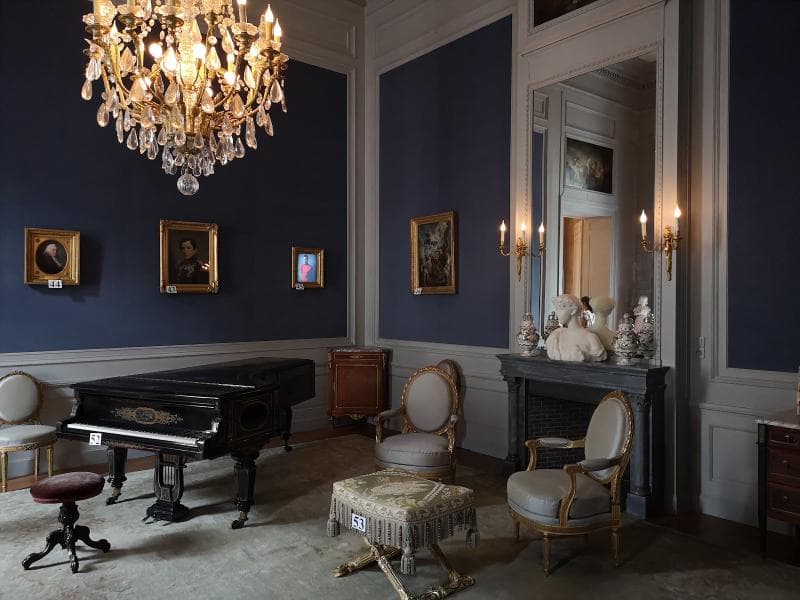
Discover the Grand Staircase within the Royal Palace of Brussels, Belgium. Explore its history, stunning architecture, and cultural significance.
Overview
Stepping into the Royal Palace of Brussels, one is immediately captivated by the sheer grandeur of the Grand Staircase, a magnificent architectural marvel that serves as a spectacular introduction to the Belgian monarchy's administrative heart. Nestled within the capital of Brussels, Belgium, this sub-spot is far more than just a means of ascent; it is a statement of power, elegance, and rich history. While the Royal Family resides at the Palace of Laeken, the Royal Palace of Brussels acts as the King's official workplace and a prestigious venue for state functions, audiences, and receptions. The Grand Staircase, with its soaring ceilings and meticulous detailing, sets an opulent tone for the entire palace, inviting visitors to delve deeper into Belgium's royal heritage and artistic achievements.
History & Cultural Background
The Royal Palace of Brussels, as it stands today, is a product of centuries of transformation. The site's history traces back to the 11th-century Coudenberg Palace, which was tragically destroyed by fire in 1731. The current structure began to take shape in the late 18th century, but it was under the ambitious reign of King Leopold II that the palace underwent its most significant enlargement and embellishment. Leopold II commissioned the renowned architect Alphonse Balat, who between 1868 and 1872, designed many of the palace's imposing spaces, including the Grand Staircase, the Throne Room, and the Grand Gallery. Balat's vision for the Grand Staircase transformed it into a focal point of neoclassical grandeur, reflecting the architectural styles prevalent in Europe during the late 18th and early 19th centuries, characterized by simple geometries and symmetry. Although Balat also planned a new facade, he passed away before its execution, with Henri Maquet completing the neoclassical exterior after 1904.
What Makes It Special
The Grand Staircase is special not just for its impressive scale, but for the harmonious blend of materials and artistic elements that create an unforgettable visual experience. Designed by Alphonse Balat, the staircase features walls and columns of pale stone, complemented by the broad steps of white marble and a balustrade of rich green marble, all enhanced with delicate gilded motifs. Mirrors and bay windows strategically placed contribute to a bright, airy, and expansive feel, amplifying the sense of majesty. Dominating the space is the magnificent statue of 'Peace', personified by the Roman goddess Minerva, a creation of Belgian sculptor Charles Auguste Fraikin from 1877. This statue, positioned prominently in a false loggia, adds a layer of symbolic depth to the already stunning architecture. Furthermore, the passage leading to the Grand Staircase is flanked by unique candelabra, sculpted in the form of Michelangelo's slaves, adding an unexpected touch of classical artistry and historical allusion. The entrance through a ceremonial vestibule, adorned with busts of past Belgian kings and queens, further establishes the historical reverence of the space, making the approach to the Grand Staircase a ceremonial experience in itself.
Stories, Fun Facts & Local Details
The Grand Staircase embodies the ambition of King Leopold II, who sought to transform the Royal Palace into a monumental symbol befitting a monarch of his stature. It was during his reign that the palace nearly doubled in size, and the Grand Staircase became a centerpiece of this expansive vision. The choice of materials, from the gleaming white and green marbles to the gilded accents, speaks volumes about the era's pursuit of opulence and refined aesthetics. A fun detail often noted by visitors is the subtle interplay of light that dances across the polished surfaces, especially on a sunny day, illuminating the intricate designs and making the entire area shimmer. The presence of Minerva, the goddess of wisdom and strategic warfare, peace, and handicrafts, at the heart of the Grand Staircase subtly reinforces the ideals of a reigning monarch focused on national progress and stability. Visitors often linger here, not just to admire the architecture, but to soak in the atmosphere of centuries of royal history. It’s a place where history feels alive, where one can almost hear the echoes of dignitaries ascending these very steps for grand state occasions. The Grand Staircase truly serves as a grand overture to the many wonders held within the palace walls.
Visitor Perspective
For any traveler exploring Brussels, a visit to the Royal Palace and its Grand Staircase offers a profound journey into Belgium's royal and architectural past. The palace typically opens its doors to the public each summer, usually from late July until early September, following Belgium's National Holiday on July 21st. While access used to be free, starting in 2026, a modest admission fee applies for visitors aged 13 and over, with online booking required to ensure a smooth experience. Children aged 12 and under can still enter for free, but also require a booked ticket. Visitors are encouraged to allocate approximately 60 minutes for their tour, which includes the Grand Staircase and various other salons. The grandeur of the Grand Staircase is often cited as a highlight, providing an immediate sense of the palace's majestic scale. Photography is generally permitted, though tripods and lengthy photo sessions are not, encouraging visitors to immerse themselves in the moment rather than focusing solely on capturing images. The experience of walking up these very steps, once trod by royalty and dignitaries, offers a unique perspective on the constitutional monarchy's elegance and historical significance.
Coordinates: 4.36238, 50.8427
View on Google Maps💬 How Travelers Describe This Place
Based on community votes
Must See
982Unique
876Photogenic
875Interesting
648Beautiful
235
Traveler Stories
Discover memorable experiences shared by travelers who have visited this place.
No traveler stories yet.
Be the first traveler to share what made this place memorable.

Tour
By
Spot
Discover amazing places around the world. Your journey starts here.
Explore
© 2026 TourBySpot. All rights reserved.