Rosenborg Castle
Copenhagen, Denmark
Explore Rosenborg Castle in Copenhagen, Denmark – a Dutch Renaissance masterpiece housing the Danish Crown Jewels and royal history.
Overview
Nestled in the heart of Copenhagen, Denmark, Rosenborg Castle stands as a magnificent testament to Danish royal history and Renaissance architecture. Originally conceived as a modest summer residence by the flamboyant King Christian IV in the early 17th century, this castle evolved into a grand pleasure palace, today preserving centuries of royal heritage. Surrounded by the tranquil King's Garden (Kongens Have), it offers a journey through time, inviting visitors to explore lavish interiors and priceless treasures.
Rosenborg Castle is renowned for housing the Danish Crown Jewels and Royal Regalia, safeguarded in secure vaults beneath the castle. Beyond these glittering symbols of monarchy, the castle itself is a richly furnished museum, showcasing royal artifacts, period rooms, and art collections that span from Christian IV's era to the 19th century. Its distinctive Dutch Renaissance style, characterized by red brick and sandstone ornamentation, makes it a prominent landmark in the city.
History & Cultural Background
The story of Rosenborg Castle begins in 1606 when King Christian IV, one of Denmark's most ambitious monarchs, initiated its construction as a country summer retreat outside Copenhagen's ramparts. Christian IV was deeply involved in the design, transforming it over several phases into the impressive castle seen today, largely completed by 1624. It served as a primary royal residence until around 1710. After this period, its use as a royal dwelling became rare, reserved only for emergencies, such as after the fire at Christiansborg Palace in 1794 and during the British attack on Copenhagen in 1801.
In the 18th century, as newer palaces became preferred, Rosenborg began transitioning into a repository for royal collections. The concept of a museum showcasing the royal family's history gained traction, leading to its establishment as a public museum in 1838. This marked a pioneering moment in European museum history, offering a chronological review of the Danish monarchy. The castle's collection vividly illustrates 400 years of royal life, preserving the personal belongings and artistic tastes of Denmark's kings and queens.
What Makes It Special
What truly sets Rosenborg Castle apart is its remarkable preservation and the incredible depth of history it presents. It offers a rare opportunity to step directly into the world of Danish royalty, with rooms meticulously maintained to reflect their original grandeur.
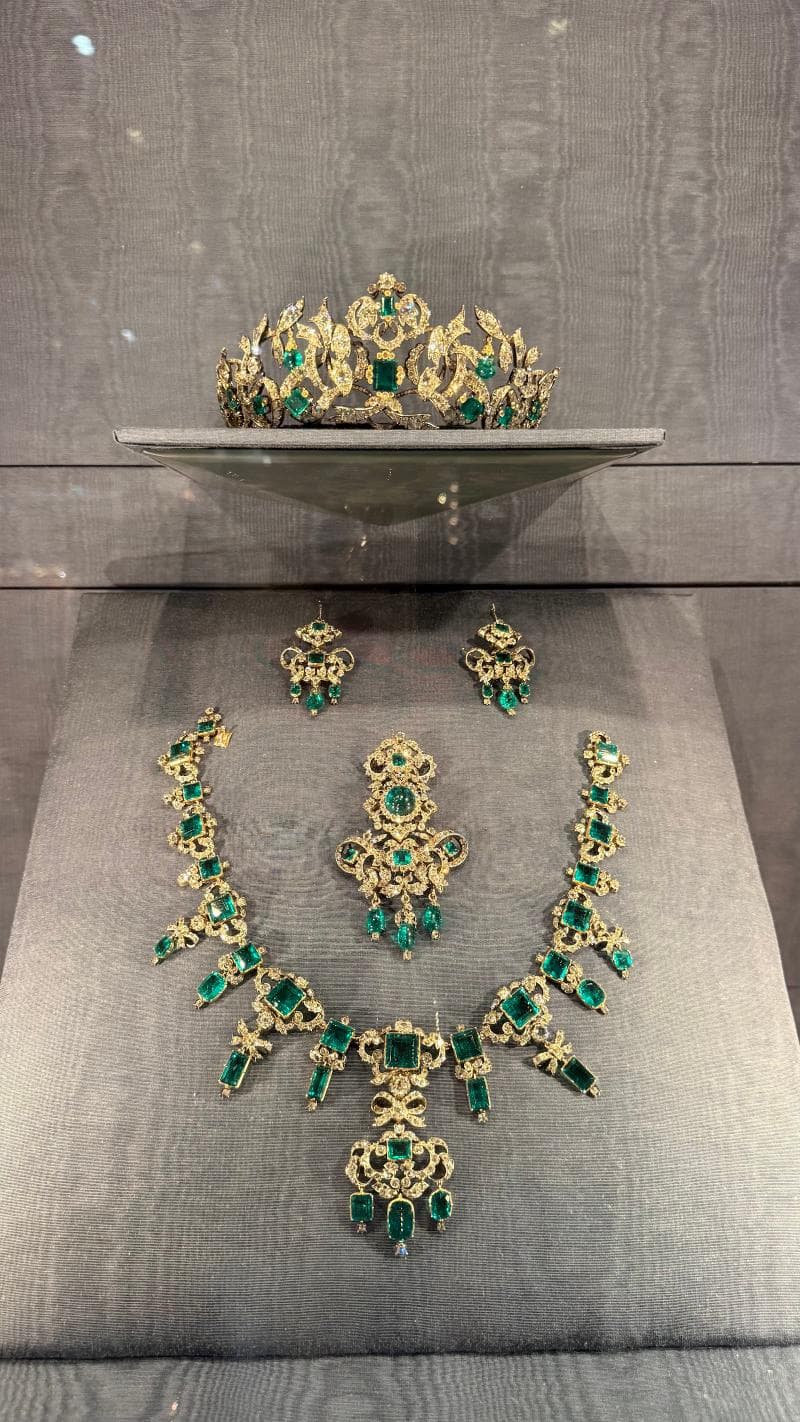
The castle's ultimate highlight is undoubtedly the Treasury, located in the basement, where the Danish Crown Jewels and Royal Regalia are kept. These invaluable items, including magnificent crowns, scepters, and orbs, are unique globally because they are not only on public display but are still actively used by the reigning monarch for special occasions. The Crown Jewels consist of four spectacular garnitures – diamond, ruby, pearl, and emerald – with the emeralds being among the finest in the world. Another central attraction is the Knights' Hall (or Long Hall) on the third floor, completed in 1624. It features the coronation thrones, traditionally guarded by three life-sized silver lions, and tapestries depicting historical battles between Denmark and Sweden.
Stories, Fun Facts & Local Details
King Christian IV, the castle's founder, was known for his love of architecture and his personal involvement in Rosenborg's design. It was his favorite residence, so much so that he chose to spend his final days there, being transported by sleigh to the castle when he was ill.
The castle's interiors hold fascinating glimpses into royal daily life. Visitors can see Christian IV's private writing cabinet and even his bathroom. The Winter Room is particularly noteworthy, being one of the best-preserved original rooms from Christian IV's time. Beyond the grand artifacts, Rosenborg also houses exquisite collections like Flora Danica porcelain and one of the world's finest Venetian glass collections.
The King's Garden, surrounding Rosenborg, is Denmark's oldest royal garden and remains a beloved green space for Copenhageners, attracting millions of visitors annually for leisurely strolls and picnics. The Royal Life Guards, garrisoned nearby, still guard the castle, adding a touch of ceremonial pomp to the historic setting.
Visitor Perspective
Visiting Rosenborg Castle offers an immersive experience, taking approximately 1.5 to 3 hours to explore thoroughly. It's conveniently located in central Copenhagen, easily accessible by a short walk from Nørreport Station, a major public transport hub. While the King's Garden is free to enter and enjoy, a ticket is required to access the castle and its collections, including the Crown Jewels.
Due to its historic nature, Rosenborg Castle features many stairs and narrow doorways, meaning wheelchair access is limited primarily to the ground floor Treasury. Photography is generally permitted for handheld devices, but tripods are not. Food and drink are not allowed inside the castle, though picnic areas are available in the surrounding gardens. For those interested in a deeper dive into Danish royal history, Rosenborg Castle serves as a crucial starting point, with its sister museum at Amalienborg Palace continuing the royal narrative from the mid-19th century onwards.
Coordinates: 12.57778, 55.68556
View on Google Maps💬 How Travelers Describe This Place
Based on community votes
Unique
326Must See
279Beautiful
276Interesting
270Photogenic
146
Traveler Stories
Discover memorable experiences shared by travelers who have visited this place.
No traveler stories yet.
Be the first traveler to share what made this place memorable.
Things to see at Rosenborg Castle



Tour
By
Spot
Discover amazing places around the world. Your journey starts here.
Explore
© 2026 TourBySpot. All rights reserved.