Treasury
Copenhagen, Denmark
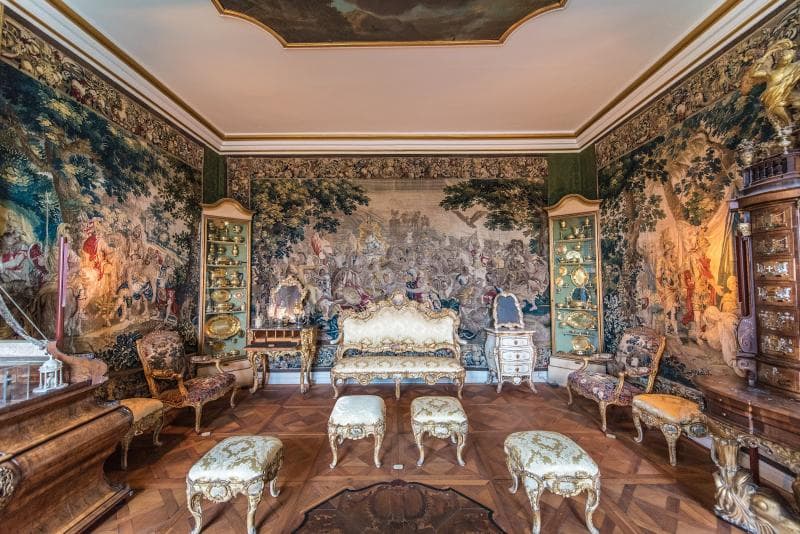
Explore the Royal Treasury at Rosenborg Castle in Copenhagen, Denmark, home to the magnificent Danish Crown Jewels and Royal Regalia.
Overview
Deep within the historic walls of Rosenborg Castle in Copenhagen, Denmark, lies the Royal Treasury, a captivating sub-spot that houses an extraordinary collection of Danish royal artifacts. Located in the castle's basement vaults, the Treasury offers visitors an intimate glimpse into centuries of monarchical splendor and intricate craftsmanship. It is the permanent home to the Danish Crown Jewels and the Royal Regalia, shimmering symbols of power, tradition, and enduring legacy.
This magnificent collection is not merely an exhibition of historical objects; it is a journey through Danish royal history, showcasing precious metals, gemstones, and meticulously crafted items that tell tales of past kings and queens. From opulent crowns and scepters to ceremonial swords and personal treasures, each artifact contributes to a rich narrative of Denmark's cultural heritage.
History & Cultural Background
Rosenborg Castle itself boasts a storied past, originally built between 1606 and 1633 by one of Denmark's most renowned monarchs, King Christian IV, as a pleasure palace and summer residence. Over time, this Dutch Renaissance-style castle evolved, eventually transitioning from a royal residence to a public museum in 1838. The decision to transform Rosenborg into a museum ensured that the royal collections, including the invaluable Treasury, would be preserved and accessible for future generations to appreciate.
A significant aspect of the Treasury's collection, particularly the Crown Jewels, is its unique cultural context. Queen Sophie Magdalene, in her will of 1746, stipulated that her jewelry should not be inherited by a specific person but rather remain perpetually available to the sitting queen of Denmark. This decree ensures that, unlike many other European royal jewels, the Danish Crown Jewels are not merely historical relics but are still actively worn by the reigning monarch, currently Queen Margrethe II, on special state occasions such as the New Year's levee.
What Makes It Special
The Treasury at Rosenborg Castle stands apart for several compelling reasons. Foremost among them is the living tradition surrounding the Danish Crown Jewels – they are the only such jewels in the world that are both publicly displayed and still in ceremonial use by the monarch. This unique distinction imbues the collection with a vibrant connection to the present day, making a visit feel like more than just observing history; it feels like witnessing an ongoing legacy.
Beyond their contemporary use, the sheer variety and exquisite craftsmanship of the items are truly remarkable. The collection includes four distinct sets of Crown Jewels: a brilliant-cut diamond set, an emerald and brilliant diamond set, a ruby, pearl, and brilliant diamond set, and a rose-cut diamond set, featuring some of the world's finest emeralds. The Royal Regalia includes Christian IV's magnificent crown from 1596, known for its gold, enamel, gems, and pearls, as well as Christian V's crown from 1670, which was used for anointings of absolute monarchs until 1840.
The meticulous artistry displayed in these pieces, from diamond-studded crowns to elaborately engraved ceremonial swords and intricately carved ivory objects, showcases the pinnacle of craftsmanship from various eras. Each item is a testament to the skill and dedication of the artisans who created them, reflecting the artistic and cultural values of their time.
Stories, Fun Facts & Local Details
The Treasury is rich with fascinating tales and details that bring its history to life. For instance, among the diverse exhibits are Christian IV's blood-stained clothes, a poignant reminder of his turbulent reign. The castle's interiors, notably preserved since 1710, offer an authentic glimpse into the royal lifestyle of past centuries, essentially freezing a moment in history for visitors to experience.
In a surprising corner of the basement, alongside the sparkling jewels, you might encounter massive wine barrels. These contain 'Rosenborg Wine', a German vintage from the 17th century that has been consistently topped up over the centuries. While reportedly 'undrinkable' due to its extreme sourness, it is famously served on special royal occasions, often with a sugar cube. A local legend even claims that Copenhagen citizens who can trace their ancestry back at least three generations are entitled to a glass on their deathbed – a humorous, albeit morbid, nod to its historical significance.
Moreover, the castle is nestled within the beautiful King's Garden (Kongens Have), the oldest royal garden in Denmark. This serene park is not just a scenic backdrop but a vibrant public space, guarded by the Royal Life Guards, who also protect the castle and its precious contents.
Visitor Perspective
Visiting the Treasury is an immersive experience. Located in the castle's secure basement, visitors descend into a vault-like environment designed to protect these priceless artifacts. The displays are thoughtfully arranged, allowing ample opportunity to admire the intricate details of each crown, jewel, and piece of regalia. Engaging with the stories behind each object, perhaps with the aid of a guidebook or guided tour, profoundly enhances the experience.
While the castle itself is a historic building with many stairs, the Treasury, being in the basement, is generally accessible, though physical access might be limited in parts due to the historic architecture. Many visitors choose to combine their Treasury visit with a leisurely stroll through the adjacent King's Garden, offering a peaceful contrast to the opulent display within the castle walls. It is highly recommended to purchase tickets in advance to ensure a smooth and enjoyable visit to this irreplaceable collection of Danish royal heritage.
Coordinates: 12.5772, 55.6858
View on Google Maps💬 How Travelers Describe This Place
Based on community votes
Must See
921Unique
831Photogenic
433Beautiful
232Interesting
211
Traveler Stories
Discover memorable experiences shared by travelers who have visited this place.
No traveler stories yet.
Be the first traveler to share what made this place memorable.

Tour
By
Spot
Discover amazing places around the world. Your journey starts here.
Explore
© 2026 TourBySpot. All rights reserved.