Crown Jewels Vault
Copenhagen, Denmark
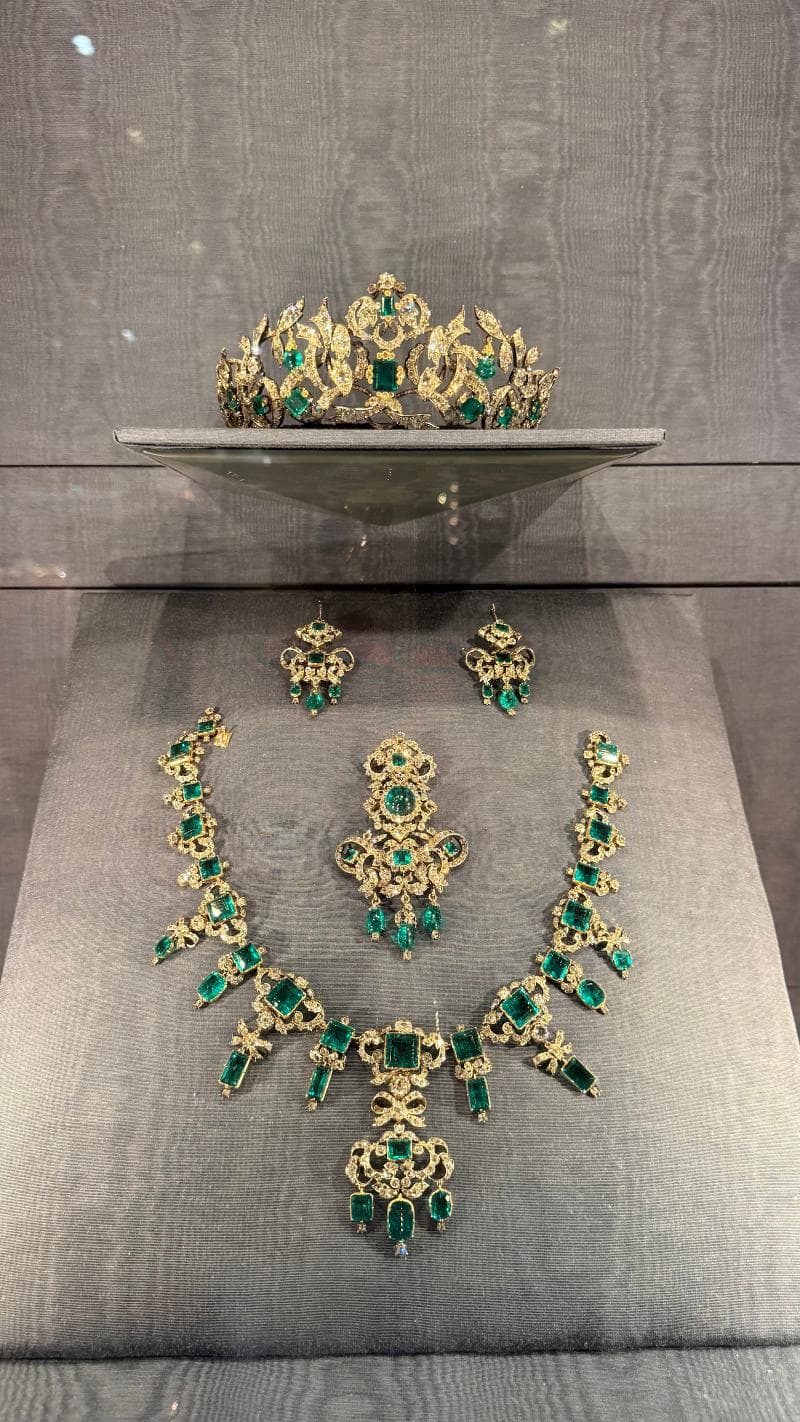
Discover the Danish Crown Jewels Vault inside Rosenborg Castle, Copenhagen. Explore royal regalia and unique jewels still worn by Denmark's Queen.
Overview
Deep within the venerable Rosenborg Castle in Copenhagen, Denmark, lies the captivating Crown Jewels Vault. This secure underground treasury houses a glittering collection of Denmark's royal heritage: the Crown Regalia and the Crown Jewels. More than just a display of precious metals and gemstones, these artifacts represent centuries of Danish monarchy, power, and tradition. Rosenborg Castle itself, a magnificent Dutch Renaissance structure built by King Christian IV in the early 17th century as a summer residence, serves as a fitting backdrop for these invaluable treasures, having been their permanent home for hundreds of years.
Visiting the vault offers a unique glimpse into a royal lineage that has shaped a nation. It's an experience that transports you back to an era of kings and queens, where dazzling symbols were not merely adornments but potent statements of authority and continuity. Unlike many other European royal collections, a significant portion of Denmark's Crown Jewels are not only preserved for posterity but are still actively used by the reigning monarch, adding a living, breathing dimension to their historical significance.
History & Cultural Background
The history of the Danish Crown Regalia and Jewels is intertwined with the evolution of the Danish monarchy. The Crown Regalia, comprising crowns, scepters, orbs, and the sword of state, are the symbolic embodiment of the monarch's supreme authority. The oldest piece, King Christian III's sword of state, dates back to 1551. Prominently featured are Christian IV's crown, crafted between 1595 and 1596, and the more elaborate crown of Christian V, made in 1670-1671 for the first absolute monarch. This latter crown was used for the anointment ceremonies of all absolute monarchs until 1840, when anointing was discontinued with the shift to a constitutional monarchy. Today, these regalia serve a ceremonial role during the 'castrum doloris' – the lying in state of a deceased monarch, where the crown is placed on the coffin.
The Crown Jewels, distinct from the Regalia, are a collection of personal jewelry belonging to the reigning queen. Their origin traces back to Queen Sophie Magdalene, consort of Christian VI, who, in her 1746 will, decreed that her extensive personal jewelry collection should not be inherited by a specific individual but rather remain 'with the Crown' to be at the disposal of future queens. Her foresight ensured that Danish queens would always possess a magnificent set of jewels. Over time, these jewels were remodelled to suit contemporary tastes, notably by Queen Caroline Amalie in 1840, who had them fashioned into four distinct parures: a diamond set, an emerald set, a pearl-ruby set, and a rose-cut diamond set.
What Makes It Special
What truly sets the Crown Jewels Vault at Rosenborg Castle apart is the unparalleled fact that its precious contents are not merely historical relics behind glass, but active components of Denmark's royal life. The Crown Jewels are the only royal jewels in the world that are both publicly exhibited and still worn by the sitting monarch, HM Queen Mary, for significant state occasions such as New Year's levees and state visits. This unique tradition imbues the jewels with a vibrant connection to the present, making them living symbols of the Danish kingdom rather than just static museum pieces.
The craftsmanship of these pieces is extraordinary, reflecting centuries of European lapidary and goldsmith artistry. From table-cut diamonds and cabochon rubies to Colombian emeralds and intricate enamel work, each item is a testament to the skill of artisans from different eras. The emeralds, in particular, are considered among the finest in the world. The combination of their aesthetic beauty, profound historical narrative, and their ongoing role in royal ceremonies makes the Danish Crown Jewels a truly singular attraction, offering visitors a sense of connection to a continuous royal legacy.
Stories, Fun Facts & Local Details
Queen Sophie Magdalene's decree, born from a desire for the Royal House to always have 'crown jewels at all', is a touching example of royal foresight. Imagine a queen deliberately ensuring her successors would sparkle, not for personal vanity, but for the dignity of the monarchy itself. It's a testament to the idea that these jewels transcend personal ownership, belonging instead to the institution and the nation. Another fascinating detail is that these precious collections never leave Denmark; when the Queen travels abroad, she uses jewels from her private collection or the Royal Property Trust, reinforcing the Crown Jewels' intrinsic link to the Danish homeland.
While the vault itself holds the glittering gems, the broader context of Rosenborg Castle enhances the experience. Visitors venturing through the castle will encounter the stunning Knights' Hall, where the coronation thrones are guarded by three life-size silver lions. These magnificent beasts, sculpted between 1665 and 1670, were inspired by biblical descriptions of King Solomon's throne and symbolize the divine authority of the monarch. Though not directly in the vault, these elements highlight the grandeur and deep symbolism associated with the monarchy that the jewels represent.
Visitor Perspective
Descending into the basement of Rosenborg Castle to enter the Crown Jewels Vault is an experience akin to stepping into a treasure chest. The atmosphere is hushed, respectful, and slightly awe-inspiring, as visitors are surrounded by centuries of royal splendor. The careful lighting illuminates every facet of the diamonds, emeralds, rubies, and pearls, allowing for a close-up appreciation of their intricate details and immense value. It's a moment to pause and reflect on the powerful stories embedded within each piece – stories of coronations, royal marriages, political shifts, and the enduring power of a royal house.
Plan to spend ample time marveling at the collection, as there is much to absorb. The vault provides informative descriptions that enrich the experience, helping visitors understand the significance and history behind each artifact. Combined with the rest of Rosenborg Castle, where you can explore royal chambers, the Knights' Hall, and the beautiful King's Garden, a visit to the Crown Jewels Vault offers a comprehensive and unforgettable journey into Denmark's royal past and present. It is a highly recommended stop for anyone curious about European royalty and magnificent historical artistry.
Coordinates: 12.57778, 55.68556
View on Google Maps💬 How Travelers Describe This Place
Based on community votes
Beautiful
852Photogenic
645Interesting
244Must See
146Unique
80
Traveler Stories
Discover memorable experiences shared by travelers who have visited this place.
No traveler stories yet.
Be the first traveler to share what made this place memorable.

Tour
By
Spot
Discover amazing places around the world. Your journey starts here.
Explore
© 2026 TourBySpot. All rights reserved.