Long Hall
Copenhagen, Denmark
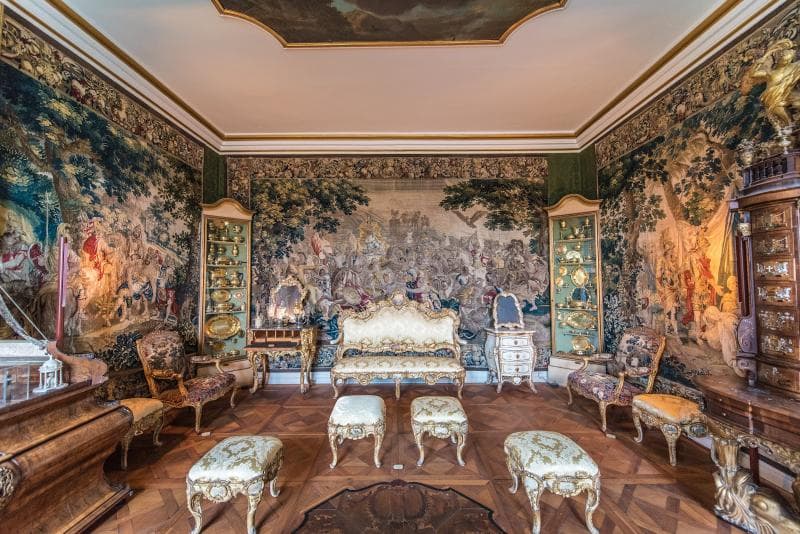
Discover the Long Hall (Knight's Hall) at Rosenborg Castle in Copenhagen, Denmark, home to royal coronation chairs, historic tapestries, and silver lions.
Overview
Stepping into the Long Hall, often referred to as the Knight's Hall, at Rosenborg Castle in Copenhagen, Denmark, is like traversing centuries of Danish royal history. Located on the castle's third floor, this magnificent chamber is a centerpiece of the castle's rich cultural heritage. Originally conceived as a grand ballroom in the 17th century, it evolved into a ceremonial space for royal receptions and banquets, culminating in its present-day role as a spectacular display of regal power and artistry. It is here that visitors encounter some of Denmark's most significant national treasures, including the coronation thrones and the watchful silver lions.
The Long Hall is more than just a room; it is a meticulously preserved tableau that captures the grandeur of Danish monarchs, offering an intimate glimpse into their lives and the events that shaped the nation. Its historical depth and visual splendor make it a must-see for anyone exploring Rosenborg Castle.
History & Cultural Background
The Long Hall's origins date back to the early 17th century when Rosenborg Castle itself was constructed between 1606 and 1624 under the ambitious King Christian IV. The hall was completed in 1624, initially serving as a ballroom for royal festivities. Its purpose shifted around 1700 when it became a dedicated space for royal receptions and elaborate banquets, reflecting the changing needs and protocols of the court.
A significant modernization occurred under Christian V in the late 17th century, who commissioned twelve impressive tapestries. These tapestries vividly depict his victories in the Scanian War (1675-1679), a conflict aimed at reclaiming Danish territories lost to Sweden. These historical narratives, woven with intricate detail, transformed the hall into a powerful testament to royal prowess. The elaborate stucco ceiling seen today, featuring the Danish Coat of Arms surrounded by the Orders of the Elephant and Dannebrog, along with side reliefs illustrating events from Frederik IV's early reign, dates to the early 18th century, adding another layer of historical artistry to the space.
What Makes It Special
The Long Hall's undeniable allure lies in its remarkable collection of royal artifacts and its opulent decor. Dominating the room are the Coronation Chairs of the absolutist kings and queens, a powerful symbol of Danish monarchy. The king's throne, notably crafted from what was believed to be 'unicorn horn' (in reality, narwhal tusks from Greenland), is an emblem of protection and royal authority. The queen's throne is made of hammered silver.
Guarding these thrones are three impressive, life-size silver lions, each weighing approximately 130 kilograms, with eyes, manes, and hindquarters adorned with pure gold. These magnificent sculptures serve not only as symbolic protectors but also as a striking visual element, deeply rooted in historical and biblical tradition. The walls are adorned with the twelve tapestries commemorating Christian V's victories in the Scanian War, alongside portraits of past monarchs. Furthermore, the hall showcases a large collection of 17th-century silver furniture, adding to its lavish display of royal wealth and craftsmanship.
Stories, Fun Facts & Local Details
The three silver lions guarding the Coronation Chairs are not just decorative; their inspiration draws from the biblical story of King Solomon's throne, which was flanked by twelve lions, symbolizing wisdom and justice. These silver guardians have played a ceremonial role beyond the Long Hall, even appearing at royal funerals, flanking the deceased monarch's 'castrum doloris' or state bed.
A fascinating journey for the tapestries themselves involved their temporary relocation. After their creation and installation in the Long Hall in the late 17th century, they were later moved to Christiansborg Palace in the early 20th century to adorn its newly built Great Hall. However, they were eventually returned to their original home at Rosenborg Castle in 1999, reaffirming their historical connection to this specific space. This demonstrates the enduring significance of the Long Hall as the intended setting for these historical masterpieces. The castle's founder, Christian IV, known for his flamboyant personality and deep interest in architecture, greatly influenced Rosenborg's development, making the Long Hall a testament to his grand vision.
Visitor Perspective
As a visitor, entering the Long Hall is an awe-inspiring experience. The sheer scale and intricate details immediately transport you to a bygone era of royal splendor. The vibrant tapestries tell tales of old conflicts and triumphs, inviting you to ponder the lives and decisions of Denmark's kings. Standing before the Coronation Chairs and the majestic silver lions, one can almost hear the echoes of royal pronouncements and the rustle of courtly attire. It is a place that evokes a profound sense of history and national identity.
The meticulous preservation of the furniture, the grandeur of the stucco ceiling, and the historical weight of each artifact combine to create an immersive atmosphere. It's a space that encourages quiet contemplation of the past, offering a tangible connection to the monarchs who once walked these very floors. This hall not only educates but also captivates, making it a highlight of any visit to Rosenborg Castle and a memorable encounter with Danish heritage.
Coordinates: 12.5772, 55.6858
View on Google Maps💬 How Travelers Describe This Place
Based on community votes
Interesting
958Unique
794Beautiful
571Must See
546Photogenic
157
Traveler Stories
Discover memorable experiences shared by travelers who have visited this place.
No traveler stories yet.
Be the first traveler to share what made this place memorable.

Tour
By
Spot
Discover amazing places around the world. Your journey starts here.
Explore
© 2026 TourBySpot. All rights reserved.