King’s Garden
Copenhagen, Denmark
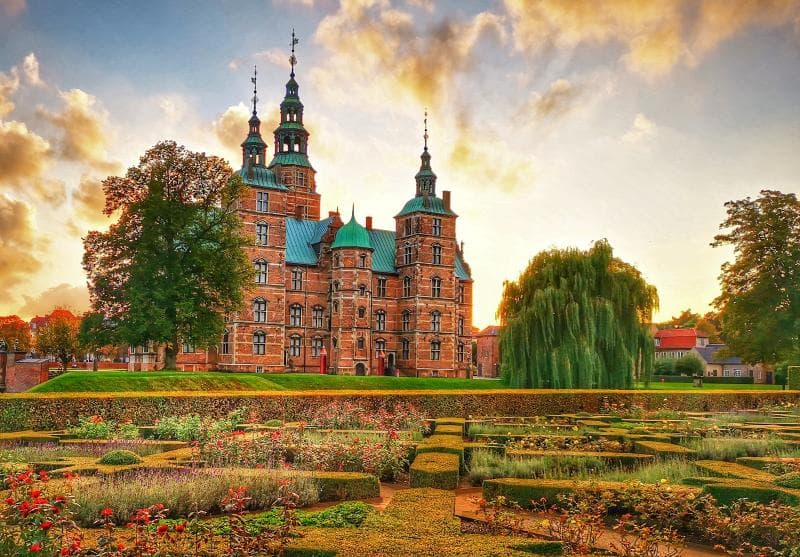
Explore King's Garden (Kongens Have), Copenhagen's oldest royal garden, a historical oasis surrounding Rosenborg Castle in Denmark.
Overview
Nestled in the heart of Copenhagen, Denmark, King’s Garden, locally known as Kongens Have, stands as the city's oldest and most cherished royal garden. This verdant oasis offers a tranquil escape for both locals and visitors, providing a beautiful setting for relaxation, picnics, and leisurely strolls. The garden gracefully encircles Rosenborg Castle, an impressive Dutch Renaissance structure, creating a harmonious blend of historical architecture and natural beauty. Free to enter, King's Garden attracts an estimated 2.5 to 3 million visitors annually, making it one of Denmark's most frequented public spaces. Its well-maintained lawns, intricate flowerbeds, and tree-lined avenues invite exploration and offer picturesque views of the castle.
History & Cultural Background
The history of King’s Garden dates back to 1606 when King Christian IV initiated its creation as a Renaissance-style pleasure garden outside Copenhagen's East Rampart. Originally, it served as a private royal garden, providing fruits, vegetables, and flowers for the royal household, including a diverse collection of plants such as apples, pears, cherries, figs, and even mulberries. The garden was designed in a formal Renaissance style, featuring geometric parterres, straight avenues, and sculpted hedgerows, and was compared to the Tuileries Garden in Paris by 1634. Over time, the garden evolved, incorporating Baroque influences, including a maze and an octagonal summerhouse. By 1710, with the royal family favoring other residences, King's Garden was opened to the public, becoming one of Scandinavia's earliest royal estates to transition into a public park.
What Makes It Special
King's Garden is distinguished by several unique features that contribute to its special charm. It boasts Northern Europe's longest herbaceous border, spanning approximately 240 meters (787 feet), known as 'The English Garden,' which showcases a stunning array of flowering perennials in a carefully timed sequence. The garden also features the Krumspringet, a symmetrical Renaissance-style garden completed in 2001, which includes roses, espaliers, and a pavilion, paying homage to a 17th-century maze. Sculptures are dotted throughout the park, including a prominent statue of Hans Christian Andersen, added in 1880. The Hercules Pavilion, dating back to the garden's founding in 1606 and later refurbished, serves as a cafe and cultural venue, showcasing a statue of Hercules acquired by King Frederick IV.
Stories, Fun Facts & Local Details
King Christian IV, known for his ambitious projects and long reign, was deeply interested in plants, collecting rare and exotic species for his garden. By 1624, his garden housed as many as 1,400 different plants. The garden is not just a historical site but a vibrant part of Copenhagen's contemporary life. In summer, the lawns become a popular spot for picnics, and the garden hosts events like puppet shows for children and even stages for the Copenhagen Jazz Festival. The layout includes distinct paths, such as the Knight's Path (Kavalergangen) and the Lady's Path (Damegangen), reflecting its royal heritage. The adventure playground, added in 1998 near the Hercules Pavilion, features unique elements inspired by the park's history, such as dragons guarding eggs.
Visitor Perspective
Visiting King's Garden offers a sensory journey through history and nature. The garden is open year-round, with hours varying seasonally, from 7 AM to 5 PM in winter and as late as 10 PM in summer. Entry to the garden is completely free, providing an accessible green space for everyone. While the garden itself is free, admission is required to enter Rosenborg Castle, which houses the Danish Crown Jewels. Many visitors enjoy simply relaxing on the benches, picnicking on the grass, or strolling along the tree-lined paths. The atmosphere is often described as warm and unpretentious, with a sense of fairytale charm, especially during bloom seasons or under a light dusting of snow in winter.
Coordinates: 12.579, 55.685
View on Google Maps💬 How Travelers Describe This Place
Based on community votes
Interesting
921Must See
617Beautiful
357Photogenic
232Unique
147
Traveler Stories
Discover memorable experiences shared by travelers who have visited this place.
No traveler stories yet.
Be the first traveler to share what made this place memorable.

Tour
By
Spot
Discover amazing places around the world. Your journey starts here.
Explore
© 2026 TourBySpot. All rights reserved.