Romanian Athenaeum
Bucharest, Romania
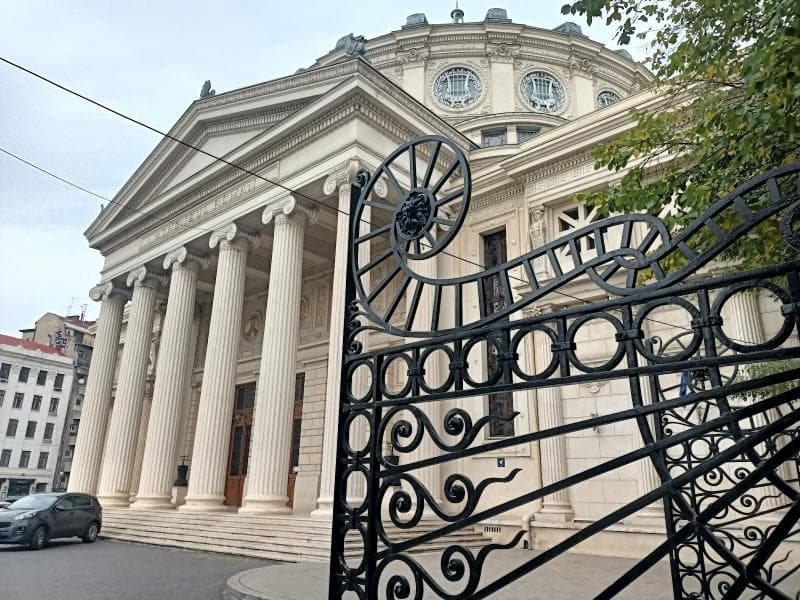
Discover the Romanian Athenaeum in Bucharest, Romania. Explore its neoclassical architecture, rich history, and the iconic George Enescu Festival.
Overview
Nestled in the heart of Bucharest, Romania, the Romanian Athenaeum, or Ateneul Român, stands as a magnificent symbol of national pride and cultural heritage. This ornate, domed, and circular building is not merely a concert hall but a cherished landmark, renowned globally for its exceptional acoustics and breathtaking beauty. Inaugurated in 1888, it serves as the esteemed home of the 'George Enescu' Philharmonic Orchestra and the prestigious George Enescu International Festival, upholding Romania's rich tradition in classical music. Its distinctive neoclassical and eclectic architectural style, characterized by a majestic dome and intricate columns, has made it one of the capital's most recognizable structures.
Recognized for its profound cultural significance, the Romanian Athenaeum was inscribed on the list of European Heritage sites in 2007 and designated a Grade-A Romanian Historical Monument in 2015.
History & Cultural Background
The story of the Romanian Athenaeum began in 1865 with the founding of the Romanian Athenaeum Cultural Society by prominent cultural and scientific figures, including Constantin Esarcu. Their vision was to create a grand edifice dedicated to art and science in Bucharest.
Designed by the talented French architect Albert Galleron, construction commenced on a site that previously belonged to the Văcărescu family and later an abandoned foundation for an American circus. The building officially opened its doors in 1888, though work on its intricate details continued until 1897.
What truly sets its history apart is the remarkable way it was funded. A significant portion of the construction costs was raised through a nationwide public subscription campaign spanning 28 years, immortalized by the patriotic slogan, 'Donate one leu for the Ateneu!' (Dați un leu pentru Ateneu!). This collective effort underscored the community's deep commitment to the arts and their shared national aspirations.
Beyond its artistic role, the Athenaeum has played a pivotal part in Romanian history. On December 29, 1919, it hosted the historic conference where leading Romanians voted to ratify the unification of Bessarabia, Transylvania, and Bukovina with the Romanian Old Kingdom, leading to the formation of Greater Romania.
The building faced significant challenges over the decades, including surviving wartime bombings and earthquakes. In 1992, extensive reconstruction and restoration efforts were undertaken, saving this architectural gem from collapse and ensuring its legacy for future generations.
What Makes It Special
The Romanian Athenaeum is a feast for the senses, both visually and acoustically. Its neoclassical design is a masterpiece, featuring a facade adorned with intricate columns and arches that draw the eye upwards to its iconic dome.
Inside, visitors are greeted by a lavish display of decorations, opulent gold leaf, a grand staircase, and stately marble columns, all contributing to an atmosphere of refined elegance. The main concert hall is particularly celebrated for its magnificent acoustics, widely considered among the finest in Europe, providing an unparalleled listening experience for classical music enthusiasts.
Perhaps its most striking interior feature is the monumental fresco by Costin Petrescu. This impressive 75-by-3-meter (246.1 by 9.8 ft) artwork encircles the entire interior of the concert hall, depicting 25 pivotal moments in Romanian history. Starting from the conquest of Dacia by Emperor Trajan and concluding with the realization of Greater Romania in 1918, this vibrant mural serves as a compelling visual narrative of the nation's journey, truly an 'open book of national history.'
Stories, Fun Facts & Local Details
- An Unusual Foundation: One fascinating detail is the Athenaeum's circular footprint. This unique shape is not arbitrary; it ingeniously adapted the pre-existing, abandoned circular foundation intended for an American circus. Architect Albert Galleron cleverly incorporated this into his design, giving the building its distinctive rounded form.
- A Nation's Contribution: The fundraising campaign, 'Donate one leu for the Ateneu!', became a powerful symbol of national unity. Ordinary citizens, from all walks of life, contributed small amounts, demonstrating a widespread desire to build a grand cultural institution for their nation.
- Inaugurated Mid-Construction: While its official opening was in 1888, the Athenaeum was, in fact, still under construction. The phased nature of the work allowed for an early inauguration, with completion stretching until 1897.
- Poetic Presence: In the small park fronting the Athenaeum, you'll find a statue of Mihai Eminescu, Romania's most celebrated poet. This adds a touch of literary history to the architectural grandeur.
Visitor Perspective
For any traveler to Bucharest, the Romanian Athenaeum is an unmissable experience. Conveniently located in the city center at Strada Benjamin Franklin 1-3, it is easily accessible. You can reach it via public transport, with the Piata Romana or Universitate metro stations being just a short walk away.
Its central position also places it within easy walking distance of other significant landmarks, including Revolution Square, the National Museum of Art, and the vibrant Calea Victoriei. This makes it an ideal stop on a cultural walking tour of Bucharest.
The most immersive way to experience the Athenaeum is by attending a concert performed by the George Enescu Philharmonic Orchestra, offering a chance to appreciate its world-class acoustics firsthand. For those interested in its history and architecture, guided tours are sometimes available. However, tour schedules can vary, so it's always advisable to check the official George Enescu Philharmonic website for the most up-to-date information. If you're opting for a tour, access is typically through the side entrance on Strada Benjamin Franklin, also known as the Musicians' Entrance.
Even if you're not attending an event, a visit to explore its stunning interior and soak in its historical ambiance typically takes between 30 minutes to an hour. Tickets for tours are usually purchased directly on-site.
Coordinates: 26.0973, 44.4413
View on Google Maps💬 How Travelers Describe This Place
Based on community votes
Photogenic
791Interesting
457Unique
252Must See
147Beautiful
19
Traveler Stories
Discover memorable experiences shared by travelers who have visited this place.
No traveler stories yet.
Be the first traveler to share what made this place memorable.
Things to see at Romanian Athenaeum



Tour
By
Spot
Discover amazing places around the world. Your journey starts here.
Explore
© 2026 TourBySpot. All rights reserved.