Main Concert Hall
Bucharest, Romania
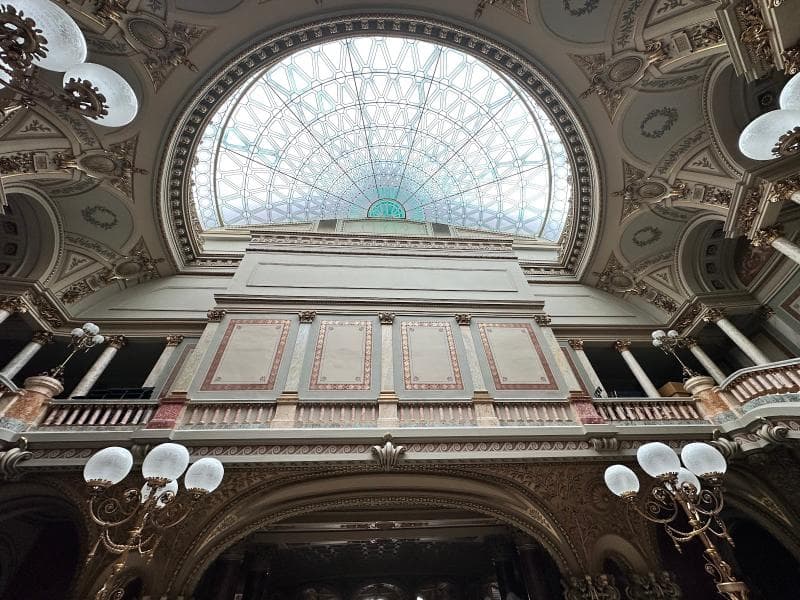
Discover the Main Concert Hall of the Romanian Athenaeum in Bucharest, Romania – an iconic neoclassical masterpiece renowned for its acoustics and history.
Overview
Nestled in the heart of Bucharest, Romania, the Main Concert Hall of the Romanian Athenaeum stands as a breathtaking architectural jewel and a profound symbol of the nation's cultural aspirations. Opened in 1888, this iconic neoclassical edifice is widely recognized as Romania's premier concert venue and the esteemed home of the George Enescu Philharmonic Orchestra. Its distinctive circular plan, capped by an elegant dome and adorned with a portico of Ionic columns, makes it one of central Bucharest's most recognizable and cherished landmarks. The Main Concert Hall is renowned globally for its exceptional acoustics, creating an immersive experience for every performance.
Beyond its visual splendor, the Athenaeum serves as a vibrant cultural hub, hosting a rich season of classical music concerts, recitals, and prestigious events, including the internationally acclaimed George Enescu Festival. With a seating capacity of approximately 794 to 800 patrons, its amphitheater-like arrangement ensures excellent stage visibility and an intimate connection between performers and audience, regardless of where one sits.
History & Cultural Background
The story of the Romanian Athenaeum is a testament to national pride and collective effort. Its construction, spanning from 1886 to 1888, was largely financed by a remarkable public subscription campaign under the enduring motto: 'Give one leu for the Athenaeum!' (Romanian: 'Dați un leu pentru Ateneu!'). This rallying cry resonated deeply with citizens, who contributed generously over 28 years to bring this cultural dream to fruition.
Designed by French architect Albert Galleron, with significant contributions from Romanian architects, the Athenaeum's neoclassical style is imbued with elements of the late-19th-century French Belle Époque. An intriguing aspect of its design is its circular form, which ingeniously utilized the existing foundations of a former American circus. The building was conceived during a period when newly unified Romania sought to establish itself as a modern European nation, and the Athenaeum quickly became a 'temple of arts, sciences, and culture,' embodying the country's intellectual and artistic ambitions. Since 1889, it has been the permanent home of the Romanian Philharmonic Society, now known as the George Enescu Philharmonic Orchestra.
The Athenaeum has also played a significant role in Romanian history beyond music. On December 29, 1919, it was the site of the historic conference where leading Romanians voted to ratify the unification of Bessarabia, Transylvania, and Bukovina with the Romanian Old Kingdom, forming what is known as Greater Romania. Having withstood wars, earthquakes, and political upheavals, including miraculously escaping destruction in World War II, the Athenaeum was inscribed on the list of European Heritage sites in 2007, recognizing its profound symbolic value to European history and culture.
What Makes It Special
The Main Concert Hall's allure lies in a harmonious blend of architectural grandeur, historical narrative, and unparalleled auditory excellence. Foremost among its special qualities are its world-renowned acoustics, considered among the finest in Europe for classical music. This superior sound quality is a result of meticulous 19th-century design, incorporating high ceilings, specific proportions, and carefully selected materials to optimize sound reflection and absorption.
Visually, the hall's most captivating feature is the monumental, circular fresco that encircles the interior just below the dome. Painted by Costin Petrescu and unveiled in 1939, this magnificent 75-meter (246-foot) long artwork vividly depicts 25 pivotal scenes from the history of the Romanian people, from the Roman conquest of Dacia to the Great Union of 1918. This stunning visual narrative transforms the concert hall into a living museum, offering a profound journey through Romania's past while experiencing its artistic present. The opulent interior, with its gold leaf, marble, and rich decorations, combined with the majestic concert organ inaugurated in 1939 (thanks to a fundraising campaign initiated by George Enescu), creates an atmosphere of timeless elegance and cultural reverence.
Stories, Fun Facts & Local Details
The Romanian Athenaeum is rich with fascinating stories that deepen its connection to the country's soul. The 'Give one leu for the Athenaeum!' campaign is perhaps the most beloved, showcasing the powerful community spirit that brought this grand project to life. It highlights how ordinary citizens contributed to building a national treasure, fostering a sense of collective ownership and pride that endures to this day. The very circular shape of the building, often admired as an architectural marvel, actually comes from its foundation on a former circus arena.
Through its long history, the Athenaeum's stage has hosted an extraordinary roster of legendary musicians and composers. Icons like George Enescu himself, Igor Stravinsky, Richard Strauss, Pablo Casals, Herbert von Karajan, and Yehudi Menuhin have graced its stage, contributing to its global reputation as a beacon of classical music. Even during challenging times, such as the communist era, the Athenaeum's spirit persevered. There are stories of concerts held in freezing temperatures, and for nearly two decades, the great fresco was covered with red velvet by the communist regime, who preferred to obscure historical scenes featuring Romanian royalty. Luckily, it was later restored to its full glory. In front of the building, visitors can find a statue of Romania's national poet, Mihai Eminescu, adding another layer of cultural significance to the site.
Visitor Perspective
For any traveler to Bucharest, experiencing the Main Concert Hall of the Romanian Athenaeum is an unforgettable journey into the heart of Romanian culture. While attending a concert by the George Enescu Philharmonic Orchestra offers the most authentic and immersive experience, the Athenaeum's doors are often open to curious visitors even without a concert ticket.
Concert seasons typically run from September through June/July, with performances held multiple times a week, providing ample opportunities to witness its magic firsthand. The biennial George Enescu Festival transforms the Athenaeum into a focal point for international classical music, drawing artists and audiences from around the world. For those unable to attend a performance, mornings often provide the best opportunity for a self-guided visit to admire the breathtaking interior, including the grand fresco and the opulent architecture. The experience is not merely about sightseeing; it's about connecting with a living piece of history, appreciating the profound impact of music and art, and witnessing a beloved institution that continues to be a vibrant testament to Romania's enduring cultural identity.
Coordinates: 26.0973, 44.4413
View on Google Maps💬 How Travelers Describe This Place
Based on community votes
Interesting
995Must See
989Unique
603Beautiful
581Photogenic
388
Traveler Stories
Discover memorable experiences shared by travelers who have visited this place.
No traveler stories yet.
Be the first traveler to share what made this place memorable.

Tour
By
Spot
Discover amazing places around the world. Your journey starts here.
Explore
© 2026 TourBySpot. All rights reserved.