Roman Forum
Rome, Italy
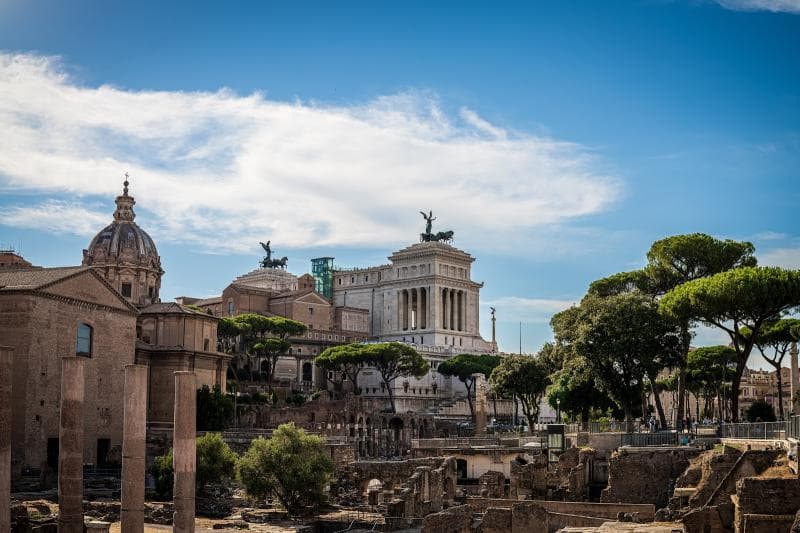
Explore the Roman Forum in Rome, Italy – the ancient heart of a vast empire. Discover its history, iconic ruins, and fascinating stories.
Overview
Stepping into the Roman Forum today is to walk through the very heart of ancient Rome, a sprawling complex of ruins nestled between the Palatine and Capitoline Hills. Once a marshy valley, this rectangular plaza transformed over a millennium into the pulsating center of daily life for one of history's greatest empires. It was here that triumphant processions marched, elections were held, laws were debated, and commerce thrived. What remains are layers of history, offering a profound glimpse into a civilization that shaped much of the Western world.
Today, the Roman Forum attracts millions of sightseers annually, drawn by the evocative remnants of temples, basilicas, and arches. It is not merely a collection of old stones, but a vivid testament to the Roman Republic and Empire's political, religious, and social life. Visiting this site is an essential experience for anyone seeking to understand the grandeur and complexity of ancient Rome.
History & Cultural Background
The story of the Roman Forum begins long before the grand structures we see today. Initially, the area was a swampy lowland. It was only in the 7th century BCE that the valley was drained, reputedly through the construction of the Cloaca Maxima, one of the world's earliest sewer systems, making it suitable for settlement and public use.
From its humble beginnings as a marketplace and burial ground, the Forum gradually evolved into the central hub of the city. During the Roman Republic, it was the primary venue for public meetings, law courts, and even gladiatorial contests before the construction of the Colosseum. As Rome grew, so did the Forum, with emperors and powerful figures continually adding or rebuilding monuments to showcase their influence and commemorate victories. Structures like the Curia Julia, where the Roman Senate convened, and the Regia, an ancient royal residence and later home to the Pontifex Maximus, highlight its crucial role in governance and religion.
Following the fall of the Western Roman Empire, the Forum gradually fell into disrepair and neglect. By the Middle Ages, much of it was buried under layers of earth, eventually becoming known as the 'Campo Vaccino' or 'cow pasture.' It was not until the 20th century that extensive archaeological excavations fully revealed its ancient splendor, bringing to light the ruins we explore today.
What Makes It Special
The Roman Forum's unparalleled significance lies in its concentration of vital historical structures within a relatively small area. It was the stage upon which much of Roman history unfolded, making it a unique outdoor museum of political power, religious devotion, and civic life. Unlike many planned ancient city centers, the Forum developed organically over centuries, resulting in a somewhat 'higgledy-piggledy' layout that reflects its continuous evolution.
Key landmarks such as the majestic Arch of Septimius Severus and the Arch of Titus stand as enduring symbols of military triumph and imperial propaganda, adorned with intricate reliefs narrating Roman conquests. The Temple of Saturn, one of Rome's oldest temples, housed the state treasury and played a central role in festivals like the Saturnalia. The Curia Julia, the remarkably preserved Senate House, offers a direct link to the political debates and decisions that shaped an empire. These structures, alongside the remnants of basilicas, houses, and marketplaces, paint a comprehensive picture of Roman society.
Stories, Fun Facts & Local Details
Imagine the cacophony of ancient Roman life echoing through these ruins. Orators like Cicero once delivered fiery speeches from the Rostra, a raised platform, influencing public opinion and shaping the destiny of Rome. Criminal trials were held here, and citizens gathered for social events and business dealings. Before the colossal amphitheater of the Colosseum was built, gladiatorial matches occasionally took place within the Forum itself, thrilling the crowds.
A fascinating detail is the Temple of Vesta, home to the Vestal Virgins, priestesses responsible for maintaining Rome's sacred flame, an act crucial for the city's prosperity. Their house, the Atrium Vestae, is nearby. Another intriguing structure is the Temple of Romulus (not to be confused with the city's founder), dedicated to the deified son of Emperor Maxentius. It boasts its original bronze doors from the early 4th century AD, remarkably preserved because the building was later incorporated into a church.
The entire area was not always open as it is today; for centuries after its decline, the Forum was a pasture, and some structures were even 'cannibalized' for their stone or converted for other uses, contributing to their survival.
Visitor Perspective
Exploring the Roman Forum is an immersive journey back in time, offering a profound sense of connection to ancient history. It's recommended to allocate several hours for your visit, especially if combining it with the neighboring Palatine Hill, from which you can enjoy breathtaking panoramic views of the Forum below.
To make the most of your experience, wear comfortable, sturdy walking shoes, as the terrain is uneven with ancient cobblestones and gravel paths. Visiting early in the morning or late in the afternoon is advisable to avoid the midday heat and larger crowds, particularly during warmer months. Tickets for the Roman Forum are typically combined with admission to the Colosseum and Palatine Hill, and booking online in advance is highly recommended to bypass long queues. While wandering, take time to read the interpretive signs scattered throughout the site, which help contextualize the ruins and bring their stories to life. Consider a guided tour to gain deeper insights into the complex history and significance of each structure.
Coordinates: 12.4857, 41.8925
View on Google Maps💬 How Travelers Describe This Place
Based on community votes
Interesting
886Photogenic
564Beautiful
443Must See
310Unique
233
Traveler Stories
Discover memorable experiences shared by travelers who have visited this place.
No traveler stories yet.
Be the first traveler to share what made this place memorable.
Things to see at Roman Forum



Tour
By
Spot
Discover amazing places around the world. Your journey starts here.
Explore
© 2026 TourBySpot. All rights reserved.