Temple of Saturn
Rome, Italy
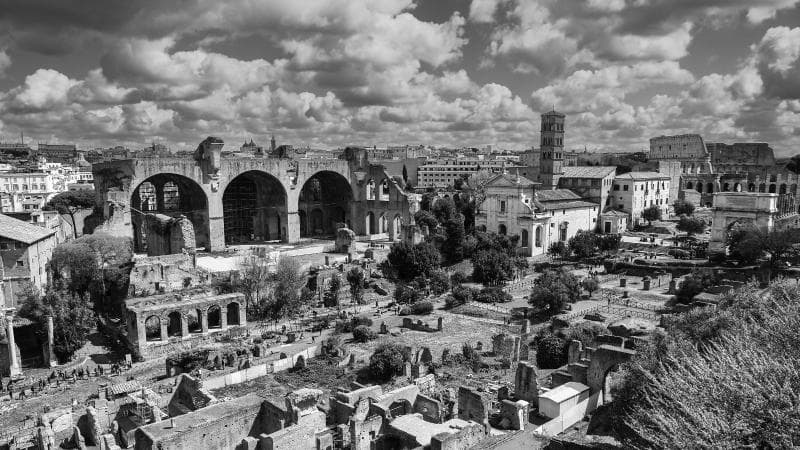
Explore the Temple of Saturn in Rome, Italy – an ancient Roman temple and state treasury in the Roman Forum, famous for its history and the Saturnalia festival.
Overview
Nestled at the western edge of the Roman Forum, at the foot of the Capitoline Hill, stands the venerable Temple of Saturn, one of ancient Rome's most enduring and recognizable landmarks. Dedicated to the Roman god of agriculture, wealth, and time, its iconic eight surviving Ionic columns have defied millennia, offering a poignant glimpse into the heart of a once-thriving civilization. Today, it serves as a powerful reminder of Rome's deep-rooted religious and economic foundations.
History & Cultural Background
The Temple of Saturn boasts an incredibly long and complex history, beginning with its initial dedication around 497 BCE, making it one of the oldest temples in the Roman Forum and indeed in Rome itself. While traditional accounts date its construction to the early years of the Roman Republic, ancient writers sometimes disagreed on the exact specifics of its earliest phase. Over the centuries, the temple faced numerous challenges, primarily destructive fires, necessitating multiple reconstructions. One significant rebuilding occurred in 42 BCE by Lucius Munatius Plancus, whose work accounts for some of the elements we see today. However, the standing ruins primarily represent a restoration undertaken between 360 and 380 CE, following a devastating fire in 283 CE. This later restoration is proudly proclaimed by an inscription on the architrave: 'SENATVS POPVLVSQVE ROMANVS INCENDIO CONSVMPTVM RESTITVIT,' meaning 'The Senate and People of Rome restored what fire had consumed.' Architecturally, the temple evolved, initially showing Etruscan influences before adopting the hexastyle Ionic order seen in its later iterations, featuring columns of Egyptian granite.
What Makes It Special
What truly sets the Temple of Saturn apart is its remarkable dual identity and enduring resilience. Beyond its primary role as a sacred site dedicated to Saturn, it uniquely served as the Aerarium, the state treasury of ancient Rome. Here, Rome's financial reserves of gold and silver were meticulously stored, alongside crucial bronze tablets detailing Roman laws and public archives, highlighting the intertwining of religion, finance, and governance in the Roman Republic and Empire. The survival of its eight imposing columns, despite centuries of earthquakes, fires, and the passage of time, is a powerful testament to the Roman engineering and dedication to their gods and institutions. It stands as a symbol of continuity, witnessing the rise and fall of emperors and the continuous pulse of Roman life in the Forum.
Stories, Fun Facts & Local Details
The Temple of Saturn was the epicenter of the famous Saturnalia festival, a highlight of the Roman calendar beginning on December 17th. During this joyous period, typically a week-long celebration, societal norms were famously inverted. Masters would serve their slaves, gift-giving was common, and a general atmosphere of revelry, feasting, and merrymaking prevailed. A fascinating ritual involved the cult statue of Saturn housed within the temple: its feet, usually bound with woolen fetters, were symbolically loosened for the duration of Saturnalia, representing liberation and renewal, themes strongly associated with the god. This ancient festival is believed to have influenced many modern winter holiday traditions, including Christmas. Another intriguing detail is the construction technique known as 'spolia,' evident in the columns; builders often repurposed materials from older structures, with some columns made from multiple pieces of granite rather than a single monolith. Furthermore, Saturn, the god of time, lends his name to 'Saturday,' a linguistic legacy that connects us directly to this ancient deity.
Visitor Perspective
Visiting the Temple of Saturn today is an immersive journey back in time, easily accessible as part of the larger Roman Forum archaeological site in Rome, Italy. There is no separate ticket required for the temple; entry is included with a general admission ticket to the Roman Forum and Colosseum. As you wander through the Forum, the Temple of Saturn's striking columns are unmissable, prominently located near other significant landmarks like the Arch of Septimius Severus and at the base of the Capitoline Hill. For a more peaceful experience and to truly absorb the atmosphere, it's recommended to visit early in the morning or late in the afternoon, when crowds are typically smaller. While only the impressive facade remains, standing before these ancient structures and reading the inscription on the architrave provides a profound connection to the Romans who walked these very grounds. Opting for a guided tour can further enrich the experience, offering deeper historical context and bringing the stories of this vital site to life.
Coordinates: 12.484186, 41.892538
View on Google Maps💬 How Travelers Describe This Place
Based on community votes
Must See
872Beautiful
684Unique
363Interesting
250Photogenic
88
Traveler Stories
Discover memorable experiences shared by travelers who have visited this place.
No traveler stories yet.
Be the first traveler to share what made this place memorable.

Tour
By
Spot
Discover amazing places around the world. Your journey starts here.
Explore
© 2026 TourBySpot. All rights reserved.