Arch of Septimius Severus
Rome, Italy
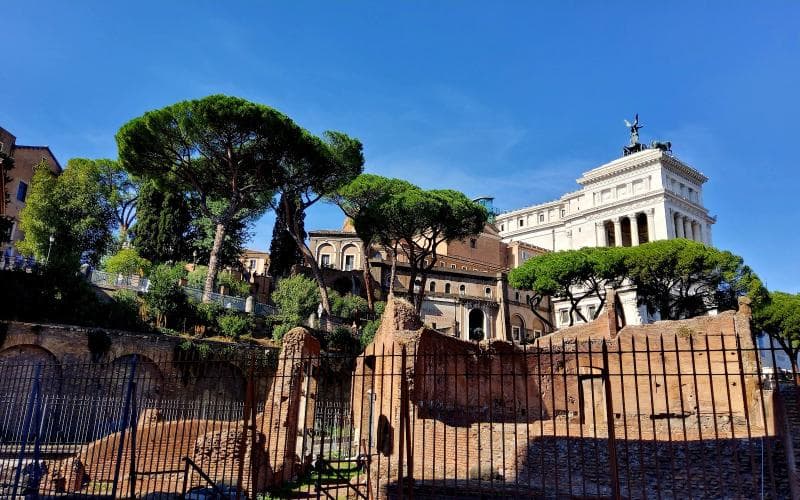
Explore the Arch of Septimius Severus in Rome, Italy – a majestic triumphal arch in the Roman Forum commemorating imperial victories and bearing tales of ancient power.
Overview
Standing majestically at the northwestern end of the Roman Forum in Rome, Italy, the Arch of Septimius Severus is a magnificent white marble triumphal arch. Dedicated in 203 AD, this iconic structure was erected to commemorate the Parthian victories of Emperor Septimius Severus and his two sons, Caracalla and Geta. Its impressive triple-arch design, with a larger central archway flanked by two smaller ones, makes it a prominent landmark amidst the ancient ruins. Visitors to the Roman Forum can easily spot this well-preserved monument, which provides a captivating glimpse into the grandeur and political messaging of the Roman Empire.
History & Cultural Background
The Arch of Septimius Severus was commissioned by the Roman Senate to celebrate Emperor Septimius Severus's successful military campaigns against the Parthian Empire, which took place between 194 and 199 AD. These victories were crucial for Rome, extending its dominion and restoring stability to the republic. The arch, built in 203 AD, was originally dedicated to the emperor and his two sons, Caracalla and Geta, acknowledging their roles in these triumphs.
However, the arch also bears a somber tale of imperial power and family betrayal. After Septimius Severus's death, his sons Caracalla and Geta initially ruled as co-emperors. Caracalla, driven by ambition, had Geta assassinated in 212 AD. Following this fratricide, Caracalla enacted a practice known as *damnatio memoriae* – the condemnation of memory – ordering the removal of Geta's name and images from all public monuments, including this triumphal arch. The original inscription on the arch's attic, which once included Geta's name, was chiseled out and replaced, a stark reminder of the ruthless political realities of ancient Rome.
Constructed primarily from brick and travertine, the arch is faced entirely with lustrous Pentelic or Proconnesian marble, known for its distinct grey and white bands. Standing approximately 23 meters (75 feet) high and 25 meters (82 feet) wide, it was an imposing structure designed to impress and communicate imperial might.
What Makes It Special
What truly sets the Arch of Septimius Severus apart are its richly detailed narrative reliefs, which offer a visual chronicle of the Parthian wars. These large panels, located on the arch's attic, depict various scenes including battle preparations, sieges, surrenders, and the emperor's triumphal procession. The artistic style, which emphasizes a 'bottom-to-top' reading of the narrative, shows an evolution in Roman art, using chiaroscuro effects to create depth.
Beyond the war narratives, the arch features symbolic decorations. Winged Victories are carved in relief in the spandrels of the central archway, while river divinities adorn those of the smaller arches, symbolizing Roman control over vast territories. Representations of prisoners of war are also depicted on the pedestals of the columns, further reinforcing the message of Roman dominance. Its strategic placement on the Via Sacra, the main processional road of the Roman Forum, ensured that all who passed through would be reminded of the emperor's power and the glory of Rome.
Stories, Fun Facts & Local Details
One of the most compelling stories associated with the Arch of Septimius Severus is the tragic fate of Geta, whose effacement from the inscription serves as a powerful testament to *damnatio memoriae*. Imagine a name, once proudly displayed in gilded bronze lettering, being systematically erased to condemn a person to historical oblivion. This act of erasing history is a chilling reminder of the brutal power dynamics of the Roman Empire.
Originally, the arch was topped by a bronze sculptural group featuring Emperor Septimius Severus and his sons in a four-horse chariot (quadriga), accompanied by soldiers, all made of gilded bronze. Though these statues are long lost, images on ancient coins provide a glimpse of their former glory. The arch essentially served as a monumental 'newspaper,' publicly broadcasting the emperor's achievements to the Roman populace.
Throughout the Middle Ages, the Roman Forum's ground level gradually rose due to debris and silt from flooding, burying the lower portions of the arch. This unintended burial actually helped preserve the structure. It was even incorporated into a medieval fortress and later into a church, preventing it from being dismantled for building materials, a common fate for many ancient Roman structures. Excavations in the 19th century finally revealed its full splendor once again.
Legend also has it that the location for the arch was chosen because Septimius Severus reportedly had a dream in which he climbed the horse of Pertinax on that very spot.
Visitor Perspective
Visiting the Arch of Septimius Severus today offers a profound connection to ancient Roman history. As it is located within the Roman Forum, a valid ticket to the Roman Forum and Colosseum archaeological area is required to get up close and fully appreciate its intricate details. You can access the Roman Forum from various points, and the arch is notably one of the first grand monuments you encounter when entering from the northwestern side, near the Capitoline Hill.
Its position makes it easily integrated into any exploration of the Forum. Standing at the foot of the Capitoline Hill, close to the Curia Julia (the ancient Senate House) and the Temple of Saturn, it forms a breathtaking part of the Forum's landscape. Take your time to examine the surviving reliefs, imagining them brightly painted as they once were, and consider the stories of power, conquest, and memory etched into its marble surface. Even from outside the Forum along Via dei Fori Imperiali, or from the Capitoline Hill viewpoint, the Arch's striking white marble presence is clearly visible.
Coordinates: 12.4847, 41.8928
View on Google Maps💬 How Travelers Describe This Place
Based on community votes
Photogenic
996Must See
953Beautiful
658Interesting
585Unique
69
Traveler Stories
Discover memorable experiences shared by travelers who have visited this place.
No traveler stories yet.
Be the first traveler to share what made this place memorable.

Tour
By
Spot
Discover amazing places around the world. Your journey starts here.
Explore
© 2026 TourBySpot. All rights reserved.