Arch of Titus
Rome, Italy
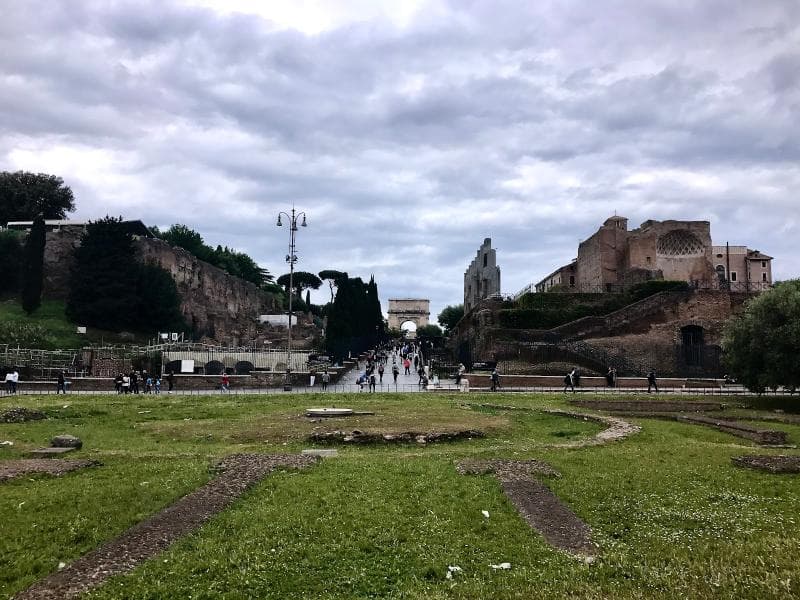
Explore the Arch of Titus in the Roman Forum, Rome, Italy. Discover its rich history, significant reliefs depicting the Jewish War, and cultural impact.
Overview
The Arch of Titus stands proudly as a monumental gateway at the eastern entrance of the Roman Forum in Rome, Italy. This single-bay honorific arch is not just an ancient relic, but a powerful narrative etched in stone, commemorating the military triumphs and posthumous deification of Emperor Titus. Erected shortly after his death, it serves as a lasting testament to a pivotal moment in Roman history and offers visitors a tangible link to the empire's grandeur and conquests.
Situated on the historic Via Sacra, the Sacred Way, it marks the route where victorious Roman generals once paraded, making its location inherently significant. Today, it forms an integral part of the Roman Forum, accessible to those exploring the vast archaeological park.
History & Cultural Background
The Arch of Titus was commissioned by Emperor Domitian, Titus's younger brother and successor, around 81 CE, shortly after Titus passed away. Its primary purpose was to commemorate Titus's decisive victory in the Jewish War, which culminated in the siege and destruction of Jerusalem in 70 CE. This conflict, also known as the First Jewish-Roman War, was a brutal event, and the arch was designed to permanently engrave Rome's imperial power and triumph over Judea into the landscape.
The arch stands as a symbol of the Flavian dynasty's influence. Its construction, using Pentelic marble, the same luminous stone as Athens' Parthenon, highlights the Romans' engineering and artistic ambition. Over the centuries, the Arch of Titus endured various transformations, including being incorporated into a medieval fortress by the Frangipani family. Significant restoration work, including a comprehensive dismantling and reassembly, was undertaken in the early 19th century by Giuseppe Valadier, who used travertine to distinguish restored sections from the original marble.
What Makes It Special
The Arch of Titus is remarkable for its elegant single-bay design and, more significantly, for its intricate relief panels, which offer invaluable historical documentation. On the interior, two large panels vividly depict scenes from Titus's triumphal procession in 71 CE.
One panel portrays Roman soldiers carrying the spoils looted from the Second Temple in Jerusalem. Among these, the seven-branched Menorah, silver trumpets, and the Table of Showbread are prominently displayed, offering a rare contemporary depiction of these sacred artifacts.
The opposite panel shows Emperor Titus himself, riding in a four-horse chariot (quadriga), crowned by the goddess Victoria, and accompanied by the goddess Roma and personifications of the Roman Senate and people. This portrayal of mortals alongside divine figures was groundbreaking in Roman art.
In the center of the arch's vault, a relief depicts the apotheosis of Titus, showing him being carried to the heavens by an eagle, symbolizing his deification.
These reliefs not only celebrate military success but also served as powerful propaganda, solidifying Titus's place among the gods and showcasing Rome's might. The arch's design has also served as a model for many later triumphal arches, most famously inspiring Paris's Arc de Triomphe.
Stories, Fun Facts & Local Details
The Arch of Titus carries deep, often contrasting, emotional significance. For nearly two millennia, the arch served as a painful reminder for Rome's Jewish community of the destruction of Jerusalem and the subsequent diaspora. Historically, many Jews in Rome refused to walk beneath it as a sign of mourning and defiance. It was only after the establishment of the modern State of Israel that some Jews symbolically marched through the arch in the opposite direction of the original triumph, reclaiming a sense of renewed hope.
The Menorah depicted on the arch's relief is so historically significant that it became the official emblem of the modern State of Israel. Another fascinating detail is the Roman practice of deifying emperors. The Arch's inscription refers to Titus as 'Divus' (divine), confirming it was built after his death and subsequent deification, a common way for 'good' emperors to be honored.
While the arch vividly displays the treasures from the Temple, the actual fate of these spoils, particularly the Menorah, remains a mystery, with legends suggesting they vanished, perhaps into the Tiber River.
Visitor Perspective
Visiting the Arch of Titus offers a profound journey into ancient history. Located at the highest point of the Via Sacra, it is easily accessible within the Roman Forum, often encountered as part of a visit to the Colosseum and Palatine Hill. There is no separate ticket for the arch itself, as its entry is included with a general ticket to the Roman Forum and Palatine Hill.
As you approach, take a moment to appreciate its imposing yet elegant structure. Look closely at the inner relief panels to truly grasp the detailed carvings and the stories they tell. Imaging the triumphal processions that once passed beneath it allows for a deeper connection to the site's historical weight. The Arch of Titus stands as a powerful, silent guide, inviting curious travelers to reflect on the rise and fall of empires, the complexities of cultural memory, and the enduring artistry of ancient Rome. Note that as of early 2025, conservation work is underway, which may temporarily impact visibility of some areas.
Coordinates: 12.488585, 41.890717
View on Google Maps💬 How Travelers Describe This Place
Based on community votes
Beautiful
886Unique
564Must See
233Interesting
201Photogenic
121
Traveler Stories
Discover memorable experiences shared by travelers who have visited this place.
No traveler stories yet.
Be the first traveler to share what made this place memorable.

Tour
By
Spot
Discover amazing places around the world. Your journey starts here.
Explore
© 2026 TourBySpot. All rights reserved.