Potocki Palace
Lviv, Ukraine
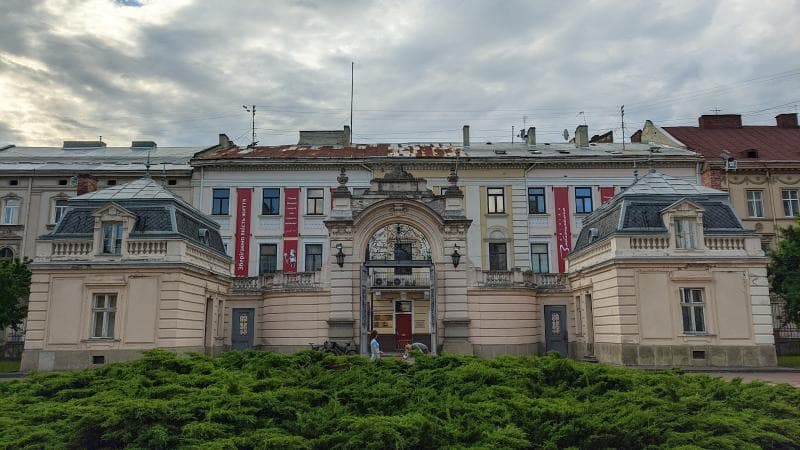
Explore the majestic Potocki Palace in Lviv, Ukraine. Discover its stunning Neo-Baroque architecture, rich history, and exquisite European art collection.
Overview
Nestled in the heart of Lviv, Ukraine, the Potocki Palace stands as a breathtaking testament to aristocratic grandeur and architectural elegance. Built in the late 19th century, this magnificent urban residence was commissioned by Alfred Józef Potocki, a prominent Austrian politician. Designed with a distinct French Classicism influence, reminiscent of the grand palaces of King Louis XIV, it immediately became one of Lviv's most opulent structures. Today, the Potocki Palace serves as a distinguished branch of the Lviv National Art Gallery, housing an impressive collection of European art spanning the 14th to 18th centuries, and occasionally functions as a presidential residence.
History & Cultural Background
The story of the Potocki Palace is deeply interwoven with the history of the influential Potocki family, one of the wealthiest and most powerful noble families in Galicia. The current palace, located at 15 Kopernika Street, replaced an earlier classical-style residence built on the same site in 1822. Construction of the new palace took place between 1888 and 1890, spearheaded by Alfred Józef Potocki, a former Minister-President of Austria and Governor of Galicia. The design was primarily conceived by the esteemed French architect Louis Dauvergne, with local architects Julian Cybulski and Ludwik Baldwin-Ramułt overseeing its construction and adapting the plans to local conditions. Although Alfred Józef Potocki passed away before its completion, the project was seen through by his son, Roman Potocki.
Following the Soviet takeover of Lviv in 1939-1940, the Potocki family left the city, and their luxurious residence was nationalized. Over the decades, the palace served various purposes, from housing the Institute of Geology and Geochemistry (1945-1972) to becoming the City Palace of Celebrations, hosting wedding ceremonies from 1972 onwards. This period, ironically, helped preserve some of its exquisite interiors through timely restoration. In the early 2000s, specifically 2002, the palace was entrusted to the Lviv Art Gallery, transforming it into a public museum and cultural hub.
What Makes It Special
What truly sets the Potocki Palace apart is its distinctive architectural style and opulent interiors. Often described as 'the most French' building in Lviv, its Neo-Baroque or French Classicism design, characterized by an H-shaped plan and elaborate facades, features figured window frames, balustrades, and an arched portico adorned with Ionic columns and stucco. The grand entrance is marked by a monumental gate, intricately decorated with the Potocki family's coat of arms. Inside, visitors are transported to an era of lavishness. The ground floor salons, meticulously recreated in the Louis XVI style, boast red, mirror, and blue halls, along with the count's office. These spaces are embellished with rich stucco work, gilding, colored marble, precious woods, and elegant marble fireplaces, reflecting the high status of its original inhabitants. Beyond its historical beauty, the palace houses one of Eastern Europe's finest art collections, showcasing European paintings from the 14th to the 18th centuries, including works by masters such as Titian and Goya.
Stories, Fun Facts & Local Details
The Potocki Palace is not just a building; it is a repository of fascinating stories and peculiar incidents. Perhaps one of the most remarkable tales dates back to 1919 when an American pilot named Edward Graves tragically crashed his plane into the palace during city celebrations. The extensive repair work required lasted until 1931. Another intriguing detail involves a Soviet-era plan to build a metro system in Lviv, with the first station near the palace. However, the project was abandoned when the ground around the palace began to sink, threatening its structural integrity. Interestingly, the palace's grand interiors have also graced the silver screen, serving as a filming location for various movies, including a Soviet adaptation of 'D'Artagnan and Three Musketeers'. In a nod to contemporary culture, the palace even hosted matches for the Women's World Chess Championship in 2016. Today, a charming 'Park of Miniatures' featuring models of castles from the Lviv region can be found in the palace's backyard, adding another layer of discovery for visitors.
Visitor Perspective
For any traveler exploring Lviv, a visit to the Potocki Palace offers a unique opportunity to step back in time and immerse oneself in the grandeur of a bygone aristocratic era. You can wander through the meticulously restored state rooms, including the famous Mirror Hall, and admire the Red and Blue Drawing Rooms, which vividly recreate the authentic atmosphere of the Potocki era. Beyond the interiors, take a moment to stroll through the courtyard, appreciate the intricate facade, and explore the miniature park. The palace is home to a rich collection of European art, providing art enthusiasts with a chance to view masterpieces from various centuries. Most visitors find that 1 to 2 hours are sufficient to explore the palace's main attractions, though more time might be desired for those wishing to delve deeper into the art exhibitions or attend special events. Conveniently located on Kopernika Street 15 in the city center, the palace is easily accessible and typically open from Wednesday to Sunday, between 10:00 AM and 5:30 PM, making it a perfect addition to any Lviv itinerary.
Coordinates: 24.026825, 49.837882
View on Google Maps💬 How Travelers Describe This Place
Based on community votes
Unique
680Interesting
588Photogenic
566Beautiful
432Must See
316
Traveler Stories
Discover memorable experiences shared by travelers who have visited this place.
No traveler stories yet.
Be the first traveler to share what made this place memorable.
Things to see at Potocki Palace



Tour
By
Spot
Discover amazing places around the world. Your journey starts here.
Explore
© 2026 TourBySpot. All rights reserved.