Grand Staircase
Lviv, Ukraine
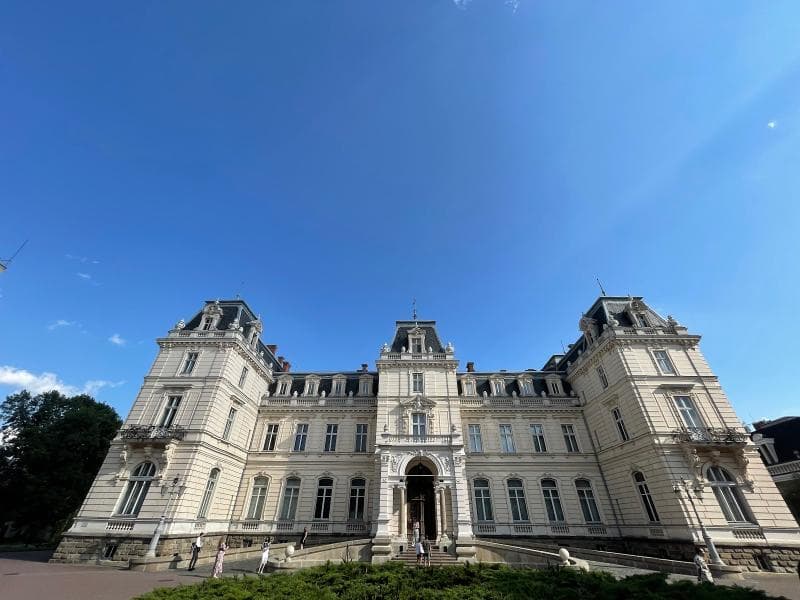
Explore the Grand Staircase of Potocki Palace in Lviv, Ukraine. Discover its Neo-Baroque elegance, rich history, and intricate Louis XVI style details.
Overview
Stepping into the Potocki Palace in Lviv, Ukraine, visitors are immediately greeted by an architectural marvel that transcends time: the Grand Staircase. This monumental feature is not merely a means to ascend floors; it is the very heart of the palace's internal composition, setting a tone of opulent grandeur that defines the entire edifice. Situated in the heart of Lviv, the palace itself is a striking example of French Classicism and Neo-Baroque design from the late 19th century. The Grand Staircase, with its intricate details and commanding presence, serves as a testament to the aristocratic elegance and meticulous craftsmanship of its era, inviting travelers to journey through history with every step.
History & Cultural Background
The Potocki Palace was commissioned in the 1880s by Count Alfred Józef Potocki, a prominent Austrian politician and Governor of Galicia, as a lavish urban residence in Lviv. The design was initially conceived by the renowned French architect Louis Duvernier (also known as Louis de Verny or d'Auvergne), who drew inspiration from the grandiose French palaces of the Louis XIV and Louis XVI eras. Local architects, including Julian Tsybulskyi (or Cybulski), adapted and oversaw the construction, which was completed around 1888-1890 for Alfred Potocki's son, Roman, as Alfred himself passed away before its completion. The Potocki family, one of the wealthiest and most influential aristocratic dynasties of the Polish-Lithuanian Commonwealth, spared no expense in creating a residence befitting their status, making it the grandest nobleman's palace in Lviv. The palace quickly became a central hub for Lviv's high society, hosting extravagant balls, receptions, and significant diplomatic meetings, with its interiors meticulously designed to impress.
What Makes It Special
The Grand Staircase is undeniably the focal point of the Potocki Palace's interior, captivating all who behold its splendor. It is renowned for its monumental scale and the exquisitely ornate wrought-iron railing that gracefully accompanies its ascent. This central element of the palace's design embodies the luxurious Louis XVI style, characterized by sophisticated elegance and intricate detailing. Crafted from the finest materials, the staircase features elements of marble, gilded stucco, and rich woods that were used throughout the palace's state rooms. Every curve of the balustrade and every decorative flourish reflects an unparalleled level of craftsmanship and artistic taste. Moving upwards, the staircase connects the ground floor, which often housed staff and service areas, to the opulent reception halls on the first floor, including the Mirror Hall, the Red Drawing Room, the Blue Drawing Room, and the Cabinet of the Ordinat. These spaces, with their unique moldings, authentic fireplaces, and exquisite wall paintings, were integral to the palace's social functions, and the staircase served as a grand prelude to them.
Stories, Fun Facts & Local Details
The history of the Grand Staircase, much like the palace itself, is intertwined with the changing fortunes of Lviv. After the Potocki family left Lviv following the Soviet takeover, the palace served various purposes, including research institutes. Notably, from 1972, it became a Palace of Celebrations, often functioning as a Wedding Palace. This period, surprisingly, played a crucial role in the preservation of its lavish interiors, including the Grand Staircase, as timely restoration efforts were undertaken to maintain its grandeur for special occasions. Imagine countless couples beginning their married lives by descending this magnificent staircase, a symbol of enduring beauty. Today, the palace is a branch of the Lviv National Art Gallery, housing the Museum of European Art. This means visitors can not only admire the staircase's beauty but also explore collections of European paintings from the 14th to 18th centuries in the very rooms it leads to, bridging the gap between historical architecture and fine art. The palace and its interiors have even served as backdrops for various films, adding a cinematic touch to its rich history.
Visitor Perspective
To truly appreciate the Grand Staircase, one must experience it firsthand. As you approach, the scale and intricate details of the Neo-Baroque design unfold before you. Walking up the wide, sweeping steps, one can almost hear the echoes of past balls and feel the aristocratic splendor that once filled these halls. The polished surfaces, the gilded accents, and the detailed wrought-iron work beckon a slow ascent, encouraging visitors to pause and absorb the artistry. From the landing, the perspective offers stunning views of the elaborate interior architecture and leads directly into the exhibition halls of the European Art Museum, where masterpieces await. It's a journey not just through floors, but through centuries of art, history, and social elegance, making the Grand Staircase an unforgettable highlight of any visit to the Potocki Palace.
Coordinates: 24.02694444, 49.83805556
View on Google Maps💬 How Travelers Describe This Place
Based on community votes
Interesting
958Beautiful
743Unique
719Photogenic
382Must See
176
Traveler Stories
Discover memorable experiences shared by travelers who have visited this place.
No traveler stories yet.
Be the first traveler to share what made this place memorable.

Tour
By
Spot
Discover amazing places around the world. Your journey starts here.
Explore
© 2026 TourBySpot. All rights reserved.