Mirror Room
Lviv, Ukraine
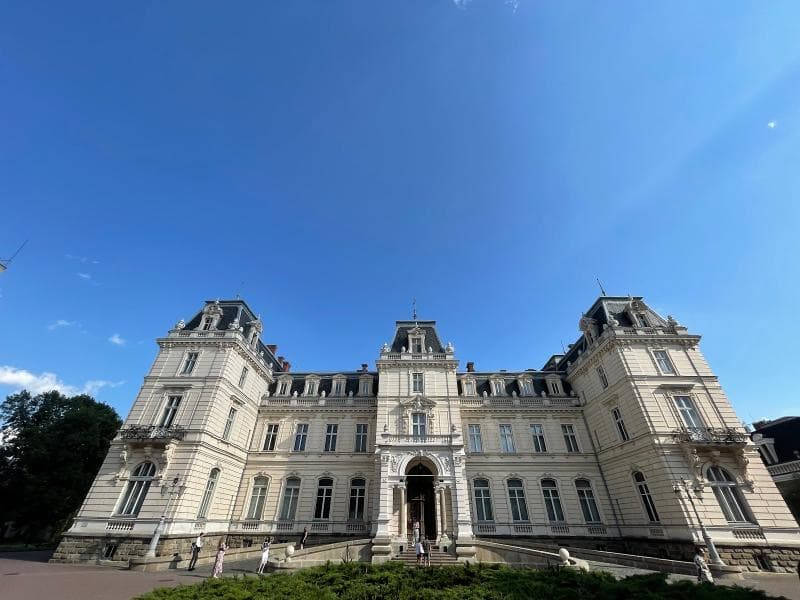
Discover the opulent Mirror Room in Potocki Palace, Lviv, Ukraine. Explore its history, stunning French Classicism architecture, and cultural significance.
Overview
Nestled within the majestic Potocki Palace in Lviv, Ukraine, the Mirror Room, also known as the Mirror Hall or Ballroom, stands as a breathtaking testament to aristocratic grandeur and refined taste. This opulent space, a highlight of the palace's ground floor, was originally conceived for lavish social gatherings, grand balls, and diplomatic receptions. Today, as part of the Lviv National Art Gallery, it continues to enchant visitors with its dazzling reflections and intricate artistry, offering a glimpse into the sophisticated world of the late 19th-century European elite.
The Potocki Palace itself is a stunning example of French Classicism and Neo-Baroque architecture, reminiscent of the grand residences of King Louis XIV, and is considered one of Lviv's most beautiful and significant architectural monuments. The Mirror Room perfectly encapsulates this aesthetic, with its lavish decorations and an atmosphere designed to impress and delight.
History & Cultural Background
The Potocki Palace was constructed between 1880 and 1890 for Count Alfred Józef Potocki, a prominent Polish aristocrat, politician, and former Minister-President of Austria. He envisioned a grand urban residence suitable for his family's influential status. The design, initially by French architect Louis Dauvergne, was adapted and implemented by local masters Julian Cybulski and Ludwik Baldwin-Ramult, resulting in a palace that evokes the splendor of French castles.
The Mirror Room, along with other state rooms like the Red and Blue Drawing Rooms, served as the epicenter of the palace's social life. These halls hosted Lviv's high society, providing a vibrant backdrop for balls, banquets, and political meetings. The Potocki family's love for French architecture and art is clearly reflected in the room's design, creating a 'touch of Versailles' in the heart of Lviv.
Following the Soviet era, the palace underwent several transformations. Notably, from 1972, some of its rooms, including the Mirror Hall, were repurposed as the City Palace of Celebrations, where countless marriage registrations took place. This unexpected role, while far from its original aristocratic function, inadvertently contributed to the preservation of its magnificent interiors through timely restoration efforts.
What Makes It Special
The Mirror Room's distinctive charm lies in its masterful blend of architectural elegance and decorative opulence. It is characterized by its abundant use of mirrors, which not only enhance the room's grandeur but also create an illusion of expansive space and shimmering light. These mirrors are often set in openwork bronze frames, complemented by gilded stucco work.
The walls, sometimes described as golden-ochre and glittering like marble, are adorned with elaborate stucco, often utilizing the 'scagliola' technique popular in Lviv since the 17th century to imitate natural stone. White pilasters divide the walls, contributing to its designation as the 'White Hall' in some descriptions. The room boasts authentic parquet flooring made from valuable woods, although some sources mention it awaiting restoration, and features exquisite marble fireplaces, frequently embellished with gilded bronze. The gilded stucco on the ceilings and the overall intricate detailing evoke the refined atmosphere of the Louis XVI era.
The integration of musical instrument imagery within its gilded stucco further highlights its original function as a ballroom. While the authentic furniture and paintings of the Potocki family were removed, the Lviv National Art Gallery has carefully curated exhibits to recreate the authentic atmosphere, allowing visitors to experience the splendor of its past.
Stories, Fun Facts & Local Details
Imagine the rustle of ballgowns and the strains of a waltz echoing through this very room. The Mirror Room was where Galicia's 'glitterati' gathered, engaging in social rituals that helped 'ward off the depressing effects of dark, cold Eastern European winters'. It was a place of status, glamour, and power, reflecting the immense wealth of the Potocki family, who were considered among the richest aristocrats in Austria-Hungary, second only to the Habsburgs in influence.
One intriguing local detail is the palace's adaptation during the Soviet period. For decades, the Mirror Room, once reserved for the elite, became a public venue for wedding ceremonies. This 'unintended aesthetic symmetry,' as some describe it, saw countless Lviv couples exchanging vows in a hall designed for celebration, preserving its festive air even under a vastly different political system.
Another fascinating aspect is the palace's miraculous preservation during World War II, unlike many other historical buildings in Ukraine. The main battle for Lviv took place in the southern suburbs, sparing the central architectural gems, including this magnificent palace. This stroke of fortune allows us to still admire its beauty today.
Visitor Perspective
Stepping into the Mirror Room today is an immersive journey back in time. Visitors are immediately struck by the dazzling play of light and reflection, creating a sense of boundless space and theatricality. The intricate details of the stucco, the warmth of the marble fireplaces, and the sheen of the gilded elements invite close inspection, revealing the exceptional craftsmanship of the late 19th century.
As you wander through this magnificent hall, it's easy to visualize the grand balls and important gatherings that once animated its space. The Mirror Room, as a centerpiece of the Lviv National Art Gallery, now also serves as an elegant backdrop for displaying European art from the 14th to 18th centuries, merging historical grandeur with cultural enrichment. It's a key highlight for anyone seeking to understand Lviv's aristocratic past and its enduring cultural legacy.
Coordinates: 24.0265, 49.83821
View on Google Maps💬 How Travelers Describe This Place
Based on community votes
Unique
931Must See
692Photogenic
655Beautiful
491Interesting
266
Traveler Stories
Discover memorable experiences shared by travelers who have visited this place.
No traveler stories yet.
Be the first traveler to share what made this place memorable.

Tour
By
Spot
Discover amazing places around the world. Your journey starts here.
Explore
© 2026 TourBySpot. All rights reserved.