Art Gallery Halls
Lviv, Ukraine
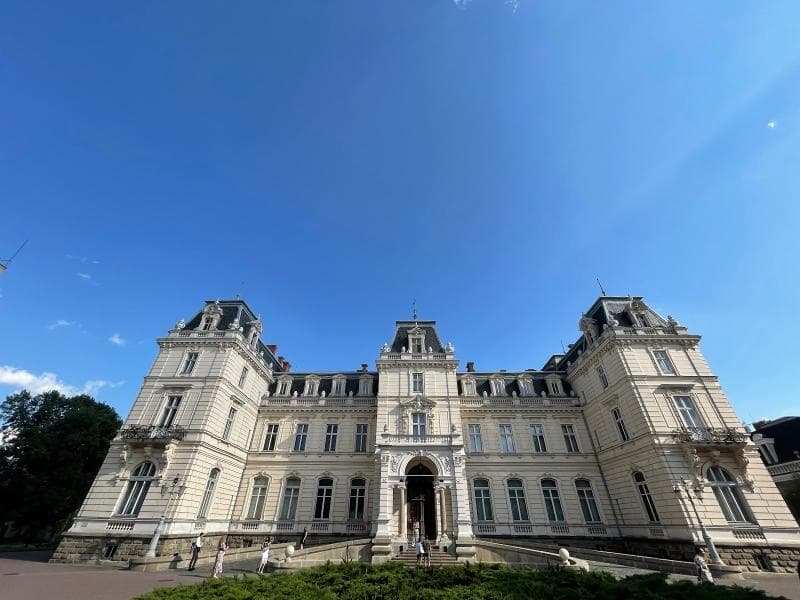
Explore the Art Gallery Halls at Potocki Palace in Lviv, Ukraine, home to a rich collection of 14th-18th century European art and stunning historical interiors.
Overview
Nestled within the architectural grandeur of Potocki Palace in Lviv, Ukraine, the Art Gallery Halls offer a captivating journey through European artistic heritage. These halls serve as a vital branch of the Borys Voznytskyi Lviv National Art Gallery, specifically housing the Museum of European Art, spanning the 14th to 18th centuries. The palace itself, a stunning example of late 19th-century French Classicism, provides a magnificent backdrop to an exceptional collection of paintings, sculptures, and decorative arts. It's a place where the opulence of aristocratic life seamlessly intertwines with the profound beauty of fine art, inviting visitors to step into a bygone era of cultural sophistication.
Initially conceived as a lavish private residence, the palace has been thoughtfully transformed, with its ground floor halls meticulously recreated to evoke the original luxurious interiors, while the upper floor showcases the gallery's rich collection. This dual presentation allows for an immersive experience, blending historical context with artistic appreciation.
History & Cultural Background
The story of the Potocki Palace begins in the late 19th century, constructed between 1880 and 1890 as the urban seat for Alfred Józef Potocki, a prominent Austrian politician and former Minister-President. Inspired by the grand residences of King Louis XIV, the palace was designed by the acclaimed French architect Louis Dauvergne (also known as Louis de Verny), with adaptations by local architects Julian Cybulski and Ludwik Baldwin-Ramułt. No expense was spared in making it the most magnificent nobleman's residence in Lviv, characterized by its H-shaped plan, elaborate stucco, Ionic columns, and balustrades.
Following the Potocki family's departure after the Soviet era, the palace underwent several transformations, serving various purposes from research institutes to a City Palace of Celebrations (registry office) in the 1970s. A significant turning point came in the early 2000s when the palace was handed over to the Lviv Art Gallery, leading to the grand opening of the Museum of European Art in 2007. This move firmly established the palace as a premier cultural institution, dedicated to preserving and exhibiting one of Ukraine's richest collections of European art.
What Makes It Special
What truly sets the Art Gallery Halls apart is their unique presentation. The ground floor is dedicated to recreating the authentic atmosphere of the Potocki era. Visitors can explore splendid rooms such as the Red, Mirror, and Blue Halls, as well as the Count's office. While the original furniture and many paintings were taken by the Potocki family, these interiors have been meticulously furnished with exquisite pieces and artworks from the gallery's extensive collections, allowing one to envision the aristocratic lifestyle that once thrived here. Features like marble fireplaces and an original oak parquet floor in one room enhance this historical immersion.
Ascending to the second floor reveals the heart of the art collection: eleven halls displaying European paintings from the 14th to the 18th centuries. This impressive collection, one of the finest in Eastern Europe, is organized both geographically and chronologically, featuring masterpieces by renowned artists. Visitors can marvel at works by Italian masters like Titian and Jacopo Zucchi, the intriguing Portrait of a Young Patrician by Sofonisba Anguissola, and significant pieces by Georges de La Tour, Jose de Ribera, Gerard van Honthorst, and Francois Gerard, among many others from Ukrainian, Polish, Czech, Hungarian, Austrian, German, French, and Spanish schools.
Stories, Fun Facts & Local Details
Beyond its artistic and architectural splendor, the Potocki Palace holds a fascinating tapestry of stories. It has served as a dramatic backdrop for numerous films, including 'D'Artagnan and Three Musketeers', lending its authentic grandeur to historical narratives on screen.
An intriguing local detail involves a failed Soviet-era project. A plan to build a Lviv subway had its first station slated near the palace. However, construction was halted when the soil began to sink, threatening the stability of the area, and the ambitious metro project was abandoned. Today, in a more charming vein, the palace's backyard features a park of miniatures, showcasing reduced copies of fortresses from various parts of Ukraine, offering a delightful contrast to the palace's European elegance.
The Potocki family itself contributed significantly to European culture. Jan Nepomucen Potocki was the author of the famous novel 'The Manuscript Found in Saragossa', and Mikolaj Bazyli Potocki was a major art patron, whose influence is still seen in unique art collections. This rich legacy underscores the cultural weight carried by the palace and its collections.
Visitor Perspective
For the curious traveler, visiting the Art Gallery Halls within Potocki Palace is an unforgettable experience. You'll first be struck by the palace's majestic exterior, often hailed as Lviv's most luxurious building. Inside, the meticulously restored state rooms transport you to the opulent world of 19th-century aristocracy. Imagining grand balls in the White Hall or private consultations in the Count's office brings the history to life.
Then, the extensive European art collection awaits, offering hours of contemplation and discovery. Whether you are an art aficionado or simply appreciate beauty, the opportunity to see works by old masters in such an atmospheric setting is truly special. The palace's central location on Kopernyka Street makes it easily accessible, just a short walk from other historical landmarks in Lviv. It's an essential stop for anyone seeking to connect with Ukraine's rich history and its deep cultural ties to European art.
Coordinates: 24.026825, 49.837882
View on Google Maps💬 How Travelers Describe This Place
Based on community votes
Must See
958Unique
728Interesting
481Beautiful
382Photogenic
183
Traveler Stories
Discover memorable experiences shared by travelers who have visited this place.
No traveler stories yet.
Be the first traveler to share what made this place memorable.

Tour
By
Spot
Discover amazing places around the world. Your journey starts here.
Explore
© 2026 TourBySpot. All rights reserved.