Parthenon
Athens, Greece
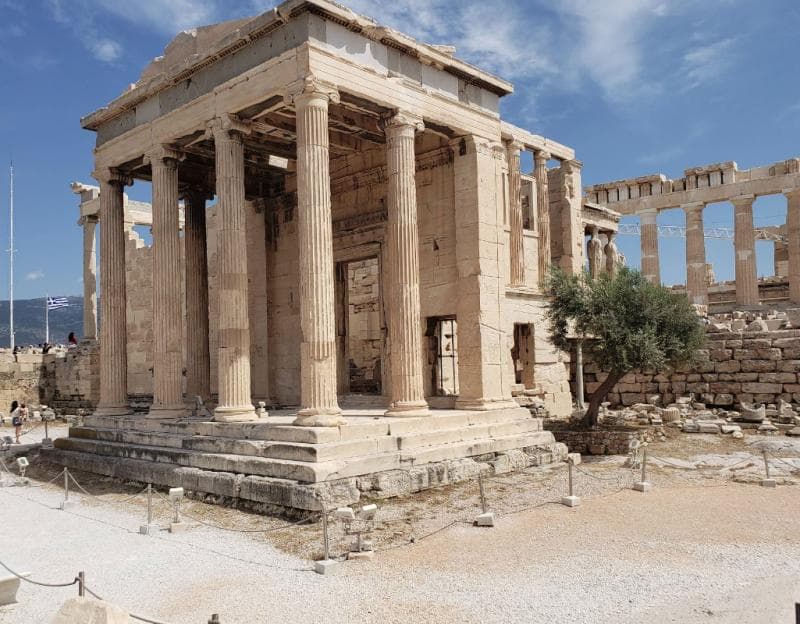
Explore the Parthenon, an iconic ancient Greek temple in Athens, Greece. Discover its rich history, unique architecture, and cultural significance.
Overview
Perched majestically atop the Acropolis hill, the Parthenon in Athens, Greece, stands as an enduring symbol of ancient Greek civilization, democracy, and Western culture. This iconic Doric temple, dedicated to the goddess Athena, captivates visitors with its harmonious proportions and profound historical significance. Visible from many parts of modern Athens, its striking white Pentelic marble structure glows differently throughout the day, offering breathtaking views from sunrise to sunset. The Parthenon is not merely a ruin; it is a profound architectural and artistic achievement that continues to inspire awe and reflection across the globe.
History & Cultural Background
Construction of the Parthenon began in 447 BC, during the height of the Athenian Empire and the golden age of Pericles, and was largely completed by 438 BC, with decorations continuing until 432 BC. It replaced an earlier temple destroyed during the Persian Wars and served as a powerful testament to the Greek victory over the Persian invaders. Dedicated to Athena Parthenos, the virgin goddess and patroness of Athens, the temple also functioned as the city's treasury and, for a time, the treasury of the Delian League. Over its long history, the Parthenon has seen many transformations; it was converted into a Christian church in the 6th century AD and later into a mosque after the Ottoman conquest in the 15th century. Tragically, in 1687, during a Venetian bombardment, an Ottoman ammunition dump inside the Parthenon ignited, causing severe damage. Extensive restoration efforts have been ongoing since 1975, carefully preserving this monumental site.
What Makes It Special
The Parthenon is considered the zenith of the Doric order of classical Greek architecture, renowned for its architectural innovations and optical refinements. Designed by architects Iktinos and Callicrates, with sculptural work overseen by Phidias, its seemingly perfect straight lines and right angles are, in fact, subtle curves and inclinations that compensate for optical illusions. For instance, the columns exhibit 'entasis,' a slight swelling in the middle and a subtle inward lean, making them appear perfectly straight and weight-bearing from a distance. The base of the temple also curves upwards slightly, preventing it from appearing to sag in the middle. These sophisticated techniques give the Parthenon a sense of lightness and dynamism, a remarkable feat for its time. Its decorative sculptures, including the metopes, frieze, and pedimental sculptures, are regarded as some of the high points of Greek art, depicting mythological battles and the Panathenaic procession.
Stories, Fun Facts & Local Details
The Parthenon's original structure housed a colossal chryselephantine (gold and ivory) statue of Athena Parthenos, a masterpiece by Phidias that stood almost 12 meters (39 feet) tall. The gold alone weighed over a ton. While this statue is long lost, its descriptions highlight the immense wealth and artistic skill of ancient Athens. A fun fact is that the name 'Parthenon' itself is believed to derive from one of the temple's chambers, the 'parthenon,' which translates to 'room of the virgin maidens' and refers to the goddess Athena. The sculptures that once adorned the Parthenon, particularly the Elgin Marbles, are a subject of ongoing international debate, with many housed in the British Museum and efforts for their reunification at the Acropolis Museum gaining traction. The Acropolis Museum, located at the foot of the Acropolis, offers a stunning setting to view many of the surviving artifacts from the site, including a dedicated Parthenon Gallery that replicates the dimensions of the temple's cella to display its sculptures.
Visitor Perspective
Visiting the Parthenon is an immersive journey through time. To fully appreciate its grandeur and the surrounding Acropolis, allow at least one to two hours, though a more comprehensive exploration might take two to three hours. The best times to visit are during the early morning or late afternoon to avoid the largest crowds and experience the softer light on the marble. Access to the Parthenon is part of the Acropolis ticket, as you cannot enter the temple itself but walk around its exterior. The path up to the Acropolis is on foot, with convenient access from Metro stations like Acropoli (Line 2) or Monastiraki. Guided tours or audio guides are highly recommended to understand the intricate history and architectural nuances of the monument, helping visitors distinguish original elements from modern restorations.
Coordinates: 23.7266, 37.9715
View on Google Maps💬 How Travelers Describe This Place
Based on community votes
Must See
996Unique
673Photogenic
186Beautiful
143Interesting
80
Traveler Stories
Discover memorable experiences shared by travelers who have visited this place.
No traveler stories yet.
Be the first traveler to share what made this place memorable.
Things to see at Parthenon



Tour
By
Spot
Discover amazing places around the world. Your journey starts here.
Explore
© 2026 TourBySpot. All rights reserved.