East Pediment
Athens, Greece
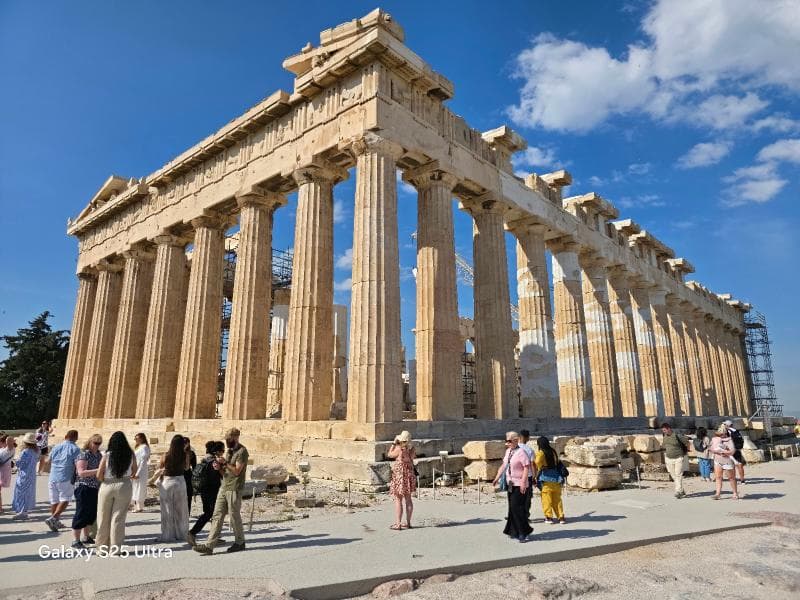
Explore the East Pediment of the Parthenon in Athens, Greece, depicting Athena's birth. Discover its history, artistry, and cultural significance.
Overview
The East Pediment of the Parthenon, located in Athens, Greece, is a magnificent and historically significant sculptural program that once adorned the eastern facade of the ancient temple. This triangular gable, positioned above the main entrance, depicted the awe-inspiring moment of the goddess Athena's birth. While much of its original glory has been lost to time and various historical events, the remaining fragments and scholarly reconstructions offer a profound glimpse into the artistic and religious fervor of classical Athens. It stands as a testament to the skill of ancient Greek sculptors, particularly those working under the master Pheidias, who transformed Pentelic marble into narratives of divine grandeur. Today, visitors can appreciate the surviving pieces, primarily housed in the British Museum and the Acropolis Museum, and reflect on the enduring stories they tell.
History & Cultural Background
Constructed between 447 and 432 BCE, the Parthenon itself was dedicated to Athena Parthenos, the patron goddess of Athens, embodying the city's power, wealth, and cultural zenith. The sculptural program of the Parthenon, including its pediments, metopes, and frieze, served as a grand visual narrative, celebrating Athenian identity and its mythical origins. The East Pediment was specifically designed to tell the foundational story of Athena's birth, emphasizing her divine legitimacy and cosmic importance. This scene was a crucial element in the temple's overall ideological message, asserting Athena's rightful place in the pantheon and, by extension, her deep connection to Athens.
The creation of these monumental sculptures, carved from lustrous Pentelic marble, involved multiple skilled artists under the probable direction of the legendary sculptor Pheidias. The work was meticulously executed, with figures often carved perfectly even on their unseen sides, showcasing the artisans' dedication to perfection. Over centuries, the Parthenon endured significant damage. Its conversion into a Christian church in the 6th or 7th century CE saw the removal of some central sculptures, likely to accommodate an apse. Later, a Venetian bombardment in 1687, when the temple was used as an Ottoman munitions dump, caused catastrophic destruction. In the early 19th century, many of the surviving pedimental sculptures were removed by Lord Elgin and transported to London, where they now reside in the British Museum.
What Makes It Special
The East Pediment is unique for its ambitious depiction of a pivotal moment in Greek mythology: the birth of Athena. This wasn't a conventional birth; Athena emerged fully grown and armed from the head of Zeus, a powerful symbol of wisdom and warfare arriving instantly and completely. The triangular shape of the pediment was ingeniously used to frame this 'divine burst' event, with Zeus likely at the center and other Olympian gods arranged in a cascading composition, reacting to the miraculous event. The corners of the pediment featured the chariots of Helios (the Sun god) rising from the sea on one side and Selene (the Moon goddess) sinking into the ocean on the other, symbolically marking the dawn when Athena's birth took place.
Despite its fragmented state, the artistry of the East Pediment remains breathtaking. The sculptures are celebrated for their naturalistic rendering of the human form, combined with exquisitely detailed and harmonious draperies that convey movement and emotion. Figures like the reclining Dionysos, the mother-daughter pairing often identified as Demeter and Persephone, and the powerful 'Horse of Selene' are masterworks of classical sculpture, revealing an unparalleled understanding of anatomy and expression. The sheer scale of the statues—some oversized—further amplified the grandeur of the divine narrative, making the pediment a powerful visual statement visible from afar.
Stories, Fun Facts & Local Details
One fascinating aspect of the East Pediment is how ancient chroniclers, like the travel writer Pausanias, helped us understand its subject matter, even after much of the sculpture was damaged. His descriptions were crucial in identifying the scene as Athena's birth. Imagine the Parthenon in its prime: the marble sculptures of the pediment would not have been stark white. While the exact vibrancy is debated, it is believed they were originally painted with vivid colors, bringing the divine drama to life against the Athenian sky. The figures were often accompanied by metal accessories, such as bracelets or fibulae, though these are now lost.
Today, visitors to Athens can explore the Acropolis Museum, which houses many original fragments and meticulous replicas from the Parthenon's East Pediment, offering a compelling interpretive experience. For instance, you can see individual pieces like the hand of Helios or the torso of a god, bringing you closer to the monumental work of Pheidias' workshop. The museum's careful presentation allows for an understanding of the pediment's original composition. Meanwhile, the British Museum in London presents other significant portions, including some of the most intact figures, which continue to spark global discussions about their provenance.
Visitor Perspective
Approaching the Parthenon on the Acropolis, the East Pediment faces the Propylaea, the ceremonial gateway. While the sculptures themselves are now largely absent from the temple's facade, understanding their original placement and narrative helps a curious traveler appreciate the temple's full impact. Stand before the eastern end and imagine the triangular space filled with fifty larger-than-life figures, each carved with exquisite detail, depicting the dramatic birth of Athens' patron goddess. The rising sun would have illuminated the scene, making Helios's horses appear to gallop towards the viewer as Selene's steeds receded, underscoring the dawn setting of the myth.
A visit to the Acropolis Museum is essential to fully grasp the East Pediment's artistic and historical significance. Here, you can examine the surviving sculptures up close, marveling at the craftsmanship and the emotional depth conveyed through the marble. The museum's reconstructions and detailed explanations help piece together the lost narrative, allowing you to connect with the ancient Athenian worldview. Witnessing the fragments of Demeter and Persephone, or the lone head of Dionysos—one of the few to survive largely intact—offers a tangible link to a civilization that perfected storytelling through stone. It's an emotional journey that transcends mere observation, inviting contemplation on art, mythology, and the relentless march of history.
Coordinates: 23.7266, 37.9715
View on Google Maps💬 How Travelers Describe This Place
Based on community votes
Unique
445Interesting
416Must See
289Beautiful
141Photogenic
33
Traveler Stories
Discover memorable experiences shared by travelers who have visited this place.
No traveler stories yet.
Be the first traveler to share what made this place memorable.

Tour
By
Spot
Discover amazing places around the world. Your journey starts here.
Explore
© 2026 TourBySpot. All rights reserved.