Inner Chamber
Athens, Greece
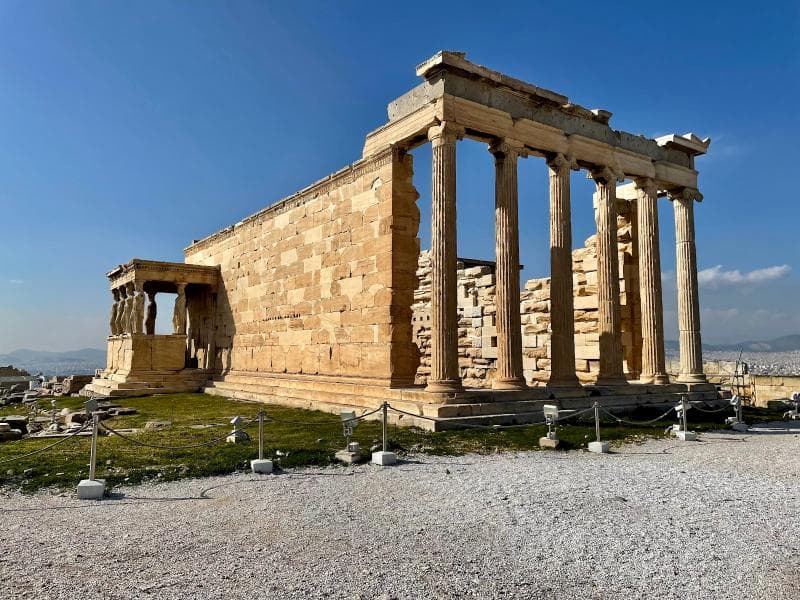
Explore the Inner Chamber of the Parthenon in Athens, Greece. Discover the historical significance of the cella and opisthodomos, home to Athena's statue and ancient treasures.
Overview
Within the majestic Parthenon, perched atop the Acropolis in Athens, Greece, lies a series of enclosed spaces collectively known as the Inner Chamber. Far from being a simple, unified room, this revered core of the temple comprised two principal areas: the grand cella, also referred to as the naos, and the rear chamber known as the opisthodomos. These inner sanctums were not merely architectural elements; they were the functional and spiritual heart of the Parthenon, serving as the dwelling place for Athens' patron goddess, Athena, and as a formidable treasury for the city-state's wealth. The very essence of ancient Athenian power and religious devotion was encapsulated within these stone walls, invisible to most, yet central to the city's identity.
History & Cultural Background
The construction of the Parthenon, including its intricate Inner Chamber, began in 447 BC and was largely completed by 432 BC, a monumental undertaking overseen by the statesman Pericles. It was built on the foundations of an older, unfinished temple that had been destroyed during the Persian invasions, symbolizing a rebirth and triumph for Athens.
The primary purpose of the eastern and larger room, the cella (naos), was to house the awe-inspiring chryselephantine statue of Athena Parthenos. Crafted from gold and ivory by the renowned sculptor Phidias, this colossal effigy stood nearly 40 feet (approximately 12 meters) tall, a breathtaking sight intended for the goddess herself and a select few. The statue was so significant that the temple's entire design was carefully planned to accommodate its massive scale. A water basin placed before the statue helped maintain the necessary humidity for the preservation of its precious ivory components.
To the west of the cella was the opisthodomos, a separate, secure chamber that functioned as the public treasury of Athens and, later, of the Delian League. This space stored valuable offerings, tribute from allied cities, and other precious items, underscoring the Parthenon's dual role as both a religious sanctuary and a symbol of Athenian financial and political might. Interestingly, it was this rear chamber, traditionally known as the 'parthenon' or 'chamber of the virgins,' that ultimately gave the entire temple its famous name.
Unlike modern places of worship, ancient Greek temples, including the Parthenon, were not designed for large congregations to enter and gather inside. Only priests and important officials typically had access to the Inner Chamber and the statue of Athena. For the average Athenian citizen, the grandeur of the Parthenon was primarily experienced from its exterior, or through glimpses into its open doors during special religious festivals.
What Makes It Special
The architectural genius of the Inner Chamber lies not just in its scale but in its meticulous design. The cella was internally divided by a two-tiered colonnade of Doric columns arranged in a 'Π' shape, which not only provided structural support for the roof but also elegantly framed the colossal statue of Athena. This internal arrangement created a sense of depth and perspective, drawing the eye towards the divine image. The opisthodomos, though smaller, was also architecturally distinct, believed to have featured four graceful Ionic columns supporting its ceiling, a subtle blend of architectural orders within a predominantly Doric temple.
Beyond its structural innovation, the Inner Chamber, and indeed the entire Parthenon, was originally adorned with rich polychromic painted detailing. While time has faded most of these vibrant colors, their presence would have enhanced the visual splendor, making the interior a vivid spectacle. The continuous frieze, depicting the Panathenaic Procession, wrapped around the exterior walls of the cella, providing a narrative of Athenian civic pride and religious devotion.
The Parthenon itself is famed for its subtle 'optical refinements' – ingenious architectural adjustments, such as imperceptibly curved lines and slightly tilted columns, designed to correct visual distortions and ensure the building appeared perfectly harmonious and rectilinear to the human eye. These refinements made the Parthenon a dynamic and seemingly living structure, even from its innermost parts.
Stories, Fun Facts & Local Details
One of the most captivating details about the Inner Chamber is the very origin of the Parthenon's name. It was the western room, the opisthodomos, often referred to as the 'parthenon' (meaning 'chamber of the virgins' or 'young women’s quarters'), that gave its name to the entire temple. This highlights the room's significant role, perhaps as a place where the sacred peplos (robe) for Athena was stored, or where priestesses resided.
The colossal gold and ivory statue of Athena Parthenos was not merely an idol but a powerful symbol of Athenian identity, embodying the city's intellectual achievements, wisdom, and military prowess. Its presence within the cella reinforced Athens' divine favor and prestige across the ancient world. The strategic placement of a water basin in front of the statue illustrates the practical yet sacred ingenuity of the ancient Greeks, ensuring the long-term preservation of the precious materials it was made from.
The Parthenon was not built in isolation; it was the crown jewel of Pericles' ambitious building program on the Acropolis, designed to demonstrate Athens' dominance after the Persian Wars. Its lavish decoration and the wealth stored within its Inner Chamber served as a clear declaration of Athenian power.
Visitor Perspective
Today, visitors to the Acropolis can marvel at the exterior grandeur of the Parthenon, but they cannot enter its Inner Chamber. Preservation efforts mean that access to the interior of the temple is restricted, allowing visitors to walk around its perimeter and appreciate its majestic facade.
However, the spirit and details of the Inner Chamber are vividly brought to life at the nearby Acropolis Museum. The museum's Parthenon Gallery on the third floor is meticulously designed to replicate the exact dimensions and orientation of the Parthenon's original cella. Here, visitors can get an intimate understanding of the temple's internal layout and architectural details. The gallery showcases many original sculptures and architectural elements that once adorned the Parthenon, including fragments of the frieze and pedimental sculptures. Informational displays provide insights into the construction of the chryselephantine statue of Athena Parthenos, allowing for a comprehensive appreciation of what was once held within the sacred inner sanctum. This immersive experience offers a unique perspective on the profound historical and cultural significance of the Parthenon's heart.
Coordinates: 23.726652224872726, 37.97149041997733
View on Google Maps💬 How Travelers Describe This Place
Based on community votes
Must See
684Beautiful
363Photogenic
302Unique
250Interesting
88
Traveler Stories
Discover memorable experiences shared by travelers who have visited this place.
No traveler stories yet.
Be the first traveler to share what made this place memorable.

Tour
By
Spot
Discover amazing places around the world. Your journey starts here.
Explore
© 2026 TourBySpot. All rights reserved.