West Pediment
Athens, Greece
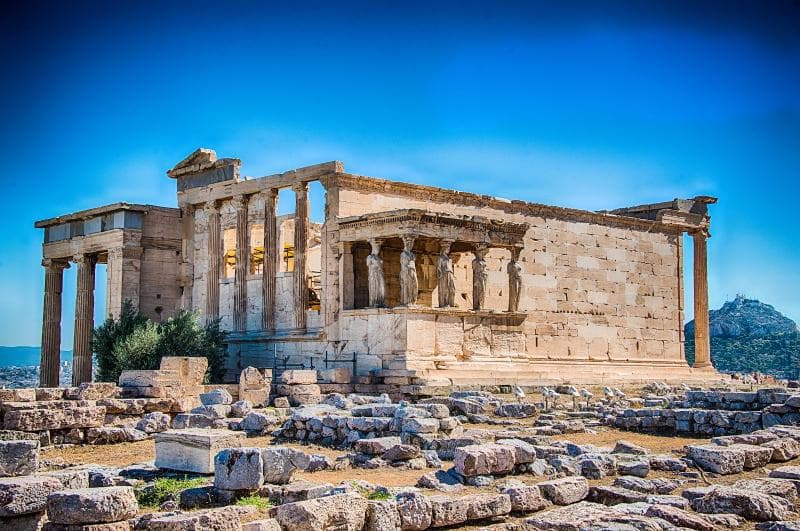
Explore the Parthenon's West Pediment in Athens, Greece, depicting the mythical contest between Athena and Poseidon for the city's patronage.
Overview
Perched majestically atop the Acropolis in Athens, Greece, the Parthenon's West Pediment stands as a remarkable testament to ancient Greek artistry and mythology. This monumental triangular sculpture adorned the western façade of the Parthenon, the side that ancient visitors approaching the sacred rock through the Propylaia would have first encountered. It is, therefore, the primary visual introduction to the temple's dedicatory narrative. Crafted from brilliant Pentelic marble, the West Pediment depicts the foundational myth of Athens: the fierce contest between the goddess Athena and the sea god Poseidon for divine patronage over the city and the wider region of Attica.
Completed around 432 BC, this elaborate sculptural group was a central element of the Parthenon's decorative program. Though time, conflict, and removal have left only fragments of its original splendor, its narrative power and artistic significance endure. Today, visitors can piece together its story through surviving pieces in the Acropolis Museum and the British Museum, as well as through detailed reconstructions and historical drawings.
History & Cultural Background
The Parthenon, dedicated to Athena, the goddess of wisdom, warfare, and crafts, was built during the zenith of the Athenian Empire in the 5th century BC. The pediments, along with the metopes and frieze, formed an integrated iconographic program celebrating Athena and the Athenian identity. The West Pediment was specifically designed to illustrate the myth of how Athena came to be the city's patron deity, firmly establishing Athens' divine origins and its special relationship with the goddess.
The creation of the pedimental sculptures, including those of the West Pediment, took place between 438/7 and 434/3 BC. The master builder and overall artistic director for the Parthenon's sculptures was likely Phidias, one of the most celebrated sculptors of ancient Greece, and the work involved many skilled artists from his workshop. Our primary ancient source for the subject matter of the Parthenon's pediments is the Greek geographer Pausanias, who briefly described the contest between Athena and Poseidon on the western side. Over centuries, the Parthenon and its sculptures suffered immense damage from various factors, including natural disasters, conversions of the temple into a Christian church and later a mosque, and military actions. A particularly devastating event was the Venetian bombardment by Francesco Morosini in 1687, which severely impacted the pediment. Further losses occurred in the early 19th century when Lord Elgin removed many of the surviving sculptures, including significant portions of the West Pediment, which are now housed in the British Museum.
What Makes It Special
The West Pediment was an artistic and engineering marvel of its time. Measuring approximately 28.8 meters in width and 3.4 meters in height, it was the largest architectural sculpture ever created in Classical Athens. This vast triangular space was filled with around fifty oversized marble statues, dynamically composed to tell a vivid story. The sculptors demonstrated extraordinary skill, meticulously carving the figures even on their reverse sides, which would have been unseen by onlookers, a testament to their dedication to perfection.
The composition was highly innovative, with the two central deities, Athena and Poseidon, positioned in a dramatic confrontation, their forms creating a powerful, symmetrical focal point. Flanking them were various Attic heroes, mythological figures, and personifications of local rivers, all contributing to the narrative and linking the divine contest directly to the Athenian landscape. The pediment's ability to transform a mythological event into a tangible, almost geographic, explanation for Athens' identity is what truly sets it apart. These sculptures are widely regarded as prime examples of the Classical style, embodying ideals of beauty, movement, and emotional expression in marble.
Stories, Fun Facts & Local Details
The central story of the West Pediment revolves around the divine competition for the patronage of Athens. According to the myth, Poseidon, the god of the sea, struck his trident upon the Acropolis rock, causing a spring of salty water to gush forth, or in some accounts, presenting a magnificent horse. Athena, in turn, struck her spear into the ground, and an olive tree, symbolizing peace, prosperity, and the lifeblood of Attic agriculture, miraculously sprouted. The mythical kings of Athens, such as Kekrops and Erechtheus, along with other local heroes, served as judges, ultimately choosing Athena's practical and beneficial gift for the city.
Among the figures depicted were Kekrops and his daughter Pandrosos, shown kneeling and observing the contest, with Kekrops often identified by his serpentine lower body, indicating his autochthonous origin. River gods, such as Ilissos and Kephissos, reclined at the outer corners of the pediment, further grounding the divine narrative within the Attic landscape. Many of the original statues, or significant fragments, are now divided between the British Museum in London (including the river god Ilissos and parts of Poseidon and Iris) and the Acropolis Museum in Athens (housing Athena's head, parts of Poseidon's torso, and the Kekrops and Pandrosos group). Interestingly, recent restoration efforts have sought to reinstate the Parthenon's west pediment closer to its 1800 appearance, before the controversial removal of sculptures by Lord Elgin, marking a significant milestone in the monument's preservation.
Visitor Perspective
While the Parthenon itself on the Acropolis still bears the impressive triangular recess where the West Pediment once stood, much of its sculptural grandeur can now be appreciated indoors. The Acropolis Museum in Athens offers visitors a unique opportunity to view a remarkable reconstruction of the West Pediment, where original fragments from the site are integrated with plaster casts and scholarly interpretations. This allows a clearer understanding of the pediment's original composition and narrative flow.
Walking through the Acropolis Museum's Parthenon Gallery, you can examine the intricate details of the surviving pieces, such as the powerful head of Athena, the torso of Poseidon, or the engaging group of Kekrops and Pandrosos. Experiencing these sculptures, even in their fragmented state or as part of a thoughtful reconstruction, provides a profound connection to the rich mythology and artistic achievements of ancient Athens. It is an opportunity to delve into the very origins of a city named after its chosen goddess, gaining a deeper appreciation for the cultural and historical significance that continues to resonate today.
Coordinates: 23.7225, 37.9703
View on Google Maps💬 How Travelers Describe This Place
Based on community votes
Photogenic
996Must See
953Beautiful
658Interesting
585Unique
69
Traveler Stories
Discover memorable experiences shared by travelers who have visited this place.
No traveler stories yet.
Be the first traveler to share what made this place memorable.

Tour
By
Spot
Discover amazing places around the world. Your journey starts here.
Explore
© 2026 TourBySpot. All rights reserved.