Metopes
Athens, Greece
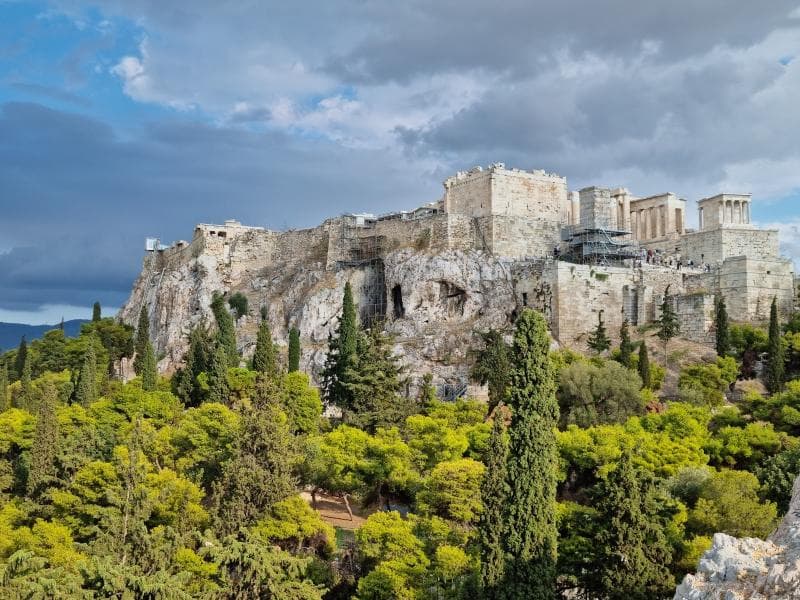
Explore the Parthenon Metopes in Athens, Greece – ancient sculptures depicting mythical battles and the triumph of civilization over chaos.
Overview
High above the vibrant city of Athens, nestled within the majestic Parthenon on the Acropolis, lies a series of carved marble panels known as the Metopes. These intricate sculptures, crafted from brilliant Pentelic marble, are not merely decorative elements but profound artistic statements from ancient Greece. Originally, there were 92 metopes, square relief panels strategically placed above the columns of the Parthenon's exterior peristyle, forming a key part of the Doric frieze. Unlike most Greek temples, the Parthenon stands out as the only one to have all its metopes adorned with detailed sculptures.
Today, many of these ancient masterpieces bear the marks of time, conflict, and the elements, yet their power to tell stories of myth and human struggle remains undiminished. While some still cling to the Parthenon itself, many of the best-preserved pieces are housed in the Acropolis Museum in Athens, offering a close-up view of their remarkable artistry. Others, however, reside in international collections, such as the British Museum in London and the Louvre in Paris, sparking ongoing conversations about their reunification.
History & Cultural Background
The Metopes were created during the zenith of Athenian power, between 447 or 446 BC and 438 BC, with the master sculptor Phidias overseeing their creation. Their placement on the exterior of the Parthenon meant they were among the first architectural decorations to be installed on the building. Each metope was carved in high relief, a technique where figures project significantly from the background, sometimes with parts almost entirely freestanding, giving them a dynamic, almost three-dimensional quality.
These sculptures were not just beautiful; they served a vital cultural purpose, embodying the Athenian worldview. The overarching theme across all metopes is the triumph of order over chaos, civilization over barbarism. This narrative was a powerful allegory for Athens' own recent victories, particularly against the Persian Empire during the Greco-Persian Wars. The destruction of many metopes began in the 6th and 7th centuries AD, when the Parthenon was converted into a Christian church, leading to the systematic defacement of 'pagan' imagery. Further damage occurred in 1687 when a Venetian bomb ignited a Turkish gunpowder magazine stored within the Parthenon, causing extensive devastation.
What Makes It Special
What truly sets the Parthenon Metopes apart is their coherent narrative spread across the temple's four sides, each dedicated to a distinct mythical battle, yet unified by a profound message. On the east side, you find the Gigantomachy, the epic clash between the Olympian gods and the Giants, symbolizing the divine establishment of cosmic order. The west side features the Amazonomachy, depicting the Greeks' struggle against the Amazons, often interpreted as a metaphor for the Persian Wars and Athens' defense against external threats.
The north side narrates scenes from the Trojan War, showcasing the Athenians' bravery and mythological heritage. Perhaps the most celebrated are the south metopes, which illustrate the dramatic Centauromachy – the battle between the Lapiths and the Centaurs. This vivid struggle, often stemming from the Centaurs' excessive drinking and attempted abduction of Lapith women at a wedding, represents the triumph of self-control and reason over primal savagery. Each side presents a 'combat narrative,' compressing intense mythical violence into powerful, single-frame scenes designed for immediate visual impact.
Stories, Fun Facts & Local Details
Imagine these metopes in their original glory: brightly painted, with metal embellishments like weapons, gleaming under the Attic sun. The precision in rendering muscles, drapery, and emotional intensity is astonishing, even in their fragmented state. One particularly poignant example involves a metope from the south side depicting a Centaur grappling with a Lapith. Parts of this very scene are scattered across different museums: the main body might be in London, a Lapith's head in Paris, and a Centaur's head in Athens, highlighting the ongoing global discussion about reuniting the Parthenon sculptures.
The metopes were designed to be viewed from a distance, high on the temple, making their clear composition and strong silhouettes crucial. This deliberate design makes them akin to 'cinematic frames,' each telling a concise yet powerful story that contributes to the larger narrative of Athenian ideals. The Acropolis Museum, a modern marvel in itself, offers visitors a unique perspective, allowing them to view the surviving metopes alongside other Parthenon fragments in a purpose-built gallery that mirrors the temple's exact dimensions, giving a sense of their original placement and scale.
Visitor Perspective
As you approach the Parthenon today, you'll see a magnificent structure, a testament to ancient Greek architectural prowess. While the metopes still in place on the building are often weathered and damaged, modern conservation efforts have seen many originals moved to the climate-controlled environment of the Acropolis Museum. Here, in carefully curated displays, you can truly appreciate the intricate details and emotional power of these sculptures. Standing before them, you connect with the ancient Athenians' beliefs, their struggles, and their triumphs, all carved into stone thousands of years ago. It's an experience that transcends mere observation, inviting you to ponder the enduring human themes of conflict, order, and civilization that these ancient artworks so powerfully convey. Don't miss the opportunity to see these incredible pieces of history up close, feeling the weight of their stories and the echoes of a civilization that profoundly shaped the Western world.
Coordinates: 23.7266, 37.9715
View on Google Maps💬 How Travelers Describe This Place
Based on community votes
Must See
886Beautiful
564Unique
201Interesting
121Photogenic
87
Traveler Stories
Discover memorable experiences shared by travelers who have visited this place.
No traveler stories yet.
Be the first traveler to share what made this place memorable.

Tour
By
Spot
Discover amazing places around the world. Your journey starts here.
Explore
© 2026 TourBySpot. All rights reserved.