National Museum Of Ethnography And Natural History
Chisinau, Moldova
Explore Moldova's oldest National Museum of Ethnography and Natural History in Chisinau. Discover ancient fossils, rich cultural traditions, and unique architecture.
Overview
The National Museum of Ethnography and Natural History in Chișinău, Moldova, stands as the nation's oldest museum, offering a compelling journey through both the natural world and the rich cultural heritage of the region. Established in 1889, this significant institution provides a unique dual perspective, showcasing Moldova's diverse ecosystems alongside the intricate traditions and history of its people. Housed in a distinctive building completed in 1905, which features a pseudo-Moorish architectural style, the museum is more than just a repository of artifacts; it is a vibrant center for scientific research, cultural events, and education.
Its permanent exhibition, aptly titled 'Nature. Human. Culture,' spans over 2,000 square meters, revealing the profound relationship between humankind and the environment across various stages of societal development. Beyond its captivating indoor displays, the museum also boasts a botanical garden with a vivarium, providing a serene outdoor extension to its natural history collections. This combination makes it an essential visit for anyone seeking to understand the essence of Moldova.
History & Cultural Background
The museum's origins trace back to October 1889, when the Zemstva of Bessarabia organized the first Agricultural and Industrial Exhibition. This event laid the foundational stone for what would become Moldova's premier museum. Initially conceived as an agricultural museum, its scope gradually expanded over the years to embrace the study of Bessarabian culture, natural history, and the evolution of human society.
Throughout its history, the institution underwent several name changes, reflecting its evolving mission and broader focus, from the Regional Museum of Bessarabia to the Republican Museum of Native Land Studies. The current main building, an architectural monument of national importance, was specifically designed for the museum by architect Vladimir Țiganco (also spelled V.N. Țiganco or Tsyganko). Its construction was completed in 1905, and it officially opened its doors to the public in June 1906, establishing a dedicated home for its growing collections.
What Makes It Special
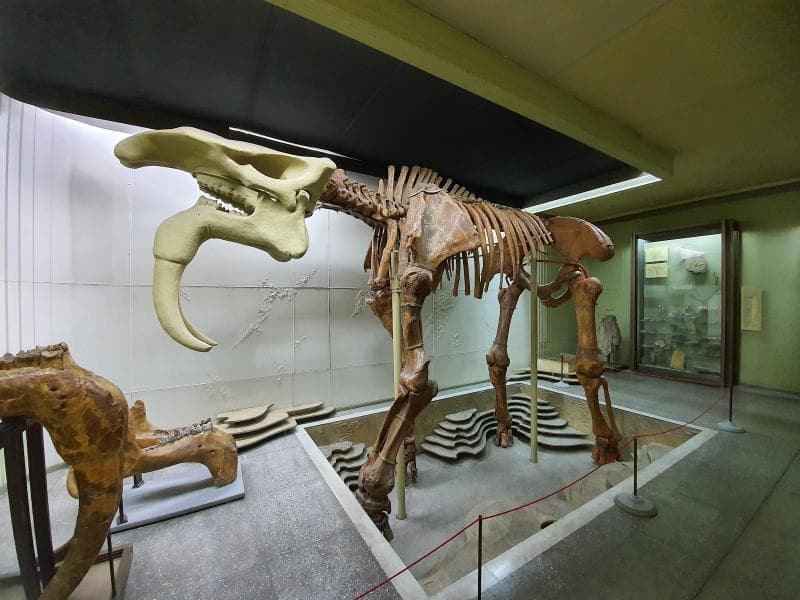
One of the most compelling aspects of the National Museum of Ethnography and Natural History is its remarkable collection, which numbers over 135,000 to 200,000 exhibits of national, European, and universal importance. The museum's crown jewel is undoubtedly the complete skeleton of a gigantic dinothere (Deinotherium gigantissimus or Deinotherium proavum), a prehistoric relative of the elephant that once roamed the territory of Moldova millions of years ago. This magnificent specimen is considered unique, possibly being the only original complete skeleton of its species in the world.
Beyond this paleontological marvel, the museum's architectural structure itself is a standout, built in a pseudo-Moorish style. The permanent exhibition 'Nature. Human. Culture.' captivates visitors with beautifully crafted dioramas, including four stunning murals that recreate Moldova's distinct geographical zones: the Nistru Uplands, the Woodlands, the Lower Prut Floodplain, and the Bălți Steppe. Furthermore, the museum complex includes an integral botanical garden, the oldest in Moldova, along with a vivarium showcasing exotic birds, reptiles, and fish, providing a living connection to the natural world.
Stories, Fun Facts & Local Details
Imagine a creature resembling a colossal elephant, but with tusks curving downwards from its lower jaw – that's the Deinotherium, and seeing its full skeleton here transports you back millions of years. This impressive exhibit is a testament to the ancient life that once thrived in the region and offers a tangible link to deep time.
The museum is not only about grand exhibits; it also celebrates the intricate details of Moldovan life. Visitors can explore priceless collections of 19th-century Bessarabian carpets, showcasing the intricate artistry and cultural symbolism embedded in traditional weaving. Other ethnographic collections include national clothes, ceramics, furniture, and musical instruments, each telling a story of Moldovan identity and craftsmanship. The adjoining Botanical Garden, established in 1906, is a living collection of the region's flora, and its vivarium adds an unexpected splash of exotic wildlife. The museum also actively fosters cultural engagement through annual handicraft exhibitions, folklore events, and festivals, providing a platform for local artisans and traditions to flourish.
Visitor Perspective
Stepping into the National Museum of Ethnography and Natural History is like opening a dual-themed book on Moldova. The natural history sections immerse you in the country's geological past and rich biodiversity, with well-preserved specimens and evocative dioramas illustrating flora and fauna. Then, you transition to the ethnographic galleries, where the narratives of Moldovan people and their traditions unfold. The collections allow you to trace the evolution of Moldovan ethnicity and traditional life.
Visitors often express awe at the grandeur of the Deinotherium skeleton and are charmed by the authenticity of the ethnographic displays. The museum also features a temporary exhibition hall, hosting a variety of seminars, master classes, and rotating exhibitions, ensuring there's always something new to discover. A stroll through the botanical garden offers a refreshing break and another layer of engagement with Moldova's natural heritage. While guiding you through scientific and historical facts, the museum truly aims to connect you with the soul of Moldova, making it a profoundly enriching experience for any curious traveler.
Coordinates: 28.81985, 47.02327
View on Google Maps💬 How Travelers Describe This Place
Based on community votes
Photogenic
551Interesting
547Unique
336Beautiful
219Must See
186
Traveler Stories
Discover memorable experiences shared by travelers who have visited this place.
No traveler stories yet.
Be the first traveler to share what made this place memorable.
Things to see at National Museum Of Ethnography And Natural History



Tour
By
Spot
Discover amazing places around the world. Your journey starts here.
Explore
© 2026 TourBySpot. All rights reserved.