Natural History Halls
Chisinau, Moldova
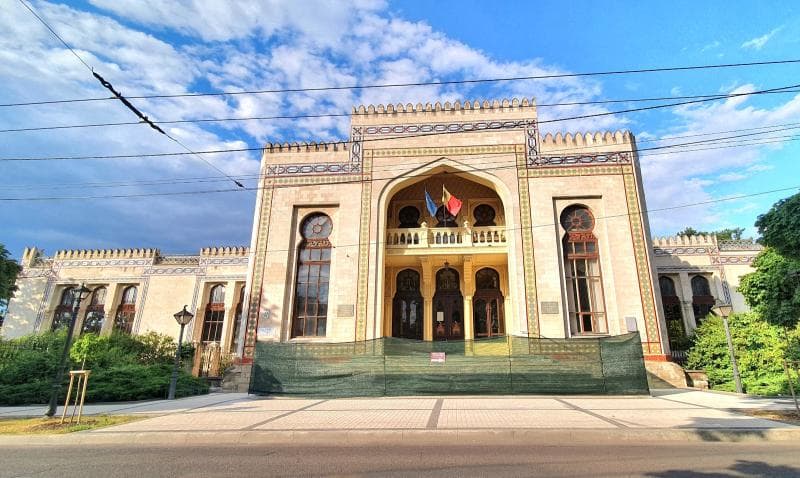
Explore the Natural History Halls at the National Museum of Ethnography and Natural History in Chisinau, Moldova. Discover ancient fossils like the Deinotherium skeleton, diverse flora, and fauna.
Overview
Nestled within the vibrant capital of Chisinau, Moldova, the National Museum of Ethnography and Natural History invites visitors on a captivating journey through the region's rich natural heritage. The museum's Natural History Halls stand as a testament to Moldova's diverse ecosystems and ancient past, showcasing an extensive array of geological, paleontological, botanical, and zoological exhibits. This dedicated section provides a comprehensive look at the evolution of life and the natural environment of the Republic of Moldova, from prehistoric eras to its contemporary landscapes. Travelers seeking to understand the deep historical layers of the land and its creatures will find these halls an invaluable resource.
The museum itself, housed in a distinctive pseudo-Moorish style building completed in 1905, is Moldova's oldest, established in 1889. Its natural history wing offers a structured narrative, guiding curious minds through epochs of geological formation, the emergence of ancient flora and fauna, and the intricate biodiversity that defines Moldova today. It's a place where the grandeur of nature's past and present converges, offering a profound educational and emotional experience.
History & Cultural Background
The genesis of the National Museum of Ethnography and Natural History dates back to 1889, originating from the first Bessarabian Agricultural and Industrial Exhibition. This initial endeavor laid the groundwork for what would become Moldova's premier institution for preserving and exhibiting its natural and cultural patrimony. Over its long history, the museum has undergone several name changes, yet it consistently maintained its dual focus on the study of nature and the culture of Bessarabia, now modern-day Moldova.
The stunning architectural complex, designed by Vladimir Țiganco and inaugurated in 1906, was purpose-built to house these significant collections. Its oriental and decorative elements make it a unique and impressive landmark in Chisinau, reflecting a period of intellectual curiosity and dedication to scientific exploration. The natural history collections, developed through the contributions of notable naturalists and the Society of Naturalists of Bessarabia, trace the scientific endeavors to document and understand the region's natural world.
What Makes It Special
What truly sets the Natural History Halls apart is the extraordinary depth and breadth of their collections, particularly the paleontological displays. The undisputed star attraction is the complete skeleton of a Deinotherium gigantissimum, a colossal prehistoric mammal akin to an elephant, unearthed in Moldova. This impressive fossil, dating back millions of years, offers a tangible link to a distant past when giants roamed the earth. The museum proudly features this 'supergiant dinothere' skeleton, which is considered the largest exhibit in Moldova.
Beyond this magnificent ancient creature, the halls also boast rich geological exhibits, showcasing the mineral wealth and geological evolution of the land. Visitors can explore diverse botanical collections, featuring the flora characteristic of the Prut and Dniester river areas, sometimes complemented by a botanical garden on the museum grounds. The zoological section presents a fascinating array of Moldova's fauna, including stuffed animals and specimens, some of which represent species that have since vanished from the region's natural environment.
Stories, Fun Facts & Local Details
The discovery of the Deinotherium skeleton is a story in itself, a significant paleontological find that put Moldova on the map for prehistoric research. Imagine the awe of the paleontologists uncovering the bones of such a gargantuan creature right in their own land! The museum’s natural history collections have not only captivated local audiences but have also been exhibited internationally, showcasing Moldova's national cultural heritage across Europe, Asia, America, and Africa.
A lesser-known fact is the establishment of a botanical garden on the museum's territory in 1906, further enriching its natural history mission by cultivating local and exotic species. This integrated approach between indoor exhibits and living collections provides a unique dimension to the visitor experience. While exploring, one might even notice the intricate details of the museum building itself; its unique oriental style often draws parallels to a grand, ancient palace rather than a typical scientific institution, adding an unexpected layer of charm to the educational journey.
Visitor Perspective
For the curious traveler, a visit to the Natural History Halls offers an immersive and often tranquil experience. Reviews frequently highlight the surprising size of the museum and the extensive nature of its collections, encouraging visitors to allocate ample time to explore. While some exhibits might have limited English translations, the visual impact of the displays, particularly the prehistoric sections, transcends language barriers. Wandering through these halls allows one to connect deeply with Moldova's natural past and present, fostering an appreciation for its unique biodiversity and the geological forces that shaped it. It's an opportunity to step back in time, marvel at ancient life, and gain a fresh perspective on the natural world around us. The serene atmosphere, combined with the sheer volume of artifacts, makes for a reflective and enriching exploration.
Coordinates: 28.81984652515977, 47.02326576678312
View on Google Maps💬 How Travelers Describe This Place
Based on community votes
Beautiful
551Must See
547Photogenic
421Unique
298Interesting
212
Traveler Stories
Discover memorable experiences shared by travelers who have visited this place.
No traveler stories yet.
Be the first traveler to share what made this place memorable.

Tour
By
Spot
Discover amazing places around the world. Your journey starts here.
Explore
© 2026 TourBySpot. All rights reserved.