National Library Of Kosovo
Pristina, Kosovo
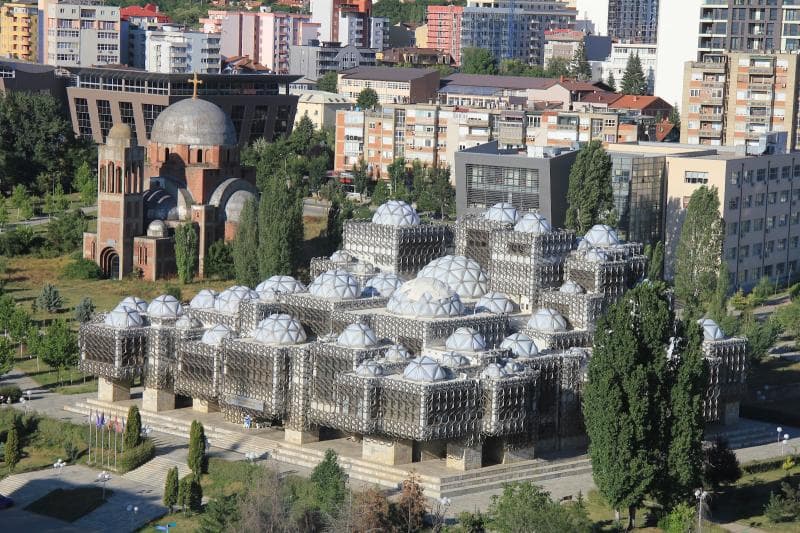
Explore the National Library of Kosovo in Pristina, a landmark known for its unique Brutalist architecture, 99 domes, and rich cultural heritage.
Overview
The National Library of Kosovo, officially known as the Pjetër Bogdani National Library of Kosovo, stands as a prominent cultural and architectural landmark in Pristina, the capital city of Kosovo. It is recognized as the highest library institution in the country, entrusted with the crucial mission of collecting, preserving, promoting, and making accessible Kosovo's rich documentary and intellectual heritage. Beyond its primary function as a repository of knowledge, the library is celebrated for its remarkably distinctive and often debated architectural design, which has made it an iconic symbol of Pristina and a fascinating destination for visitors interested in unique structures and cultural history.
History & Cultural Background
The history of library institutions in Kosovo stretches back to the 14th and 15th centuries, with early collections found within Christian and Muslim religious communities. The institutional foundation of the National Library of Kosovo, however, was officially laid in December 1944 in Prizren, which served as the capital at the time. The library later moved to its current, purpose-built facility in Pristina, inaugurated on November 25, 1982. This striking building was designed by the acclaimed Croatian architect Andrija Mutnjaković.
Throughout its existence, the library has faced significant challenges, particularly during the turbulent 1990s and the Kosovo War (1998-1999). During this period, the building was utilized to house a large number of refugees from Bosnia-Herzegovina and Croatia. Tragically, it was later used as a command-and-control center by the Yugoslav army, resulting in the theft and destruction of numerous historical books and materials, and significant damage to the interior. Following the conflict, with assistance from international organizations such as UNESCO and the Council of Europe, concerted efforts were made to rebuild the library's collections and re-establish its vital services, restoring its role as a beacon of knowledge and culture.
What Makes It Special
What truly sets the National Library of Kosovo apart is its extraordinary architecture. Designed by Andrija Mutnjaković, the building is a bold fusion of Brutalist forms with Byzantine and Islamic architectural influences, resulting in a controversial yet undeniably captivating appearance. It features an unusual combination of 99 white domes of various sizes and an exterior covered in a unique metal lattice.
This design has drawn diverse opinions, with some critics labeling it one of the 'ugliest' buildings in the world, while many others hail it as a unique masterpiece and an extraordinary example of late Yugoslav modernism. The domes are famously said to symbolize the 'qeleshe' or 'plis', traditional Albanian white felt hats, while the metal net has been interpreted as a fishing net or a ceremonial veil, adding layers of cultural symbolism to its modern aesthetic.
Beyond its exterior, the library serves as a dynamic cultural and educational hub. It regularly hosts a variety of events, exhibitions, and lectures, enriching Pristina's cultural scene and fostering engagement with Kosovo's rich heritage. Its extensive collections comprise over 2 million library items, including a wealth of rare books, historical manuscripts, maps, photographs, and an archive of national newspapers, making it an invaluable resource for scholars and the public alike.
Stories, Fun Facts & Local Details
The architect Andrija Mutnjaković intended for the building to blend regional traditions with modern design. The 99 domes, which crown the structure, are a direct reference to the traditional Albanian 'plis', a distinctive white hat worn by men. This detail grounds the futuristic design in deep cultural roots. The exterior's metal lattice, often described as a 'fishing net' or a 'veil,' serves both as a sun barrier and a symbolic element, evoking local traditions and hinting at the region's diverse religious heritage.
Inside, the library reveals further artistic and cultural touches. The grand lobby features colorful marble mosaics on its floor, creating a visually rich entrance. Visitors can also find spiral rosettes, reportedly designed by Simon Shiroka, which are said to resemble ancient Illyrian fibulae or Iron Age brooches, connecting the library's interior to an even deeper historical past. The library plays a unique role in the country's literary ecosystem, automatically receiving a copy of every book published in Kosovo and being responsible for issuing International Standard Book Numbers (ISBNs) to publishers.
Visitor Perspective
For any curious traveler in Pristina, a visit to the National Library of Kosovo offers a truly unforgettable experience. While its exterior might first spark debate, its profound architectural statement and cultural significance become clear upon closer inspection. The library is generally open to visitors, though it is advisable to carry identification, such as a passport, for entry.
Inside, the atmosphere is typically serene, providing a quiet space for reflection and learning amidst its vast collections. Guests can explore the reading rooms, which can accommodate hundreds of people, and discover the large amphitheater and meeting halls used for various cultural and intellectual gatherings. Stepping into the National Library is more than just observing a building; it is an immersion into Kosovo's dedication to preserving its heritage and a chance to witness a controversial yet beloved architectural marvel that continues to inspire and provoke thought.
Coordinates: 21.16222, 42.65722
View on Google Maps💬 How Travelers Describe This Place
Based on community votes
Interesting
958Beautiful
743Unique
719Photogenic
382Must See
176
Traveler Stories
Discover memorable experiences shared by travelers who have visited this place.
No traveler stories yet.
Be the first traveler to share what made this place memorable.
Things to see at National Library Of Kosovo



Tour
By
Spot
Discover amazing places around the world. Your journey starts here.
Explore
© 2026 TourBySpot. All rights reserved.