Exterior Lattice Design
Pristina, Kosovo
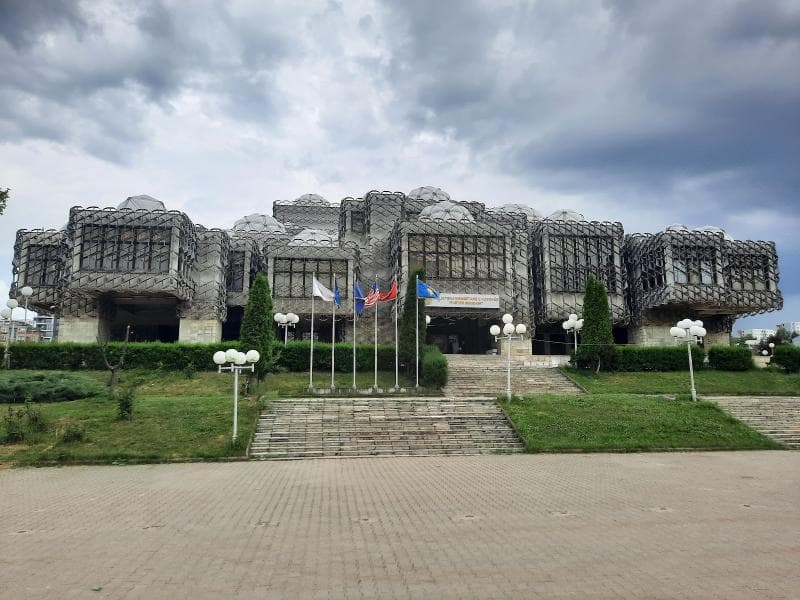
Explore the unique Exterior Lattice Design of the National Library of Kosovo in Pristina, a controversial yet iconic blend of tradition and modern architecture.
Overview
The National Library of Kosovo in Pristina stands as an undeniable landmark, captivating and often dividing opinions with its extraordinary architectural statement. Designed by Croatian architect Andrija Mutnjaković and inaugurated in 1982, this building is celebrated for its unique fusion of Byzantine, Ottoman, and modernist influences. Its most striking feature is the exterior lattice design, a metal mesh that envelopes the entire structure, creating a visual spectacle that is both intriguing and controversial. This architectural marvel, alongside its 99 translucent domes, makes it one of Europe's most distinctive cultural institutions and a must-see for anyone exploring Kosovo's capital.
Far from blending into the urban fabric, the library demands attention, inviting observers to ponder its meaning and appreciate its boldness. Its design has fueled ongoing debates, with some hailing it as a masterpiece of brutalism and cultural synthesis, while others have controversially labeled it among the world's 'ugliest buildings'. Regardless of personal aesthetic judgment, the exterior lattice, combined with the multiple domes, establishes the library as a powerful symbol of Kosovo's complex identity and rich heritage.
History & Cultural Background
The genesis of the National Library of Kosovo's distinctive design dates back to the early 1970s when architect Andrija Mutnjaković was commissioned for the project. At a time of palpable ethnic and political tensions between Albanian and Serbian Kosovars within then-Yugoslavia, Mutnjaković aimed to create a unifying symbol. His architectural concept was deeply influenced by regional elements, specifically the cube and dome shapes prevalent in Byzantine and Ottoman traditions found throughout Kosovo.
The building, completed in 1982, was envisioned as a meeting point between tradition and modernity. It incorporates new materials and construction techniques to evoke ancient architectural tropes, blending a rigorously geometric approach with historical forms. This deliberate synthesis was intended to represent Kosovo's multi-religious heritage, acting as a profound architectural statement in a territory shared by various communities. During the Kosovo War (1998-1999), the library endured a turbulent period, being used to house refugees and, at one point, serving as a command and control center for the Yugoslav army, during which many historical books were destroyed. Despite the damage to its interior, the exterior largely survived the conflict, standing as a testament to resilience.
What Makes It Special
The exterior lattice design of the National Library of Kosovo is undoubtedly its most distinguishing feature. This metal mesh, often described as a 'metal fishing net' or 'veil', completely enwraps the building's concrete mass. Its primary function is practical, acting as a sun barrier to create a pleasant internal environment for readers and protecting the solid reinforced concrete structure. However, its significance extends far beyond mere utility, imbuing the library with layers of symbolic meaning.
The lattice has been interpreted in various ways: some see it as a symbol of the traditional Kosovan art of filigree, connecting the modern structure to local artisan heritage. Others view it as a 'veil' hinting at the area's predominant religions, or even as 'fishing nets' that collect and preserve knowledge. Critically, the design combines with the building's 99 domes, made of translucent acrylic, which are distributed across the roof. This interplay between the rigid steel lattice and the soft, rounded domes creates a dynamic tension, a dialogue between openness and enclosure, tradition and futurism, making the building a complex and thought-provoking architectural statement.
Stories, Fun Facts & Local Details
The National Library of Kosovo is a building steeped in stories and local lore, largely due to its highly unconventional appearance. It has frequently been cited in lists of the 'ugliest buildings in the world', a title that ironically highlights its unique character and ensures its place in architectural discourse. Yet, for many, its bold design is a source of national pride and an iconic symbol of Pristina.
The 99 domes, which top the building, are a particularly rich source of interpretation. Architect Mutnjaković suggested connections to Byzantine and Ottoman architectural elements, but a more popular local interpretation links them to the *qeleshe* or *plis*, the traditional white felt hats worn by Albanian men. This symbolism, while officially unconfirmed by the architect as the sole inspiration, resonates strongly with Albanian national identity and has even stirred political reactions in the past. The metal lattice, too, carries various symbolic weight; some have viewed it as representing a 'cage', a potent metaphor for Kosovo's historical struggles for independence. These diverse interpretations underscore the library's role as a reflection of Kosovo's complex past, present, and future, making it more than just a building—it is an ongoing story.
Visitor Perspective
Visiting the National Library of Kosovo is an experience that invariably leaves a lasting impression. As you approach the building, its concrete cubes enveloped by the distinctive metal lattice and topped with numerous domes immediately capture your gaze. It stands out distinctly amidst Pristina's urban landscape, a testament to avant-garde design. Many visitors find themselves drawn to photograph its striking exterior, particularly during sunset, when the light plays dramatically across the mesh and domes.
While the exterior is what often grabs headlines, venturing inside reveals more of Mutnjaković's vision. The interior features geometric floor mosaics, notably in the lobby, which also serves as a venue for cultural events. Despite past controversies, the building has evolved into a beloved space and an important cultural and educational hub. Travelers often remark on the compelling nature of its design, even if they initially perceive it as 'ugly', noting how its profound symbolism and connection to Kosovo's identity eventually win them over. It truly is a place that challenges perceptions and encourages deeper engagement with architectural meaning and cultural context, inviting every visitor to form their own opinion on this architectural enigma.
Coordinates: 21.162222, 42.657222
View on Google Maps💬 How Travelers Describe This Place
Based on community votes
Must See
958Unique
728Interesting
481Beautiful
382Photogenic
183
Traveler Stories
Discover memorable experiences shared by travelers who have visited this place.
No traveler stories yet.
Be the first traveler to share what made this place memorable.

Tour
By
Spot
Discover amazing places around the world. Your journey starts here.
Explore
© 2026 TourBySpot. All rights reserved.