Academic Archives
Pristina, Kosovo
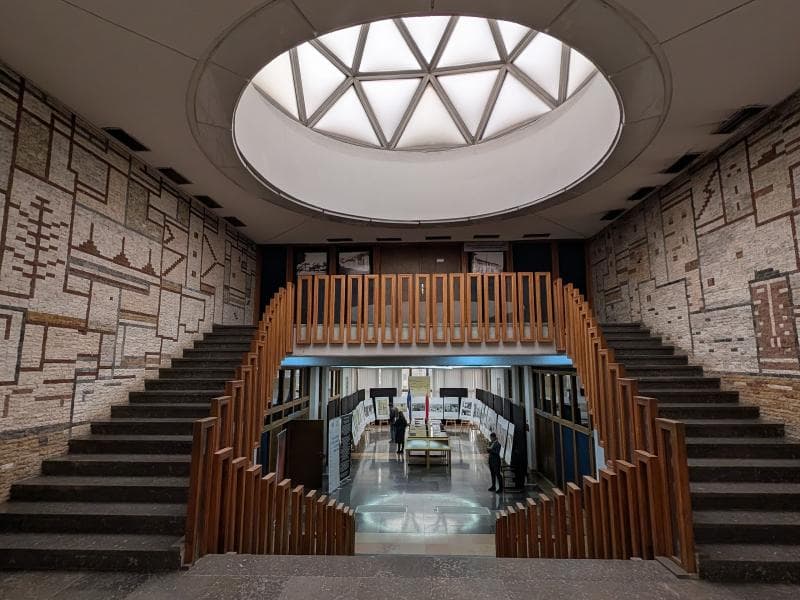
Explore the Academic Archives within the National Library of Kosovo in Pristina, a stunning architectural marvel housing nearly 2 million historical and cultural treasures.
Overview
Deep within the vibrant city of Pristina, Kosovo, stands the iconic National Library of Kosovo, a true repository of the nation's intellectual and documentary heritage. While you might expect to find a sub-spot named 'Academic Archives,' it's important to know that this term, in the context of this institution, generally encompasses the entirety of the library's vast and invaluable collections. It is not a separate, distinct room, but rather the comprehensive body of knowledge meticulously gathered and preserved within its unique walls for researchers, scholars, and future generations.
The library's mission is clear: to collect, preserve, promote, and make accessible Kosovo's rich documentary and intellectual heritage. As the highest library institution in the country, it plays a pivotal role in safeguarding the cultural memory of Kosovo, positioning itself as an indispensable resource for understanding the region's past and present.
History & Cultural Background
The institutional roots of libraries in Kosovo date back to the 14th and 15th centuries, with collections from Christian and Muslim religious communities considered among the oldest archives. The National Library of Kosovo itself was officially founded in December 1944 in Prizren, which served as the capital at the time.
Over the decades, the library's name and status evolved, reflecting Kosovo's changing political landscape. In September 1981, it was relocated to its current, distinct building in Pristina, which was inaugurated on November 25, 1982. The period between 1998 and 1999, during the Kosovo War, was particularly challenging; many library collections were burned and destroyed. Tragically, the building was even used by the Yugoslav Army as a command-and-control center, leading to stolen materials, smashed furniture, and a card catalog dumped in the basement. Following NATO's intervention in June 1999, there was a strong commitment to rebuild and re-establish library services, often with assistance from international organizations.
What Makes It Special
What truly sets the National Library of Kosovo apart is its extraordinary architecture and the sheer depth of its collections. Designed by the Croatian architect Andrija Mutnjaković, the building itself is a striking example of late Yugoslav modernism, characterized by 99 domes of varying sizes and an exterior entirely covered in a metal fishing net. This design has sparked continuous debate, being described by some as an example of magnificent brutalism, and by others as one of the 'ugliest buildings in the world'.
The true essence of the 'Academic Archives' within this library lies in its breadth and depth. The collections are immense, totaling nearly two million units, including over 382,806 books, 281,591 magazines, and 984,022 newspapers, along with rare old books, Albanian manuscripts, maps, and photo documents. These holdings offer a panoramic view of Kosovo's rich cultural tapestry, forming the largest repository of Albanian-language materials and Balkan studies in the region. The library also actively preserves this heritage through digitization projects and functions as a vibrant cultural hub, hosting exhibitions, events, and publishing its own journal, 'Biblioletra'.
Stories, Fun Facts & Local Details
The controversial architecture of the National Library holds many stories. Mutnjaković aimed to blend Byzantine and Islamic architectural forms, drawing inspiration from regional elements like cubes and domes present in Ottoman and Byzantine traditions. One popular interpretation connects the building's domes to the 'qeleshe,' the traditional Albanian national hat, a detail that historically provoked strong reactions from Serbian politicians. The metal net covering the exterior is said to symbolize either fishing nets or a veil, reflecting the area's predominant religions and local filigree craftsmanship. Despite its mixed reception upon opening, the building is now often regarded as an extraordinary and beloved example of modern architecture, even receiving a Getty Foundation 'Keeping it Modern' grant in 2016 for its preservation.
Its turbulent history saw it serving as temporary housing for Bosnian and Croatian refugees during the Yugoslav Wars, adding another layer to its significant narrative beyond being just a library.
Visitor Perspective
Visiting the National Library of Kosovo offers a unique journey into the cultural and intellectual heart of Pristina. Its strategic location within the university complex, surrounded by green areas, makes it easily accessible. Upon entry, visitors are greeted by an interior that features colorful marble mosaics in the lobby, providing a striking contrast to the exterior's perceived brutalism. While the library is open to the public, visitors should be prepared to present identification, such as a passport, for entry. As a functional academic and research institution, you'll find it buzzing with students and scholars delving into its vast resources, making it a living testament to Kosovo's dedication to knowledge and heritage. Exploring its collections provides a profound insight into the country's resilience and its enduring commitment to its unique cultural identity.
Coordinates: 21.16227, 42.6575
View on Google Maps💬 How Travelers Describe This Place
Based on community votes
Interesting
896Must See
102Beautiful
102Unique
95Photogenic
28
Traveler Stories
Discover memorable experiences shared by travelers who have visited this place.
No traveler stories yet.
Be the first traveler to share what made this place memorable.

Tour
By
Spot
Discover amazing places around the world. Your journey starts here.
Explore
© 2026 TourBySpot. All rights reserved.