Photography Viewpoints
Pristina, Kosovo
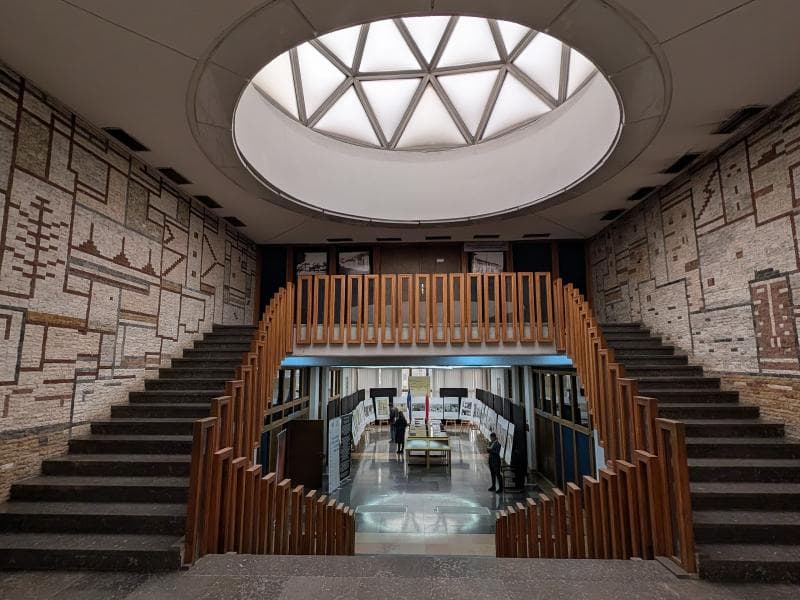
Discover the National Library Of Kosovo's unique photography viewpoints in Pristina. Explore its controversial architecture, 99 domes, and metal mesh facade, a true symbol of Kosovo's rich history and cultural identity.
Overview
The National Library Of Kosovo, nestled in the vibrant capital of Pristina, stands as an architectural marvel and a profound symbol of the nation's cultural identity. Its distinctive and often debated design makes it an unmissable landmark for any curious traveler. Far from a conventional library, this institution is a sculptural statement, inviting observers to ponder its meaning and appreciate its unique aesthetics. What might be termed 'Photography Viewpoints' within this grand structure are less about designated spots and more about the building itself, which presents an endless array of visual narratives from every angle, inside and out. It challenges perceptions and offers a compelling backdrop for capturing the essence of modern Kosovo.
History & Cultural Background
The journey of the National Library Of Kosovo began on November 25, 1944, in Prizren, initially serving as the capital's library. In September 1981, it found its permanent home in Pristina, moving into the strikingly modern facility it occupies today. The building, inaugurated on November 25, 1982, was designed by Croatian architect Andrija Mutnjaković, who aimed to blend Byzantine and Islamic architectural influences. His vision was to create a unifying symbol during a period of rising ethnic tensions, drawing on the region's rich historical tapestry. Tragically, the library endured severe hardship during the 1990s and the Kosovo War (1998-1999). It was used to house refugees from Bosnia and Herzegovina and Croatia, and later, controversially, served as a command and control center for the Yugoslav army. During this tumultuous time, priceless Albanian-language holdings were stolen or destroyed, and the library's interior suffered significant damage. Despite these challenges, it has since been painstakingly rebuilt and reorganized with international assistance, reaffirming its crucial mission to collect, preserve, and promote Kosovo's documentary and intellectual heritage.
What Makes It Special
The National Library Of Kosovo is special precisely because of its controversial and unique architecture, which refuses to be ignored. It is composed of a dozen irregularly arranged concrete cubes, entirely enveloped in a metal mesh or 'fishing net,' and crowned with 99 domes of varying sizes. This design has sparked intense debate, with some critics labeling it among the world's 'ugliest buildings,' while others celebrate it as a brutalist masterpiece and a unique example of postmodern architectural synthesis. Architect Mutnjaković intended the design to represent a fusion of Byzantine and Islamic styles, drawing inspiration from traditional elements. The metal lattice has been interpreted as both a symbolic fishing net, a reference to traditional Kosovo filigree craftsmanship, or even as a representation of protection and confinement. The 99 domes are often said to evoke the traditional Albanian white felt cap, the 'plis' or 'qeleshe,' a powerful national symbol, though some also link the number 99 to the names of God in Islam. This blend of historical references, cultural symbolism, and bold modernism makes the building a profound architectural statement and an enduring symbol of Kosovo's complex identity.
Stories, Fun Facts & Local Details
One of the most intriguing aspects of the library is the constant discussion surrounding its aesthetic. While its architect intended to synthesize local architectural traditions with modernism, the building has frequently been featured on lists of the world's most unusual or even 'ugliest' structures. Yet, for many, it is precisely this unconventional appearance that gives it character and makes it a cherished landmark. The interior lobby features colorful marble mosaics, adding another layer of artistic detail to its otherwise austere concrete and metal exterior. During its darkest hours, the library's six floors, including four underground, became an unexpected refuge and command center. Its survival and subsequent restoration speak volumes about the resilience of the Kosovar people and their commitment to preserving their cultural heritage. The library also houses an impressive collection of nearly two million volumes, including rare books, manuscripts, and historical documents, making it a crucial hub for research and cultural preservation.
Visitor Perspective
For photographers and curious visitors, the National Library Of Kosovo offers unparalleled visual opportunities. Its exterior, with the interplay of concrete cubes, the distinctive metal mesh, and the striking array of 99 domes, changes dramatically with the time of day and light conditions. Sunrise and sunset, for instance, cast long, dramatic shadows that highlight its unique textures and forms, providing excellent photographic material. For an iconic bird's-eye view, often seen in postcards and travel guides, consider heading to the tower of the nearby Cathedral of Saint Mother Teresa, which offers panoramic vistas of the library and the surrounding city. Inside, the experience is equally captivating. The natural light filtering through the domes creates a unique ambiance in the reading rooms, and the grand entryway with its intricate marble mosaics offers further photographic interest. Remember that this is a functioning academic institution, so visitors are expected to maintain silence and respect the environment. Bringing a form of identification, such as a passport, is usually required for entry.
Coordinates: 21.16227, 42.6575
View on Google Maps💬 How Travelers Describe This Place
Based on community votes
Photogenic
674Must See
585Beautiful
546Interesting
503Unique
92
Traveler Stories
Discover memorable experiences shared by travelers who have visited this place.
No traveler stories yet.
Be the first traveler to share what made this place memorable.

Tour
By
Spot
Discover amazing places around the world. Your journey starts here.
Explore
© 2026 TourBySpot. All rights reserved.