MO Museum
Vilnius, Lithuania
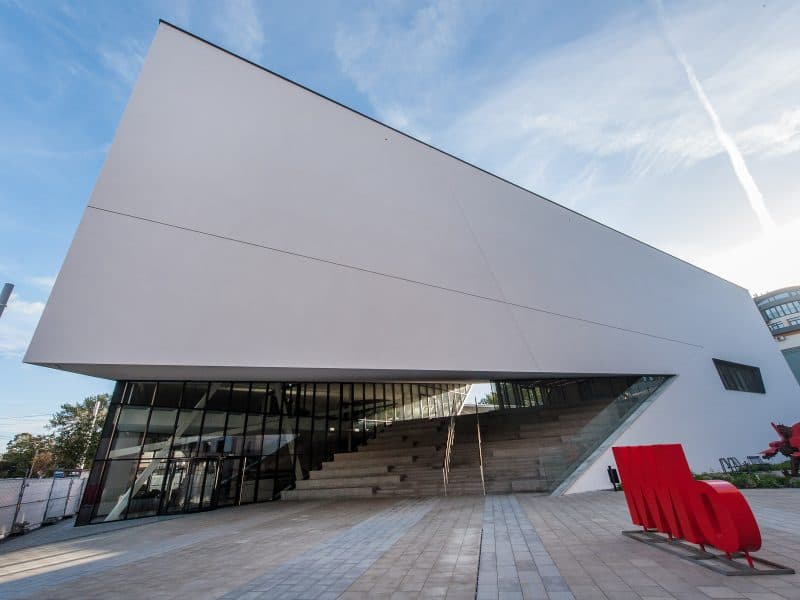
Explore MO Museum in Vilnius, Lithuania, a modern art hub showcasing 6,000+ works in a stunning Daniel Libeskind-designed building.
Overview
The MO Museum, known in Lithuanian as MO muziejus, is a prominent modern art museum located in the vibrant city of Vilnius, Lithuania. Opened to the public on October 18, 2018, it emerged from the private initiative of Lithuanian scientists and philanthropists Danguolė and Viktoras Butkus. This institution is dedicated to making art accessible and engaging for a broad audience, serving as a dynamic cultural hub in the heart of the capital. The museum houses an impressive collection of over 6,000 modern and contemporary Lithuanian artworks, spanning from the 1950s to the present day. Its striking building, a work of art in itself, was designed by the internationally renowned architect Daniel Libeskind, in collaboration with Lithuanian firm Do Architects. Situated at Pylimo str. 17, the MO Museum has quickly established itself as a must-visit destination for anyone interested in modern art and Lithuanian culture.
History & Cultural Background
The story of the MO Museum began long before its physical doors opened. In 2008, founders Viktoras and Danguolė Butkus started assembling their private art collection, which for approximately ten years functioned as an 'art museum without walls.' This collection was officially recognized as being of 'national significance' in 2011, underscoring its importance to Lithuania's cultural heritage. The collection uniquely reflects the trajectory of Lithuanian cultural modernization since the 1960s and the gradual cultural liberation that followed the Stalin era. Notably, it includes works that were once ideologically suppressed or overlooked by state museums during the Soviet period.
The physical museum building stands on a site with its own rich history, formerly home to the Lietuva Cinema. This cinema was a significant cultural landmark for generations of Vilnius residents. The construction of the MO Museum marked a monumental occasion, being the first cultural patronage project of such a large scale in independent Lithuania, demonstrating a profound commitment to public art and culture.
What Makes It Special
The MO Museum is exceptional for several reasons, starting with its distinctive architecture. Designed by Daniel Libeskind, whose other notable works include the Jewish Museum in Berlin, this project marked his first foray into the Baltic states. Libeskind envisioned the building as a 'cultural gateway,' symbolically connecting Vilnius' medieval Old Town with its 18th-century grid and modern areas. The museum's exterior features a rectilinear form clad in luminous white plaster, a nod to local materials, with two symmetrical masses that appear to intertwine.
A dramatic public staircase cuts through the building, leading visitors to a terraced roof and an open-air sculpture garden, which hosts works by recipients of the Lithuanian National Prize for Culture and Arts. Inside, a striking black spiral staircase is a prominent architectural detail, linking different exhibition levels. Libeskind himself noted that the spiral staircase was his first use of a circular form in a project, and he considers the MO Museum one of his favorite, albeit smallest, designs. Beyond its architecture, the museum's core strength lies in its extensive collection of over 6,000 modern and contemporary Lithuanian artworks, one of the largest private art collections in the country. The collection spans various mediums, including painting, graphics, photography, video art, sculpture, and interdisciplinary works. Its innovative approach has garnered international recognition, with the Italian news agency ANSA including MO Museum in its 'Top 10 21st-century museums to visit.'
Stories, Fun Facts & Local Details
The journey of the MO Museum from a private collection to a public institution is a testament to the founders' vision. For a decade, the Butkus' collection existed as a 'museum without walls,' sharing art through various projects before finding its permanent home. An interesting anecdote surrounds the selection of architect Daniel Libeskind: his involvement reportedly stemmed from an accidental meeting between him and Viktoras Butkus during a lecture in Vilnius. This chance encounter led to the creation of a building that not only houses art but also revived a cherished local spot – the former Lietuva Cinema. This was a place where many locals queued for popular films, like 'Titanic,' making the museum's site rich with nostalgic memories for older generations.
The museum's design cleverly integrates public spaces, dedicating nearly a quarter of its site to green areas, including a sculpture garden. This emphasis on openness aligns with the museum's mission to be a vibrant cultural meeting place. The inaugural exhibition, aptly titled 'All Art Is About Us,' highlighted major Lithuanian modern artworks from the 1950s, setting the tone for a museum that encourages personal engagement with art and its connection to national identity. The MO Museum is not just about static displays; it actively hosts a diverse array of educational programs, film screenings, concerts, and events, fostering a dynamic and interactive cultural environment.
Visitor Perspective
For visitors to Vilnius, the MO Museum offers an enriching and easily accessible cultural experience. It is conveniently located in the city center at Pylimo g. 17, making it a short 10 to 15-minute walk from Vilnius' main train and bus stations, allowing for a pleasant stroll through the city. The museum prides itself on being a welcoming and open space, designed to be 'full of people, art, movies, various exhibitions, concerts, and seminars.' Its interiors feature open floor plans for its galleries, complemented by amenities such as a cafe, a bookstore, and educational facilities. The MO Museum is also committed to accessibility, ensuring that it is wheelchair friendly for all visitors. It typically operates from 10:00 AM to 8:00 PM, though it is usually closed on Tuesdays, so it's always advisable to check their official schedule before planning a visit. Through its diverse programs and engaging exhibitions, the museum encourages dialogue and hands-on interaction with art, providing a comprehensive and inspiring visitor experience.
Coordinates: 25.277744, 54.67947
View on Google Maps💬 How Travelers Describe This Place
Based on community votes
Beautiful
673Photogenic
219Interesting
186Must See
143Unique
80
Traveler Stories
Discover memorable experiences shared by travelers who have visited this place.
No traveler stories yet.
Be the first traveler to share what made this place memorable.
Things to see at MO Museum



Tour
By
Spot
Discover amazing places around the world. Your journey starts here.
Explore
© 2026 TourBySpot. All rights reserved.