Rooftop Areas
Vilnius, Lithuania
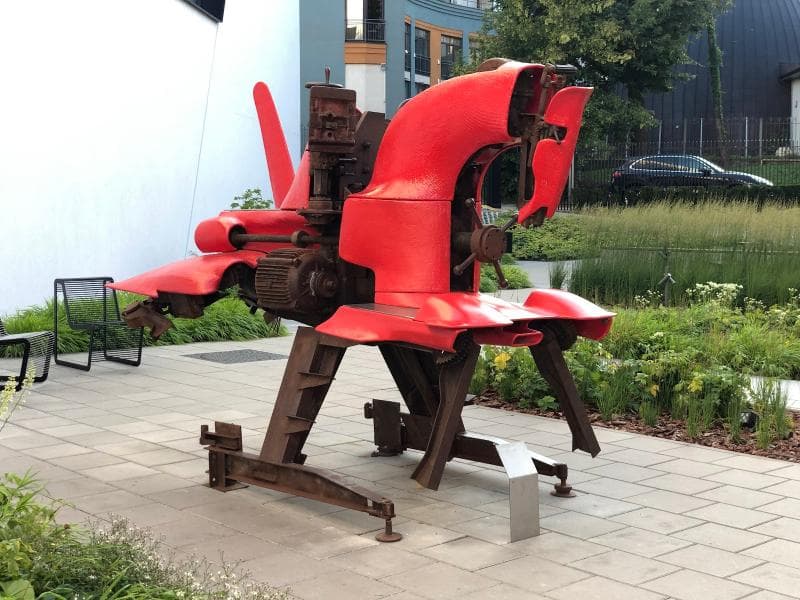
Explore MO Museum's Rooftop Areas in Vilnius, Lithuania, offering stunning city views and a unique space for public events and relaxation.
Overview
The MO Museum in Vilnius, Lithuania, is a vibrant hub for modern and contemporary art, housed within an architectural marvel designed by the renowned Daniel Libeskind. More than just a gallery space, the museum is conceived as a 'cultural gateway' that bridges Vilnius' historic medieval past with its 18th-century urban grid. At the heart of its public-facing design are the captivating Rooftop Areas, offering visitors a unique perspective on the city and the museum's striking form.
These open-air terraced spaces are an integral part of the MO Museum's commitment to public engagement, providing an inviting setting for relaxation, contemplation, and communal events. Accessible via a dramatic public staircase that cuts through the building's facade, the Rooftop Areas seamlessly connect the street level with elevated views. It is a place where art extends beyond the indoor galleries, inviting interaction and offering a dynamic environment for visitors to immerse themselves in both culture and the urban landscape.
History & Cultural Background
The MO Museum itself is a testament to private philanthropy and a deep dedication to Lithuanian art. Founded by scientists and philanthropists Danguolė and Viktoras Butkus, the museum opened its doors on October 18, 2018, fulfilling a decade-long vision to make Lithuanian modern and contemporary art accessible to a wider audience. Its collection, comprising over 6,000 works, spans from the 1950s to the present day, chronicling the nation's artistic evolution.
The building's design by Studio Libeskind, in collaboration with Do Architects, is a significant part of its story. Libeskind's vision was to create a structure that not only housed art but also served as a symbolic link, representing the historic gates of the city. The site itself holds cultural memory, as it was formerly home to the beloved Lietuva Cinema, one of Lithuania's oldest movie theaters. The integration of public outdoor spaces, including the Rooftop Areas, reflects a deliberate choice to revive this culturally iconic space and offer it back to the community in a new, engaging form.
What Makes It Special
The Rooftop Areas of the MO Museum are truly special due to their innovative architectural integration and their multi-functional role. Libeskind's design features a dramatic public stair that diagonally intersects the museum's rectilinear form, leading directly to the terraced roof. This creates an immediate and inviting connection between the city street and the elevated public space, making the museum's exterior as much a part of the visitor experience as its interior.
Clad in luminous white plaster, the museum's facade, including the visual elements leading to the rooftop, references the local materials of Vilnius, yet its contemporary angularity stands out as a bold architectural statement. The use of durable granite pavers on the terraced roof further enhances its connection to the urban environment while providing a robust surface for diverse activities. What sets these areas apart is their dual nature: they are both a destination for panoramic views and a venue for cultural happenings, embodying the museum's ethos of openness and accessibility.
Stories, Fun Facts & Local Details
One fascinating aspect of the MO Museum's design, and by extension its Rooftop Areas, is Daniel Libeskind's personal connection to the project. Despite having designed many large-scale museums worldwide, he considered the MO Museum, his first cultural project in the Baltic states, to be one of his favorites, and notably, the first time he extensively used a circular form in his work, evident in the striking spiral staircase inside. While the spiral staircase is an interior feature, its conceptual boldness resonates with the dramatic public stair leading to the roof, both serving as architectural gestures that invite movement and discovery.
The existence of these public Rooftop Areas speaks to a broader trend in contemporary museum design: moving beyond mere exhibition spaces to create active community hubs. The founders envisioned MO as 'a museum without walls' for nearly a decade, and the open-air terraces are a physical manifestation of this philosophy, literally extending the museum's reach into the cityscape and welcoming people to gather and engage, whether they enter the main galleries or not. It's a place where locals might attend an evening talk or performance under the stars, adding an unexpected dimension to Vilnius' cultural scene.
Visitor Perspective
From a visitor's perspective, the Rooftop Areas offer a refreshing complement to the indoor art experience. After immersing oneself in the compelling narratives of Lithuanian art from the 1950s onwards, stepping out onto the terraced roof provides a moment of fresh air and a change of scenery. The accessibility of these spaces, directly from the street via the public staircase, means that one doesn't necessarily need a museum ticket to appreciate the unique architectural dialogue and the urban vista.
It's an ideal spot to take in the blend of historic Vilnius and its modern developments, offering a different vantage point than many other city viewpoints. The design encourages lingering, providing a space where one can reflect on the art seen inside or simply enjoy the ambiance. Whether it's for a special event, a quiet moment of reflection, or a casual meet-up, the MO Museum's Rooftop Areas provide an engaging and memorable dimension to any visit to this significant cultural institution in the heart of Lithuania's capital.
Coordinates: 25.277744, 54.67947
View on Google Maps💬 How Travelers Describe This Place
Based on community votes
Beautiful
995Interesting
839Must See
603Unique
388Photogenic
289
Traveler Stories
Discover memorable experiences shared by travelers who have visited this place.
No traveler stories yet.
Be the first traveler to share what made this place memorable.

Tour
By
Spot
Discover amazing places around the world. Your journey starts here.
Explore
© 2026 TourBySpot. All rights reserved.