Lviv Opera House
Lviv, Ukraine
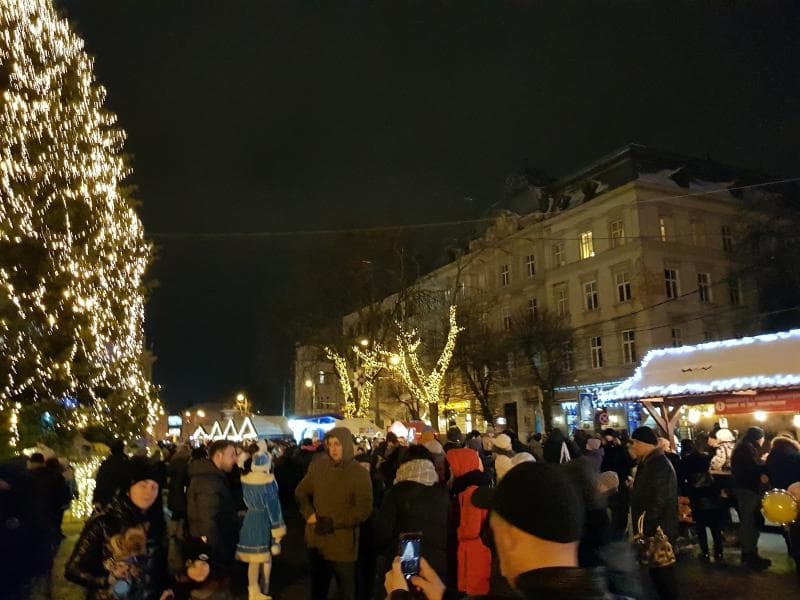
Explore the majestic Lviv Opera House in Lviv, Ukraine, an architectural masterpiece blending Neo-Renaissance and Baroque styles with rich history.
Overview
Standing proudly in the heart of Lviv, Ukraine, the Solomiya Krushelnytska Lviv National Academic Theatre of Opera and Ballet, commonly known as the Lviv Opera House, is a breathtaking architectural marvel and a true cultural gem. This magnificent edifice, often compared to the most beautiful theatres in Europe, serves not only as a vibrant centre for performing arts but also as a profound symbol of the city's rich history and artistic heritage. It is centrally located on Freedom Avenue, a tree-lined thoroughfare that forms part of Lviv's historic Old City, a UNESCO World Heritage Site.
Designed in a captivating blend of Renaissance Revival and Neo-Baroque styles, with elements of Art Nouveau, the opera house captivates visitors with its opulent facade and lavish interiors. Its sheer grandeur is such that it is depicted on Ukraine's 20 Hryvnia banknote, underscoring its national significance. A remarkable feat of engineering at its time, the theatre was built on the former marshland of the submerged Poltva River, utilizing innovative concrete block foundations, a detail still remembered by locals today.
History & Cultural Background
The story of the Lviv Opera House begins in the late 19th century when Lviv was the capital of the autonomous province of Galicia within the Austro-Hungarian Empire. The city aspired to construct a grand theatre that would reflect its growing importance and cultural sophistication. The ambitious project was entrusted to Polish architect Zygmunt Gorgolewski, a graduate of the Berlin Building Academy, whose design was chosen from several proposals.
Construction commenced in 1897, and the theatre officially opened its doors on October 4, 1900, with the premiere of Władysław Żeleński's lyrical opera 'Janek,' which depicted the lives of Carpathian inhabitants. The opening ceremony was a major cultural event, drawing an elite audience including renowned writers, composers, and delegations from across Europe, such as Henryk Sienkiewicz and Ignacy Jan Paderewski. Over its long and storied existence, the theatre has undergone several name changes reflecting the shifting political landscapes. Initially known as the Grand Theatre, it was later renamed the Ivan Franko Lviv State Academic Theatre of Opera and Ballet in 1956. In 2000, commemorating its centennial, it was finally named after the celebrated Ukrainian soprano Solomiya Krushelnytska, a fitting tribute to a global icon of opera.
What Makes It Special
The Lviv Opera House is a feast for the senses, distinguished by its intricate architectural details both inside and out. The exterior facade is a rich tapestry of art, featuring numerous niches, majestic Corinthian columns, elegant pilasters, and ornate balustrades. Sculpted allegorical figures representing Comedy and Tragedy flank the main entrance, while statues of muses adorn the cornice, and a grand bronze triad symbolizing Glory, Poetry, and Music crowns the building.
Stepping inside, visitors are met with an equally impressive display of artistry. The interior boasts richly stuccoed ceilings and walls adorned with oil paintings, gilded details (with several kilograms of gold used in its decoration), and multicolored marble. The main auditorium is designed in the shape of a lyre, ensuring exceptional acoustics, and can accommodate over a thousand spectators. A highlight is the famous decorative curtain 'Parnassus,' painted by the renowned Polish artist Henryk Siemiradzki in 1900. This allegorical masterpiece, depicting various scenes of human life, is still used for special occasions, adding to the theatre's unique charm.
Stories, Fun Facts & Local Details
One of the most remarkable stories associated with the Lviv Opera House is its audacious construction over the Poltva River. Architect Zygmunt Gorgolewski faced the challenge of a marshy riverbed, a problem he resolved by enclosing the river in an underground collector and laying the foundation with concrete blocks—a groundbreaking engineering feat that was among the first of its kind in Europe. Locals still recount tales of the theatre 'standing on a river,' a testament to this incredible architectural ingenuity.
The theatre was also one of the first buildings in Lviv to be electrified, showcasing the rapid technological advancements of its construction era. The legend surrounding Henryk Siemiradzki's 'Parnassus' curtain adds another layer of intrigue; it is said he donated the magnificent artwork to the theatre because the administration faced financial constraints and could not pay him upon completion. Beyond its architectural wonders, the Lviv Opera House has adapted to various historical epochs, serving as a cultural beacon through periods of significant political change. It even became the first Ukrainian institution to join the prestigious 'Opera Europa' in 2008, affirming its place on the international stage. Today, it continues to host a diverse repertoire, from world classical masterpieces to works by Ukrainian composers, alongside ballets and concerts, contributing vibrantly to Lviv's cultural life.
Visitor Perspective
For any curious traveler visiting Lviv, the Opera House is an absolute must-see, whether to admire its architectural splendor or to experience a performance. Many visitors choose to take a guided tour to delve deeper into its history and explore the opulent interiors, including the grand lobby, the lyre-shaped auditorium, and the exquisite mirror hall with its Venetian mirrors that create an illusion of boundless space.
Attending a performance here is a truly immersive cultural experience, combining world-class artistry with the grandeur of a historic European venue. Guests are often encouraged to dress elegantly, adding to the special atmosphere of the evening. It's advisable to check the official website for performance schedules and to book tickets in advance, especially for popular shows, as they tend to sell out quickly. The theatre's central location on Svobody Avenue makes it easily accessible from most parts of the city. Visitors should also be aware of current security measures, such as potential inspections and designated air raid shelters, especially during periods of martial law, ensuring a safe and respectful visit to this iconic institution.
Coordinates: 24.02624, 49.84405
View on Google Maps💬 How Travelers Describe This Place
Based on community votes
Unique
674Beautiful
503Photogenic
261Must See
92Interesting
49
Traveler Stories
Discover memorable experiences shared by travelers who have visited this place.
No traveler stories yet.
Be the first traveler to share what made this place memorable.
Things to see at Lviv Opera House



Tour
By
Spot
Discover amazing places around the world. Your journey starts here.
Explore
© 2026 TourBySpot. All rights reserved.