Main Stage
Lviv, Ukraine
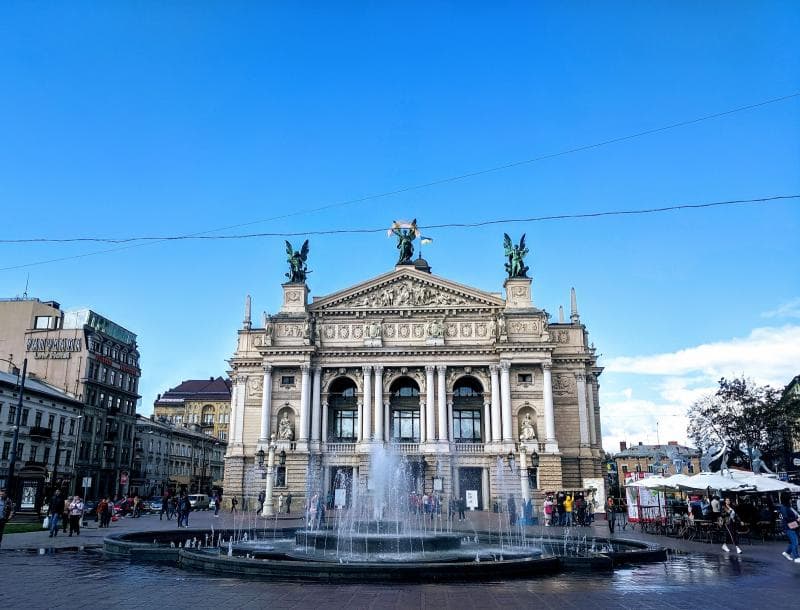
Discover the opulent Main Stage of the Lviv Opera House in Lviv, Ukraine, a historic cultural gem renowned for its stunning architecture and rich artistic heritage.
Overview
Stepping into the Solomiya Krushelnytska Lviv National Academic Theatre of Opera and Ballet, commonly known as the Lviv Opera House, is to enter a world where art, history, and architectural splendor converge. At the heart of this magnificent edifice in Lviv, Ukraine, lies its Main Stage, a hallowed space that has hosted countless performances and witnessed the unfolding of artistic triumphs for over a century. More than just a platform for performers, the Main Stage is an integral part of the theatre's soul, surrounded by opulent decorations and steeped in rich cultural heritage, drawing visitors into a truly immersive experience of opera and ballet.
History & Cultural Background
The Lviv Opera House, originally known as the Grand Theatre, rose from the ambitious vision of architect Zygmunt Gorgolewski between 1897 and 1900. Its construction was a marvel of late 19th-century engineering, as it was built on marshland, requiring the Poltva River to be enclosed underground. This innovative foundation, reportedly the first of its kind in Europe to use reinforced concrete, allowed for the creation of a grand structure that would become a cultural beacon. Opened on October 4, 1900, with the opera 'Janek,' the theatre quickly established itself as a premier European cultural institution. Throughout its history, the theatre has adapted to changing political landscapes, being renamed multiple times before ultimately honoring the renowned Ukrainian soprano Solomiya Krushelnytska in 2000.
What Makes It Special
The Main Stage of the Lviv Opera House is a focal point of artistic and technical sophistication. One of its most striking features is the monumental 'Parnassus' curtain, painted by the celebrated Polish artist Henryk Siemiradzki in 1900. This allegorical masterpiece, depicting an interpretation of human life with figures from Mount Parnassus, is reserved for special occasions, adding an extra layer of grandeur to significant performances. Above the stage proscenium, audiences can admire 'The Apotheosis of Glory' by Stanisław Reichan, featuring a central female figure of Glory in a chariot pulled by swans, symbolizing artistic achievement. Further enriching the area are a sculpted coat of arms of Lviv and celestial figures like 'Grace' by Edward Miron Pietsch, 'Truth' by Tadeusz Popiel, and 'Illusion' on the auditorium ceiling, creating a continuous artistic narrative surrounding the stage. The stage's hydraulic mechanization, a testament to early 20th-century engineering, was crafted by a Polish railway workshop company, enabling seamless scene changes and special effects. The auditorium itself, shaped like a Greek lyre, is known for its excellent acoustics, ensuring that every note and spoken word from the Main Stage resonates perfectly for the thousand-plus audience members.
Stories, Fun Facts & Local Details
The Lviv Opera House, and its Main Stage, are brimming with fascinating stories and local charm. The legend surrounding Siemiradzki's 'Parnassus' curtain suggests that the artist, having completed the work in Rome, generously donated it to the theatre when it faced financial difficulties, ensuring its placement on the stage. This act of artistic philanthropy underscores the deep cultural value placed on the theatre. Over the decades, the Main Stage has been graced by world-renowned stars and prominent Ukrainian artists, cementing its reputation as a significant performance venue in Europe. The intricate details of the theatre's interior, including the several kilograms of gold used for gilding, the colored marble, and the decorative paintings and sculptures, all contribute to the regal ambiance experienced by both performers on the Main Stage and spectators in the audience. The building's enduring presence on the 20 Hryvnia banknote signifies its status as a national treasure and a symbol of Ukrainian culture.
Visitor Perspective
To experience the Main Stage at the Lviv Opera House as a visitor is to be transported. Whether attending a captivating opera or a mesmerizing ballet, the grandeur of the setting enhances every moment. The plush seating in the lyre-shaped hall, the opulent decorations that adorn every surface, and the perfect acoustics create an intimate yet majestic atmosphere. The anticipation as the 'Parnassus' curtain rises, or the house lights dim, is palpable. The stage is not merely a distant spectacle but feels alive and connected to the audience through its rich artistry and historical echoes. Even without attending a performance, a tour of the theatre offers a profound appreciation for the craftsmanship and artistic dedication embodied by the Main Stage and its surroundings. It's a place where the past and present of performing arts beautifully intertwine, leaving a lasting impression on every traveler.
Coordinates: 24.02624, 49.84405
View on Google Maps💬 How Travelers Describe This Place
Based on community votes
Interesting
747Unique
399Photogenic
302Must See
182Beautiful
76
Traveler Stories
Discover memorable experiences shared by travelers who have visited this place.
No traveler stories yet.
Be the first traveler to share what made this place memorable.

Tour
By
Spot
Discover amazing places around the world. Your journey starts here.
Explore
© 2026 TourBySpot. All rights reserved.