Mirror Hall
Lviv, Ukraine
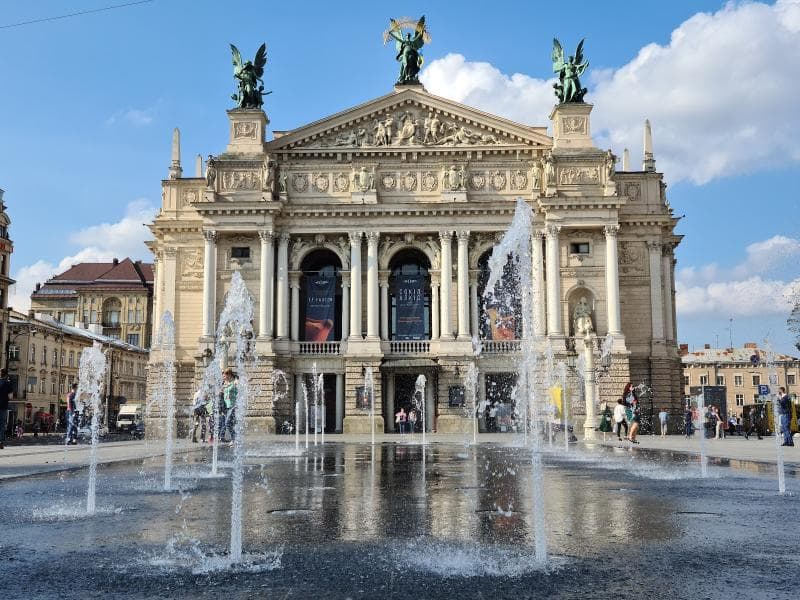
Discover the opulent Mirror Hall inside Lviv Opera House, Ukraine. Explore its stunning Venetian mirrors, allegorical sculptures, and rich history.
Overview
Nestled within the architectural masterpiece that is the Solomiya Krushelnytska Lviv National Academic Opera and Ballet Theatre in Lviv, Ukraine, lies the exquisite Mirror Hall. Often considered a 'real pearl' of the theatre's opulent interior, this grand space captivates visitors with its lavish decoration and ingenious design. The Lviv Opera House itself, an exemplary display of Neo-Renaissance and Neo-Baroque styles, was constructed between 1897 and 1900 under the vision of architect Zygmunt Gorgolewski. The Mirror Hall forms an integral part of this historic building, offering a glimpse into the artistic grandeur of late 19th-century European culture.
The theatre, often compared to the esteemed opera houses of Paris and Vienna, stands proudly on Svobody Avenue, Lviv's main thoroughfare. Its interior, including the magnificent Mirror Hall, is renowned for its extensive use of gilding, intricate marble work, decorative paintings, and sculptural elements.
History & Cultural Background
The construction of the Lviv Opera House, originally known as the Grand City Theatre, was a monumental undertaking for Lviv, then the capital of the autonomous province of Galicia within the Austro-Hungarian Empire. The project, led by Polish architect Zygmunt Gorgolewski, commenced in 1897 and concluded in 1900.
One of the most challenging aspects of its construction was its chosen location directly over the Poltva River. This required an innovative engineering solution: the riverbed was enclosed underground in a concrete collector, a pioneering use of such building technology in Europe at the time.
The theatre officially opened its doors on October 4, 1900, with the premiere of Vladislav Zhelensky's opera 'Janek'. Over its history, the building has witnessed significant political changes, having been part of various countries and renamed multiple times, eventually being named after the globally recognized Ukrainian opera singer, Solomiya Krushelnytska, in 2000.
What Makes It Special
The Mirror Hall, or mirrored foyer, is celebrated for its breathtaking visual effects. Its most striking feature is the strategic placement of Venetian mirrors opposite each other, which creates an illusion of boundless, expansive space, drawing visitors into a world of shimmering reflections and grandiosity.
Beyond the reflective surfaces, the hall is richly adorned with exquisite artistic details. It features four allegorical female sculptures by Piotr Wojtowicz, depicting 'Love', 'Envy', 'Pride' (often shown with a looking glass in hand), and 'Motherhood', positioned above the archivolts of the entrances to the side halls.
The hall also boasts numerous other decorative sculptures and bas-reliefs, contributing to an atmosphere of refined elegance. The lavish interior decoration of the Lviv Opera House, for which several kilograms of gold were reportedly used in gilding, extends to every corner, making the Mirror Hall a particularly brilliant example of this opulent design.
Stories, Fun Facts & Local Details
The engineering feat of building the Lviv Opera House over the submerged Poltva River highlights the ambition and innovation of its creators. This bold decision solidified its place as a symbol of Lviv's scientific and technological progress in the late 19th century.
The theatre's importance to Ukrainian culture is underscored by its depiction on the 20 Hryvnia banknote, a testament to its status as a national treasure.
Another fascinating detail is the decorative stage curtain, 'Parnassus', painted by Henryk Siemiradzki in 1900. This allegorical interpretation of life's meaning, featuring figures of Parnassus, was so elaborate that the artist requested an explanation be printed for the audience's understanding. It is now carefully preserved and displayed only during premiere performances and major celebrations.
Despite historical challenges, including wartime, the Lviv Opera House has demonstrated remarkable resilience, consistently hosting performances and serving as a beacon of artistic expression and cultural identity.
Visitor Perspective
Stepping into the Mirror Hall is often described as an immersive journey into a bygone era of elegance and sophistication. Visitors consistently marvel at the grandeur of the space and the illusion of endless corridors created by the mirrored walls.
A guided tour of the Lviv Opera House, including the Mirror Hall, offers a comprehensive insight into the building's rich history and architectural significance. These tours typically allow travelers to admire the opulent interiors, gaining a deeper appreciation for the artistry and craftsmanship involved in its creation.
The atmosphere is one of solemn beauty and historical resonance, enchanting all who cross its threshold. The Mirror Hall truly provides a sense of the theatre's luxurious interior, a highlight that leaves an indelible impression on those exploring this iconic Ukrainian landmark.
Coordinates: 24.0264, 49.844
View on Google Maps💬 How Travelers Describe This Place
Based on community votes
Unique
896Photogenic
550Must See
102Beautiful
95Interesting
28
Traveler Stories
Discover memorable experiences shared by travelers who have visited this place.
No traveler stories yet.
Be the first traveler to share what made this place memorable.

Tour
By
Spot
Discover amazing places around the world. Your journey starts here.
Explore
© 2026 TourBySpot. All rights reserved.