Grand Hall
Lviv, Ukraine
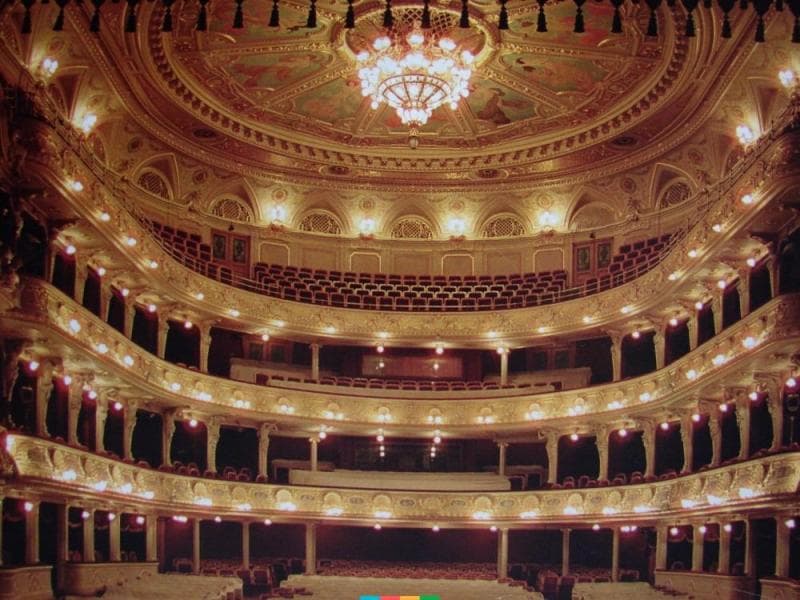
Discover the Grand Hall and opulent interiors of Lviv Opera House in Lviv, Ukraine. Explore its stunning architecture and rich history.
Overview
The Solomiya Krushelnytska Lviv National Academic Opera and Ballet Theatre, often simply known as the Lviv Opera House, is a jewel of architecture and culture in Lviv, Ukraine. Within its magnificent walls lie several grand interior spaces that captivate visitors, serving as a testament to late 19th-century European artistry and engineering. While no single room is exclusively named 'Grand Hall,' the collective splendor of its main auditorium, the opulent Mirror Hall, and the majestic lobby creates an overwhelming sense of grandeur and historical significance. These spaces are not merely functional areas but are integral parts of the theatre's artistic identity, each richly decorated with luxurious materials and intricate artwork.
Standing proudly on Svobody Avenue, the Lviv Opera House is recognized as one of Europe's most beautiful theaters, often compared to the grand opera houses in Paris and Vienna. A visit inside reveals interiors adorned with multicolored marble, extensive gilding, decorative paintings, and ornate stucco work, creating an atmosphere of incredible solemnity and artistic celebration.
History & Cultural Background
The Lviv Opera House was constructed between 1897 and 1900, a period when Lviv was the capital of the autonomous province of Galicia within the Austro-Hungarian Empire. The ambitious project was led by Polish architect Zygmunt Gorgolewski, whose vision combined Neo-Renaissance and Neo-Baroque styles with elements of Art Nouveau.
A remarkable feat of engineering for its time, the theater was built directly over the submerged Poltva River, which was enclosed in a concrete collector. This innovative construction, including the use of a concrete foundation, was among the first of its kind in Europe. The grand opening took place on October 4, 1900, with the premiere of Wladyslaw Zelenski's opera 'Janek,' attracting cultural elite and delegations from across Europe.
Over its history, the theater has experienced significant changes, including being renamed multiple times, eventually honoring the renowned Ukrainian soprano Solomiya Krushelnytska in 2000 for its centennial. It also holds the distinction of being the first electrified building in Lviv, showcasing the era's rapid technological advancements.
What Makes It Special
The internal spaces of the Lviv Opera House are a harmonious blend of architectural brilliance and artistic expression. The main auditorium, notably lyre-shaped, accommodates over a thousand spectators, designed to optimize both sightlines and acoustics. Its interior is a spectacle of luxury, featuring gilded stucco, rich paintings, and varied marble. A stunning, massive chandelier, approximately nine meters high and four meters in diameter with 214 light bulbs and 900 crystals, descends from the painted ceiling, creating a dazzling centerpiece.
The Mirror Hall, a true 'pearl of the theater,' is particularly enchanting. Venetian mirrors are strategically placed opposite each other, creating an illusion of boundless space that amplifies the hall's decorative elements, including sculptures and allegories of seasons and continents. The lobby itself is considered an art gallery, boasting a mosaic floor, marble stairs, and balustrades, complemented by numerous paintings, sculptures, and bas-reliefs, all enhanced with lavish gilding.
Stories, Fun Facts & Local Details
The construction of the Lviv Opera House is steeped in fascinating details. The decision to build on the marshy bed of the Poltva River was a bold one, requiring the river to be channeled into an underground collector, a testament to the engineering prowess of the time. The immense cost, 2.4 million Austrian crowns, underscored the city's commitment to creating a cultural landmark.
The theatre's interiors are a showcase of the talent of numerous Lviv artists, a unique aspect compared to many European theaters decorated by a single master. This collaborative effort resulted in a rich tapestry of art, from the allegorical figures of Comedy and Tragedy on the facade to the muses above the cornice and the grand composition of 'The Joys and Miseries of Life.' A famous feature is the 'Parnassus' curtain, painted by Henryk Siemiradzki in 1900, which is still used for special occasions and depicts an allegorical image of the meaning of life.
The Lviv Opera House is such an iconic symbol of Lviv and Ukraine that it is even depicted on the country's 20 Hryvnia banknote.
Visitor Perspective
Experiencing the grandeur of the Lviv Opera House's interior spaces is a highlight for any traveler to Lviv. Whether attending an opera or ballet performance, or simply taking a guided tour, visitors are immersed in an atmosphere of historical elegance and artistic splendor.
Guided tours typically include the vestibule, the magnificent main auditorium, and the breathtaking Mirror Hall, allowing guests to appreciate the intricate details of the decor up close. The tours offer a chance to learn about the theater's storied past and architectural significance. Stepping into these halls, one can easily imagine the countless celebrated performers and distinguished guests who have graced these very spaces over more than a century, feeling the echo of history in every gilded archway and painted ceiling.
Coordinates: 24.0262123, 49.8440167
View on Google Maps💬 How Travelers Describe This Place
Based on community votes
Beautiful
710Must See
156Interesting
102Photogenic
102Unique
87
Traveler Stories
Discover memorable experiences shared by travelers who have visited this place.
No traveler stories yet.
Be the first traveler to share what made this place memorable.

Tour
By
Spot
Discover amazing places around the world. Your journey starts here.
Explore
© 2026 TourBySpot. All rights reserved.