La Rambla
Barcelona, Spain
Discover La Rambla in Barcelona, Spain: a vibrant pedestrian boulevard connecting Plaça de Catalunya to Port Vell, rich in history, culture, and street life.
Overview
La Rambla is more than just a street; it is the beating heart of Barcelona, Spain, a lively pedestrian boulevard stretching approximately 1.2 to 1.3 kilometers through the city's core. This iconic promenade connects the bustling Plaça de Catalunya at its northern end to the historic Port Vell and the Christopher Columbus Monument in the south. It acts as a vibrant divider, separating the ancient, labyrinthine lanes of the Barri Gòtic (Gothic Quarter) to the east from the eclectic, bohemian neighborhood of El Raval to the west. Often referred to in the plural as 'Las Ramblas', this reflects its composition of several distinct sections, each with its own character and history. It's a place where locals and visitors alike converge to experience the city's pulse, a continuous flow of life, art, and commerce that encapsulates Barcelona's unique spirit.
History & Cultural Background
The history of La Rambla is deeply rooted in Barcelona's landscape, beginning not as a grand avenue, but as a humble natural feature. The name 'Rambla' itself originates from the Arabic word 'ramla', meaning 'sandy riverbed' or 'wadi'. For centuries, it was a seasonal stream bed, often dry, that served as a natural drainage channel for rainwater flowing from the nearby hills to the sea. In the Middle Ages, this natural boundary marked the western edge of Barcelona's fortified city walls. As Barcelona expanded in the 14th and 15th centuries, the city walls were extended to encompass La Rambla and the developing El Raval area. The stream was eventually diverted in 1440, paving the way for the transformation of the dry riverbed into a street. Over the subsequent centuries, La Rambla evolved into a crucial artery of urban life, hosting festivals, markets, and public gatherings. Numerous religious institutions were established along its length, many of which were later replaced by significant public spaces like the Mercat de la Boqueria and the Gran Teatre del Liceu during the 19th century, following a period of anti-clerical sentiment and urban renewal. The planting of the first trees in 1703 marked the beginning of its development into a fashionable promenade, eventually becoming the tree-lined boulevard recognizable today. Historically, even during the Franco regime, La Rambla provided a space for quiet protest and cultural expression, highlighting its enduring role as a public forum.
What Makes It Special
La Rambla's enduring appeal lies in its captivating blend of dynamic street life and rich cultural heritage. It's a place of constant movement and sensory delight, famed for its eclectic mix of street performers, living statues, and musicians who entertain passersby day and night. The wide central pedestrian zone is flanked by narrow service roads and lined with a vibrant array of kiosks selling everything from fresh flowers to newspapers and souvenirs. Outdoor cafes spill onto the pavement, offering perfect spots for people-watching. The street is home to several important cultural institutions, including the grand Gran Teatre del Liceu opera house, the Palau de la Virreina with its exhibitions, and the Centre d'Art Santa Mònica. A highlight for many is the Mercat de la Boqueria, a world-renowned food market offering an incredible array of fresh produce, local delicacies, and vibrant culinary experiences. La Rambla's strategic location also makes it unique, as it seamlessly connects visitors to the historic Barri Gòtic on one side and the lively El Raval on the other, acting as a gateway to exploring Barcelona's diverse neighborhoods.
Stories, Fun Facts & Local Details
- The Font de Canaletes: At the very top of La Rambla, near Plaça de Catalunya, stands the Font de Canaletes, a modest iron fountain. Legend has it that anyone who drinks from its waters is destined to return to Barcelona. Beyond folklore, this fountain serves as a traditional and spirited gathering point for FC Barcelona fans to celebrate their team's victories.
- Miró's Mosaic: Look down as you approach the Mercat de la Boqueria, and you might spot a colorful, circular mosaic embedded in the paving by the celebrated Catalan artist Joan Miró. It's a subtle piece of public art often trodden upon by thousands daily, a quiet counterpoint to the street's energy.
- Columbus Monument: At the southern end, where La Rambla meets the sea, stands the towering Christopher Columbus Monument. Erected in 1888, visitors can take an elevator to its observation deck for panoramic views of the city, the harbor, and the Mediterranean. Interestingly, poet Federico García Lorca famously declared La Rambla 'the only street in the world which I wish would never end,' capturing its unique, enchanting quality.
- The Five Ramblas: The street is often pluralized as 'Las Ramblas' because it's traditionally divided into five distinct sections, each named after landmarks or activities that once defined it: Rambla de Canaletes, Rambla dels Estudis, Rambla de Sant Josep (or de les Flors), Rambla dels Caputxins, and Rambla de Santa Mònica.
- Flower Power: The tradition of selling flowers along La Rambla dates back to 1853, with permanent flower stalls becoming a fixture by the 1860s, continuing to add bursts of color and fragrance to the promenade.
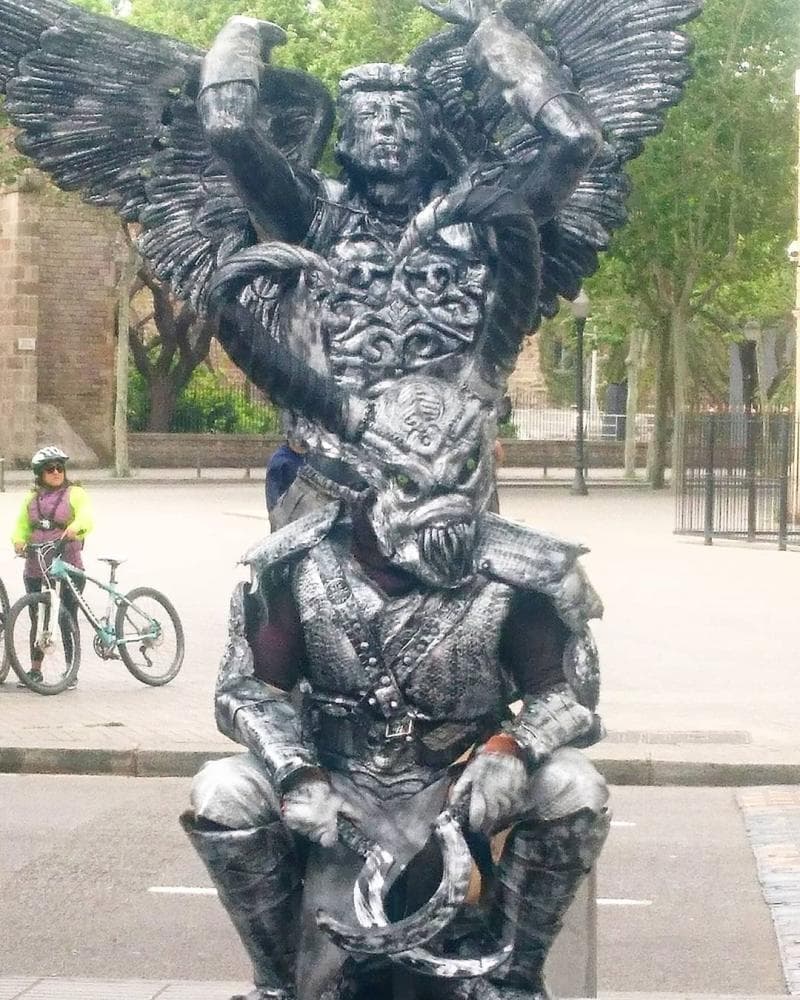
- Living Statues: The tradition of human statues, where performers remain motionless until receiving a coin, began in the 1980s and is a distinctive feature of the street's vibrant atmosphere.
Visitor Perspective
For any traveler to Barcelona, a stroll along La Rambla is considered an essential experience. It offers an unparalleled opportunity for people-watching and immersing oneself in the city's lively ambiance. To fully appreciate its charm, consider visiting in the early morning when it's quieter, allowing for a more relaxed exploration of places like La Boqueria Market. Alternatively, evenings offer a different kind of magic, with vibrant street performances and outdoor dining experiences. While undeniably captivating, La Rambla can be very crowded, especially during peak tourist season. It's advisable to be mindful of your personal belongings, as pickpocketing can occur in busy areas. Many establishments directly on La Rambla cater specifically to tourists, so adventurous visitors might find more authentic local experiences by venturing into the charming side streets of the adjacent Gothic Quarter and El Raval. Conveniently, the Barcelona Metro's L3 line runs beneath La Rambla, with several stations (Catalunya, Liceu, Drassanes) providing easy access to different points along the boulevard and its surrounding attractions.
Coordinates: 2.1705, 41.3755
View on Google Maps💬 How Travelers Describe This Place
Based on community votes
Interesting
494Must See
242Photogenic
193Unique
125Beautiful
82
Traveler Stories
Discover memorable experiences shared by travelers who have visited this place.
No traveler stories yet.
Be the first traveler to share what made this place memorable.
Things to see at La Rambla



Tour
By
Spot
Discover amazing places around the world. Your journey starts here.
Explore
© 2026 TourBySpot. All rights reserved.