Gran Teatre del Liceu
Barcelona, Spain
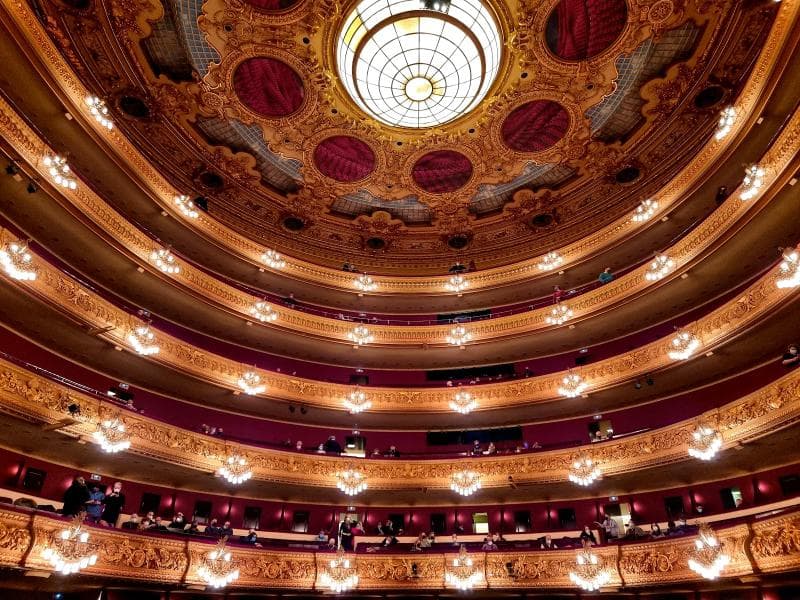
Discover the Gran Teatre del Liceu in Barcelona, Spain, an iconic opera house on La Rambla with a rich history and stunning architecture.
Overview
Nestled along the vibrant promenade of La Rambla in Barcelona, Spain, stands the Gran Teatre del Liceu, a majestic opera house that has been a cornerstone of the city's cultural life since its inauguration in 1847. Recognized as one of the world's most significant opera venues, the Liceu is an iconic symbol of Barcelona, celebrated for its rich history and exceptional artistic programming. It is an enduring landmark in the heart of the city, offering a diverse array of opera, ballet, and symphonic music to both local and international audiences.
History & Cultural Background
The origins of the Gran Teatre del Liceu trace back to 1837, when a group of National Militia officials formed an association to promote music and singing. This initiative, known as the Liceo Filo-dramático Barcelonés, quickly outgrew its initial home in an old convent, leading to the decision to construct a grander venue. Prominent bourgeois figures supported the project, envisioning an auditorium that could rival those in major European capitals. Construction commenced in 1845 on the site of a former convent on La Rambla, and the theater first opened its doors in 1847.
Throughout its more than 150-year history, the Liceu has faced significant challenges, including two devastating fires and a tragic bombing incident. The first fire in 1861 destroyed the concert hall and stage, but the theater was swiftly rebuilt. In 1893, during an opening night performance, an anarchist bomb was thrown into the stalls, causing multiple fatalities and injuries. Despite such periods of social and political upheaval, the Liceu persevered. The most recent major fire occurred in 1994, which again led to extensive reconstruction and modernization efforts, culminating in its reopening in 1999. This resilience has cemented its status as a profound symbol of Barcelona's society and its unwavering commitment to culture.
What Makes It Special
The Gran Teatre del Liceu distinguishes itself with its impressive scale and design, featuring a neoclassical facade that hints at the grandeur within. Its current Theatre Hall boasts a traditional horseshoe shape, capable of seating 2,292 spectators, making it one of the largest opera houses in Europe. The hall's excellent acoustics and elegant decoration contribute to a solemn theatrical experience, reminiscent of 19th-century architecture. The building's interior includes notable spaces such as the historical vestibule, the opulent Hall of Mirrors (Saló dels Miralls), and a grand central staircase, which survived the 1994 fire. The post-1994 reconstruction integrated modern technical infrastructure while preserving the theater's original essence, allowing for complex and ambitious productions. The stage itself is a marvel of engineering, equipped with advanced facilities for rapid set changes, supporting a diverse and dynamic programming schedule.
Stories, Fun Facts & Local Details
The Liceu's history is interwoven with dramatic tales of survival and rebirth. The fact that its initial construction was funded through private shareholders, with boxes and seats owned by prominent families, speaks to its deep connection with the city's burgeoning bourgeoisie. These private efforts contrasted with many other European opera houses, which were often supported by monarchies. The theater's repeated rises from the ashes after fires in 1861 and 1994 are testaments to its enduring spirit and the collective will of the Catalan community to restore this cultural gem. The 1893 bombing, a dark moment in its history, also highlights the intense social and political climate of the late 19th century in Barcelona. Over the decades, the Liceu has hosted legendary performers such as Maria Callas and Enrico Caruso, cementing its reputation on the international stage. It also housed Spain's oldest working orchestra, the Orquestra Simfònica del Gran Teatre del Liceu, since its opening in 1847.
Visitor Perspective
For a curious traveler, the Gran Teatre del Liceu offers more than just a performance space; it is an immersive journey into Barcelona's cultural soul. Visitors can explore its magnificent interiors through guided tours, which typically include the historical vestibule, the Concert Hall, and the stunning Hall of Mirrors. Experiencing a live opera, ballet, or concert within its hallowed walls provides a profound appreciation for its world-class acoustics and opulent setting. The Liceu's commitment to accessibility is also notable, with provisions for visitors with reduced mobility. Located on La Rambla, the theater is easily accessible and forms an integral part of the vibrant cityscape, inviting visitors to combine a cultural experience with the lively atmosphere of one of Barcelona's most famous avenues.
Coordinates: 2.173295, 41.380197
View on Google Maps💬 How Travelers Describe This Place
Based on community votes
Beautiful
996Unique
726Interesting
717Photogenic
335Must See
193
Traveler Stories
Discover memorable experiences shared by travelers who have visited this place.
No traveler stories yet.
Be the first traveler to share what made this place memorable.

Tour
By
Spot
Discover amazing places around the world. Your journey starts here.
Explore
© 2026 TourBySpot. All rights reserved.