Miró Mosaic
Barcelona, Spain
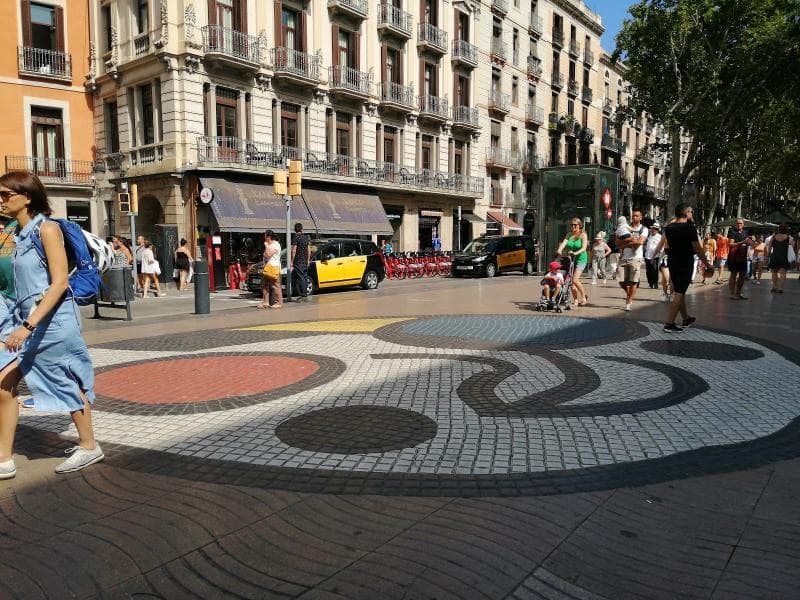
Discover Joan Miró's vibrant pavement mosaic on La Rambla, Barcelona, Spain. A symbolic artwork designed to be walked on, integrating art into city life.
Overview
Hidden in plain sight amidst the vibrant bustle of La Rambla in Barcelona, the Miró Mosaic is an extraordinary piece of public art by the renowned Catalan artist Joan Miró. This circular pavement mosaic, vibrant with primary colors, is not merely a decorative element but a deeply symbolic work designed to be walked upon by millions of passersby. Located at Plaça de la Boqueria, it offers a unique, tactile connection to the artist's imaginative world right in the heart of the city's most famous promenade. Unassuming yet profound, it stands as a testament to Miró's vision of integrating art into everyday life, welcoming visitors and locals alike with its enduring presence. Its deliberate placement and humble presentation challenge traditional notions of art, inviting interaction and contemplation from all who traverse La Rambla.
History & Cultural Background
The Miró Mosaic was conceived as part of a larger project by Joan Miró, intended to greet visitors arriving in Barcelona by various routes: air, land, and sea. This particular mosaic was designed to welcome those approaching the city from the sea. It was inaugurated on December 30, 1976, when Miró was 83 years old, marking a significant contribution to his hometown. The artwork is composed of over 6,000 terrazzo tiles, a durable material made from a mixture of white cement and crushed colored glass. Collaborating with ceramicist Joan Gardy Artigas and Escofet studios, Miró brought his distinctive abstract style to a public space, challenging conventional art display. This mosaic is one of three major public works by Miró in Barcelona from that period, which also include a mural at the airport and the 'Woman and Bird' sculpture in Joan Miró Park, completing his artistic welcome to the city. Miró's decision to embed art directly into the pavement reflects a democratic ideal, making high art accessible to everyone without barriers.
What Makes It Special
What truly sets the Miró Mosaic apart is the artist's explicit intention for it to be integrated into the urban fabric, to be stepped on, worn down, and experienced as part of daily life. Unlike delicate museum pieces, Miró wanted his artwork to endure the constant footsteps of thousands, symbolizing art's resilience and its deep connection to the city's pulse. He famously insisted that no protective layer be applied to its surface, embracing the natural wear and tear as an integral part of its existence. The mosaic's design features Miró's signature palette of white, black, blue, red, and yellow, arranged in an irregular circular pattern with cosmic symbols, including a central point and an arrow-like figure, believed to signify a celestial body and the direction of arrival. Its creation near Miró's birthplace on Passatge del Crèdit adds another layer of personal significance, anchoring his universal artistic vision to his roots in Barcelona. This profound connection to the artist's origins imbues the mosaic with a silent narrative of homecoming.
Stories, Fun Facts & Local Details
A charming anecdote reveals Miró's meticulous yet unconventional approach: he reportedly had to persuade the workers to lay the tiles in an 'irregular' way, reflecting his abstract aesthetic rather than a perfect, uniform pattern. When he visited the mosaic a month after its inauguration, he overheard a bricklayer criticizing the 'misplaced' tiles, to which Miró is said to have replied, 'You don't know how difficult it was to convince operators to put pieces in an irregular way!' Another subtle detail for keen observers is Miró's signature, discreetly embedded into one of the mosaic tiles, a small personal touch from the master himself. Perhaps the most poignant local detail is the mosaic's transformation into an impromptu memorial. Following the tragic terrorist attack on La Rambla on August 17, 2017, the area around the mosaic became a focal point for remembrance, with flowers and messages covering its surface. This moment tragically underscored the mosaic's role not just as art, but as a living part of the city's soul, bearing witness to its joys and sorrows.
Visitor Perspective
For many visitors strolling along La Rambla, the Miró Mosaic remains a 'hidden gem in plain sight,' often walked over without a second thought, precisely as Miró intended for it to be an integrated part of the urban landscape. However, for those who pause to appreciate it, the mosaic offers a unique and authentic interaction with art. It's a reminder that beauty and meaning can be found in the most unexpected places, even underfoot. Standing above the mosaic, one can contemplate its enduring spirit and the artist's vision of public art as a democratic, accessible experience. Finding Miró's subtle signature adds a rewarding challenge to the discovery. This pavement mosaic invites travelers to connect with Barcelona's artistic heritage in a truly intimate way, stepping into Miró's world and becoming part of the ongoing story of this resilient city.
Coordinates: 2.173228, 41.381234
View on Google Maps💬 How Travelers Describe This Place
Based on community votes
Interesting
872Unique
846Photogenic
684Must See
121Beautiful
87
Traveler Stories
Discover memorable experiences shared by travelers who have visited this place.
No traveler stories yet.
Be the first traveler to share what made this place memorable.

Tour
By
Spot
Discover amazing places around the world. Your journey starts here.
Explore
© 2026 TourBySpot. All rights reserved.