Kyiv Pechersk Lavra
Kiev, Ukraine
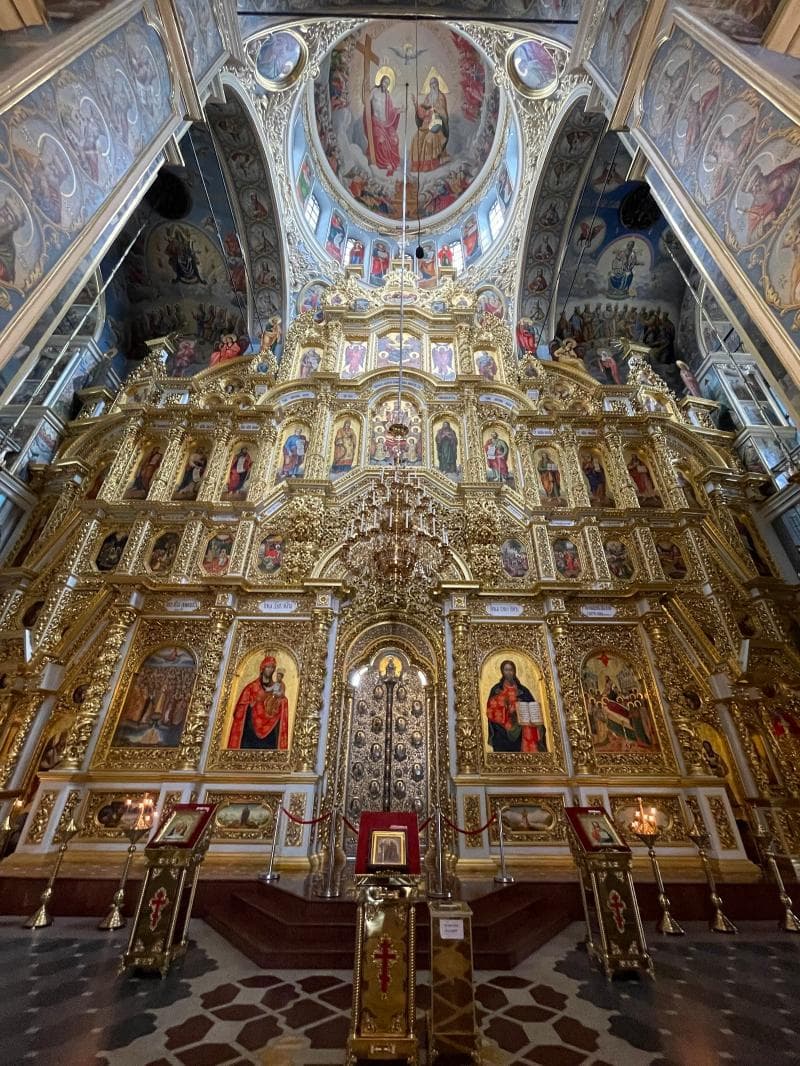
Explore Kyiv Pechersk Lavra, a UNESCO World Heritage Site in Kiev, Ukraine. Discover its ancient cave monasteries, golden-domed churches, and rich history.
Overview
Kyiv Pechersk Lavra, often called the Kyiv Monastery of the Caves, stands as a profound testament to Ukraine's rich spiritual and historical legacy. Perched gracefully on the high hills overlooking the Dnipro River in Kiev's Pechersk district, this ancient complex is more than just a monastery; it is a sprawling sanctuary of faith, culture, and architecture. Recognized globally for its outstanding value, the Lavra, alongside Saint Sophia Cathedral, was inscribed as a UNESCO World Heritage Site in 1990. Its name itself, a blend of 'Pechersk' meaning 'of the caves' and 'Lavra' denoting a high-ranking monastery, hints at its unique subterranean world. Today, it continues to serve as an active spiritual center and a national historical and cultural preserve, drawing both pilgrims and curious travelers to explore its golden-domed churches, ancient catacombs, and profound tranquility.
History & Cultural Background
The genesis of Kyiv Pechersk Lavra dates back to 1051, when the ascetic monk Anthony, returning from Mount Athos, chose a secluded cave on a Kyiv hill as his hermitage. Soon, disciples gathered around him, and the community flourished under the guidance of Theodosius, its third abbot. This marked the birth of Eastern Europe's preeminent center of Eastern Christianity. From its humble cave origins, the monastery expanded above ground, developing into a significant intellectual hub of Kyivan Rus'. It housed one of the earliest printing presses in Ukraine, becoming renowned for its printed books and religious art. Monks within its walls contributed significantly to chronicles, notably with Nestor the Chronicler playing a key role in compiling the 'Primary Chronicle', an invaluable source of early East Slavic history. Beyond its spiritual and scholarly pursuits, the Lavra was also a pioneering medical center, establishing the first hospital in Rus' during the early 12th century, with figures like Agapit of the Caves serving as revered physicians. The monastery's resilience is etched in its long history, surviving Mongol invasions, periods of Lithuanian-Polish influence, the Cossack era, the Russian Empire, and Soviet repression, always re-emerging as a beacon of Ukrainian identity and faith.
What Makes It Special
What truly sets Kyiv Pechersk Lavra apart is its remarkable blend of above-ground architectural splendor and its mysterious, sacred subterranean world. The complex is dominated by the majestic Great Lavra Bell Tower, a 96.5-meter-tall structure that has long been a defining feature of the Kiev skyline, offering breathtaking panoramic views. The Lavra is also home to numerous ornate churches, such as the Trinity Gate Church and the grand Dormition Cathedral, many showcasing exquisite Ukrainian Baroque architecture. However, it is the labyrinthine cave system—the Near and Far Caves—that forms the spiritual heart of the Lavra. These narrow underground passages, once living quarters for reclusive monks, now serve as sacred resting places for over 120 saints and mummified monks. The cool, dry atmosphere of the caves has naturally preserved these relics for centuries, a phenomenon that deeply moves believers and intrigues visitors alike. This dual nature, with vibrant golden-domed churches above and a solemn, hallowed necropolis below, creates a uniquely profound spiritual and historical experience.
Stories, Fun Facts & Local Details
The Great Lavra Bell Tower, an iconic symbol of Kiev, boasts a fascinating detail: its clock famously stopped only once since 1903, specifically during the explosion of the Dormition Cathedral in 1941. The caves themselves are steeped in tales of asceticism; some monks practiced the strictest form of seclusion, walling themselves into cells with only a small opening for food, symbolizing their complete devotion. The very name 'Pechersk' is a direct nod to these monastic caves, underscoring their foundational importance. Beyond its religious significance, the Lavra's printing house played a crucial role in disseminating knowledge, using woodcuts to create religious iconography sold to pilgrims, thereby supporting the monastery's upkeep. It was also at the Lavra that the monk Alipius became the first iconographer of Kyivan Rus', learning his craft from Greek masters. For centuries, foreign travelers spread awareness of the Lavra by exaggerating the length of its catacombs, claiming they stretched for hundreds of kilometers, even reaching Moscow and Novgorod.
Visitor Perspective
Exploring Kyiv Pechersk Lavra is an unforgettable experience, offering a deep dive into centuries of Ukrainian spirituality and heritage. Visitors can expect to spend at least two hours, or ideally three to four hours, to truly appreciate the complex. The Upper Lavra, managed by the state, houses many museums and architectural marvels. The Lower Lavra, still an active monastery, contains the sacred cave system. Access to the caves requires modest dress—covered shoulders and knees for all, and a headscarf for women—to show respect for the holy site. Guided tours of the Near Caves are available, offering a chance to walk through dimly lit tunnels and witness the monks' humble cells and relics. The nearest metro station, Arsenalna, is conveniently close, about a 15-20 minute walk away. As of September 2023, UNESCO has placed the site on its World Heritage in Danger list due to ongoing conflicts, highlighting its vulnerability and the urgent need for its preservation. Despite challenges, the Lavra remains a vibrant cultural and spiritual landmark, serving as a powerful symbol of Ukraine's enduring spirit.
Coordinates: 30.559167, 50.434167
View on Google Maps💬 How Travelers Describe This Place
Based on community votes
Beautiful
982Interesting
876Photogenic
648Unique
235Must See
197
Traveler Stories
Discover memorable experiences shared by travelers who have visited this place.
No traveler stories yet.
Be the first traveler to share what made this place memorable.
Things to see at Kyiv Pechersk Lavra



Tour
By
Spot
Discover amazing places around the world. Your journey starts here.
Explore
© 2026 TourBySpot. All rights reserved.