Monastic Walls
Kiev, Ukraine
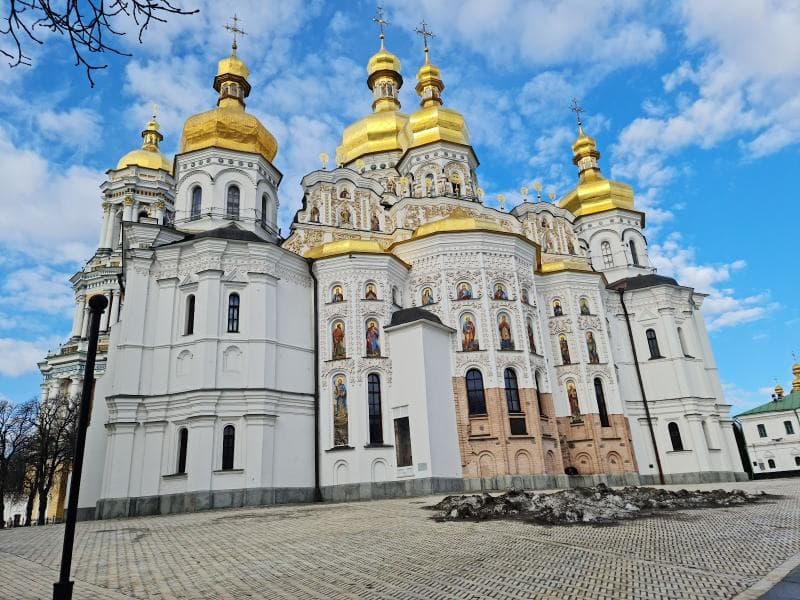
Explore the ancient Monastic Walls of Kyiv Pechersk Lavra in Kiev, Ukraine. Discover centuries of history, defense, and spiritual significance surrounding this UNESCO World Heritage site.
Overview
The Monastic Walls of Kyiv Pechersk Lavra stand as a testament to centuries of resilience, faith, and strategic importance in Kiev, Ukraine. These imposing fortifications encircle one of Eastern Europe's most significant Orthodox Christian monasteries, a UNESCO World Heritage site. More than mere barriers, the walls are an integral part of the Lavra's architectural ensemble, embodying its enduring legacy through periods of peace and conflict. They define the sacred space within, protecting its revered churches, caves, and monastic life, offering visitors a tangible connection to its profound past.
History & Cultural Background
The history of the Lavra's fortifications dates back to the late 12th century, when the monastery first erected a substantial stone wall, measuring approximately 2 meters wide and 5 meters high. This early defensive structure, however, did not survive the devastating Mongol invasion of Rus', and its remnants were only fully excavated by archaeologists in 1951. Following this destruction, the monastery relied on wooden defenses for a period.
A significant era of reconstruction and fortification began in the late 17th century. In 1679, Hetman Ivan Samoylovych initiated the addition of a moat and new ramparts around the upper monastery. However, the most substantial stone walls visible today were largely financed by Hetman Ivan Mazepa during the Great Northern War, built between 1696 and 1702. These formidable walls were designed to protect the monastery from potential Swedish attacks and measured approximately 1,090 meters in length, 3 meters in thickness, and stood 7 meters high.
These extensive fortifications incorporated three main gates: the Holy Gates, crowned by the beautiful Trinity Gate Church; the Economy Gates, featuring the All Saints Church; and the Southern Gates, also known as the Caves Gates. Four distinct towers further reinforced the perimeter: the Ivan Kushchnyk Tower, Onufriy Tower, Painter Tower, and Clock Tower. Subsequent centuries saw further enhancements, including Tsar Peter I's order in 1706 for the construction of the 'Old Cave Fortress,' completed by 1723, and additional rebuildings during the 18th and 19th centuries, particularly around the Near and Far Caves.
What Makes It Special
What truly sets the Monastic Walls apart is their layered history and architectural grandeur. They are not a singular creation but a composite of defensive strategies and artistic styles spanning centuries. The dominant features reflect the Ukrainian Baroque period, particularly evident in the scale and ornamentation integrated within the gate churches.
The walls symbolise the Lavra's enduring role as a spiritual and cultural bulwark. They guarded invaluable relics, ancient manuscripts, and the monastic community itself, allowing the monastery to flourish as a center of learning, printing, and Orthodox tradition in Eastern Europe. The thoughtful integration of sacred spaces, such as the Trinity Gate Church, directly into the defensive structures highlights a unique blend of spiritual purpose and pragmatic protection.
Their status as an immovable monument of national significance in Ukraine underscores their importance beyond mere architecture; they are a vital part of the nation's heritage.
Stories, Fun Facts & Local Details
Throughout their long existence, the Monastic Walls have silently witnessed numerous historical turning points. They stood firm through sieges and changing political landscapes, embodying the Lavra's resilience. A notable detail is Hetman Ivan Mazepa's personal commitment to fortifying the Lavra, investing significantly in its defense during a turbulent era.
Each of the four main towers has its own story, often reflected in its name. For instance, the Painter Tower once housed an art studio, while the Clock Tower featured a clock until 1818. The Onufriy Tower reportedly contained Hetman Mazepa's personal chambers at one point.
An interesting geographical detail is that while the Lavra is extensively fortified, the historic Church of the Savior at Berestov, though closely associated with the monastery, stands just outside the main defensive wall system to the north. This distinction further emphasizes the protective embrace of the main monastic walls around the core complex.
Visitor Perspective
For visitors today, walking alongside or through the ancient Monastic Walls of Kyiv Pechersk Lavra is an immersive experience. The sheer scale and historical depth are palpable, offering a vivid sense of the monastery's past as a self-contained spiritual city. Passing through the grand Holy Gates beneath the Trinity Gate Church, one enters a realm where time seems to slow, enveloped by centuries of faith and history. The walls frame breathtaking views of the golden-domed churches within and, from certain vantage points, offer glimpses of the Dnieper River valley beyond. They invite contemplation on the passage of time and the enduring power of human endeavor, leaving a lasting impression of strength, beauty, and profound heritage.
Coordinates: 30.55917, 50.43417
View on Google Maps💬 How Travelers Describe This Place
Based on community votes
Interesting
712Photogenic
628Unique
542Beautiful
516Must See
326
Traveler Stories
Discover memorable experiences shared by travelers who have visited this place.
No traveler stories yet.
Be the first traveler to share what made this place memorable.

Tour
By
Spot
Discover amazing places around the world. Your journey starts here.
Explore
© 2026 TourBySpot. All rights reserved.