Great Lavra Bell Tower
Kiev, Ukraine
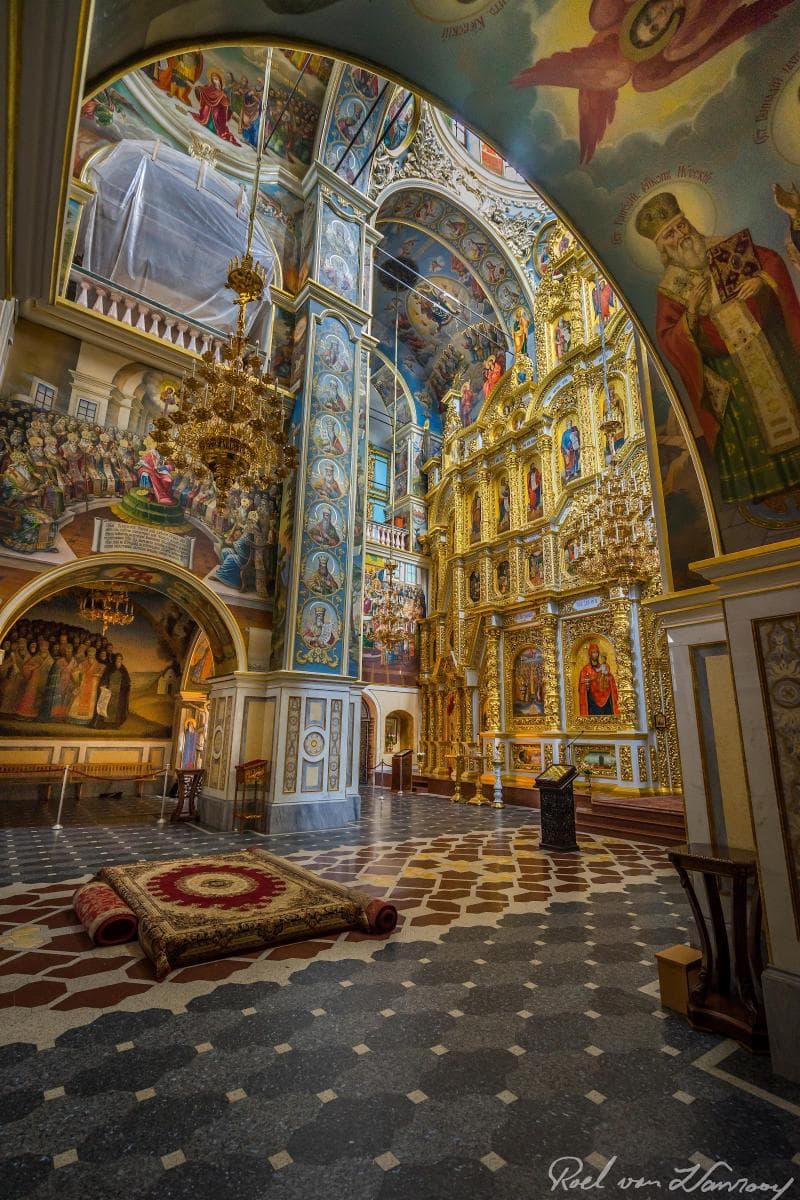
Explore the Great Lavra Bell Tower, a historic 96.5m landmark in Kyiv, Ukraine. Discover its Baroque architecture, chiming clock, and panoramic city views.
Overview
Dominating the skyline of Ukraine's capital, Kyiv, the Great Lavra Bell Tower stands as an iconic symbol of the historic Kyiv Pechersk Lavra monastery complex. Rising majestically to a height of 96.5 meters, including its gilded cross, this magnificent structure is not merely a bell tower but a testament to centuries of Ukrainian spiritual and architectural heritage. Located within the ancient cave monastery, it offers both a visual landmark from afar and a profound experience up close, drawing the eye with its intricate Baroque and Neoclassical design and the glint of its golden dome against the sky.
History & Cultural Background
The story of the Great Lavra Bell Tower began long before its current form. Earlier wooden belfries at the Lavra were destroyed by a devastating fire in 1718. In the quest for a more enduring structure, initial plans for a five-tier brick bell tower were drawn up in 1721. However, construction did not commence for another decade. The current tower was built between 1731 and 1745, under the skilled direction of German architect Johann Gottfried Schädel. His design significantly modified earlier proposals, resulting in a four-tiered structure that, upon its completion, was renowned as the tallest free-standing bell tower and brick building in Eastern Europe. The initial funding for such an ambitious project was provided by Ukrainian Cossack Hetman Ivan Mazepa, though work faced delays, partly due to Peter I's ban on brick construction in Ukraine, aimed at diverting resources to St. Petersburg. Approximately five million bricks and 20,000 tons of lime were used in its construction, highlighting the immense scale of the undertaking.
What Makes It Special
The Great Lavra Bell Tower's distinctiveness lies in its impressive scale, intricate design, and enduring presence. It is a stunning example of Neoclassical architecture, though it incorporates elements of the Baroque style, contributing to its unique aesthetic. The tower is composed of four progressively smaller tiers, each adorned with a different classical order of columns: the second tier features 32 Dorian columns, the third boasts 16 Ionic columns, and the uppermost tier is decorated with 8 Corinthian columns. This sophisticated progression creates a sense of lightness as the tower ascends, culminating in a striking gilded dome that adds to its grandeur. Its foundations, exceeding 7 meters in depth, and walls, 8 meters thick at the lowest tier, speak to the engineering prowess required to support such a monumental structure.
Stories, Fun Facts & Local Details
- A Slight Lean: Much like its more famous Italian counterpart, the Great Lavra Bell Tower exhibits a slight lean. It is inclined approximately 62 centimeters (24 inches) from its center point towards the north-east, a fact that has remained largely unchanged for centuries.
- The Chiming Clock: On its fourth tier, a chiming clock, installed in 1903, marks the hours and quarters. This massive mechanism weighs 4.5 tons and was manufactured by Moscow master A. Enodin, based on the Kremlin clock. Remarkably, this clock is said to have stopped only once in its history—in September 1941, during World War II, when the nearby Dormition Cathedral was destroyed.
- Historic Bells: While many of its original bells were lost, three 18th-century bells, including the Uspenskyi bell (weighing one ton), which was cast in 1732 by Ivan Motorin (also known for the Moscow Kremlin Tsar Bell), are still preserved.
- A City Landmark: The bell tower's immense height meant it remained the tallest structure in Kyiv for over a century and could be seen from distances of 25 to 30 kilometers away, solidifying its role as a key city landmark.
- Recent Access: After significant repair and restoration works, access to the highest tier was reopened to visitors in 2023 for the first time in three decades, offering renewed opportunities to experience its grandeur.
Visitor Perspective
For visitors to Kyiv Pechersk Lavra, the Great Lavra Bell Tower is an unmissable experience. Ascending to its viewing platform, located on the third tier, requires climbing over 300 steps. The effort is richly rewarded with breathtaking, panoramic views of the entire monastery complex, the serene Dnipro River, and the sprawling cityscape of Kyiv. From this vantage point, one can truly appreciate the Lavra's scale and its harmonious integration with the surrounding landscape. The journey through the tower also allows for a closer look at its robust construction and decorative elements, offering a deeper connection to this architectural marvel. Visiting the Great Lavra Bell Tower is not just about the view; it is about stepping back in time and connecting with the profound history and spiritual significance embedded within its brickwork.
Coordinates: 30.556389, 50.434722
View on Google Maps💬 How Travelers Describe This Place
Based on community votes
Must See
876Unique
875Photogenic
820Interesting
718Beautiful
648
Traveler Stories
Discover memorable experiences shared by travelers who have visited this place.
No traveler stories yet.
Be the first traveler to share what made this place memorable.

Tour
By
Spot
Discover amazing places around the world. Your journey starts here.
Explore
© 2026 TourBySpot. All rights reserved.