Kilmainham Gaol
Dublin, Ireland
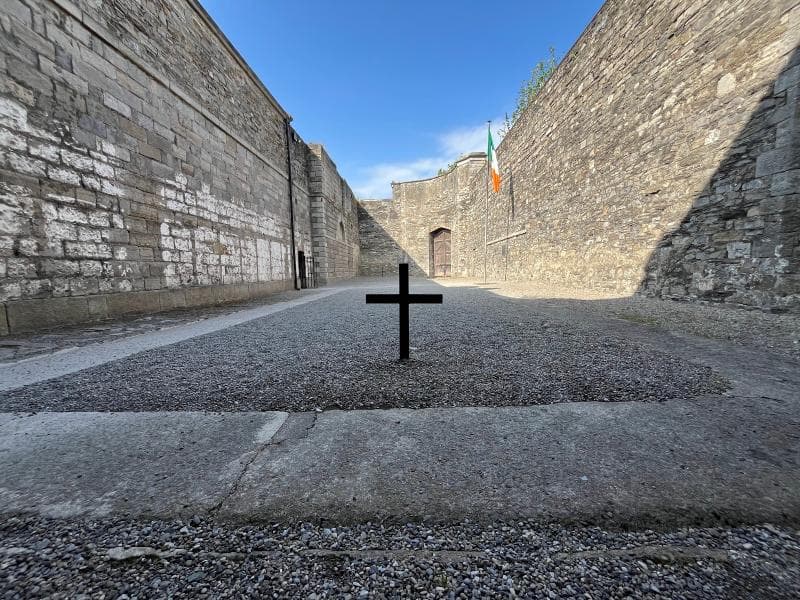
Explore Kilmainham Gaol in Dublin, Ireland, a former prison now a museum, detailing Ireland's fight for independence and poignant history.
Overview
Kilmainham Gaol, situated in Dublin, Ireland, stands as a profoundly significant former prison, now transformed into a compelling museum. Originally opened in 1796 as the 'New Gaol' or 'County of Dublin Gaol', it served as a correctional facility for 128 years. Decommissioned in 1924 by the Irish Free State government, its cells were silent for decades before being preserved as a national monument in the 1960s and subsequently restored. Today, Kilmainham Gaol is recognized as one of Europe's largest unoccupied prisons, drawing visitors from around the globe. Access to this historic site is exclusively by guided tour, necessitating advance online booking due to its popularity. Visitors should allocate approximately 90 minutes for their experience, which includes a one-hour guided tour and time to explore the museum's exhibitions.
History & Cultural Background
From its inception until its closure, Kilmainham Gaol played a pivotal, often tragic, role in Ireland's journey towards independence. Its cold stone walls held a diverse population of inmates, ranging from common criminals – including debtors, vagrants, and those imprisoned for petty theft – to the most prominent figures in Irish nationalism. Thousands of men, women, and even children passed through its gates, many for minor offenses like stealing a boiled egg, often driven by dire poverty, especially during the Great Famine. The Gaol's conditions were notoriously harsh, with little to no segregation; men, women, and children were often incarcerated together, up to five in a single cell, with only a solitary candle providing light and meager warmth for weeks.
Kilmainham became synonymous with Ireland's struggle against British rule. It imprisoned leaders from nearly every major Irish uprising from 1798 through to the Civil War of 1922-23. Iconic names associated with the Gaol include Robert Emmet, Anne Devlin, Charles Stewart Parnell, Countess Markievicz, and famously, the leaders of the 1916 Easter Rising. The most solemn chapter occurred in May 1916, when 14 leaders of the Easter Rising were executed by firing squad in the Gaol's Stonebreaker's Yard, an event that profoundly shifted public opinion in Ireland and galvanized the independence movement.
What Makes It Special
Kilmainham Gaol holds a unique place in the hearts of many as a tangible monument to Ireland's quest for political independence. Its imposing architecture, particularly the Victorian East Wing with its striking central atrium and tiered walkways, offers a stark visual representation of 19th-century penal philosophy focused on surveillance and reform. The contrast between the older, grimmer West Wing and this more 'modern' section tells a story in itself. Beyond its physical structure, the Gaol's profound emotional resonance makes it special; it is often referred to as the 'Irish Bastille', symbolizing revolution and the enduring spirit of a nation. It stands as a powerful, albeit somber, reminder of the sacrifices made in pursuit of freedom and justice, a place where history feels intensely alive within its silent cells and yards.
Stories, Fun Facts & Local Details
The narratives woven into Kilmainham Gaol's fabric are both poignant and compelling. Public hangings initially took place at the front of the prison, a grim spectacle, though later executions were conducted privately within its walls, with a specific hanging cell constructed in 1891. Perhaps one of the most heart-wrenching stories is that of James Connolly, a leader of the 1916 Easter Rising, who was so severely wounded he had to be carried on a stretcher and tied to a chair for his execution in the Stonebreaker's Yard, an act of brutality that shocked many. The youngest recorded prisoner was believed to be just seven years old, highlighting the harsh realities of justice in those times.
The intricate stonework above the main entrance features five snakes in chains, an old symbol intended to represent evil held under strict control. Interestingly, after its closure in 1924, there was initially little interest in preserving the Gaol, seen by some as a symbol of oppression. It was only through the dedication of the Kilmainham Gaol Restoration Committee, comprised of volunteers, that the building was saved from potential demolition and reopened as a museum in 1966. This grassroots effort underscores the deep cultural significance the site eventually attained.
Visitor Perspective
A visit to Kilmainham Gaol is more than just a historical tour; it is an immersive journey that offers a powerful and moving glimpse into Ireland's past. The expert guides are instrumental in bringing the cold stone corridors to life, sharing stories that are by turns heartbreaking, inspiring, and sometimes infuriating, leaving a lasting impression on visitors. The experience is designed to be highly informational, covering the social history of the Gaol, the broader Irish prison system, and the nation's fight for independence through detailed exhibitions. Due to the nature of the guided tour and its somber themes, it is generally not recommended for very young children under the age of six, and for practical reasons, buggies and strollers are not permitted on the tour. It's also advisable to dress warmly, especially during winter months, as parts of the tour are outdoors and the interior of the historic building can be quite cold. While there are no car parking facilities directly at the Gaol, nearby options are available, ensuring accessibility for all curious travelers seeking to understand this pivotal piece of Irish heritage.
Coordinates: -6.3098, 53.3418
View on Google Maps💬 How Travelers Describe This Place
Based on community votes
Photogenic
931Unique
692Interesting
491Beautiful
261Must See
49
Traveler Stories
Discover memorable experiences shared by travelers who have visited this place.
No traveler stories yet.
Be the first traveler to share what made this place memorable.
Things to see at Kilmainham Gaol



Tour
By
Spot
Discover amazing places around the world. Your journey starts here.
Explore
© 2026 TourBySpot. All rights reserved.