Execution Sites
Dublin, Ireland
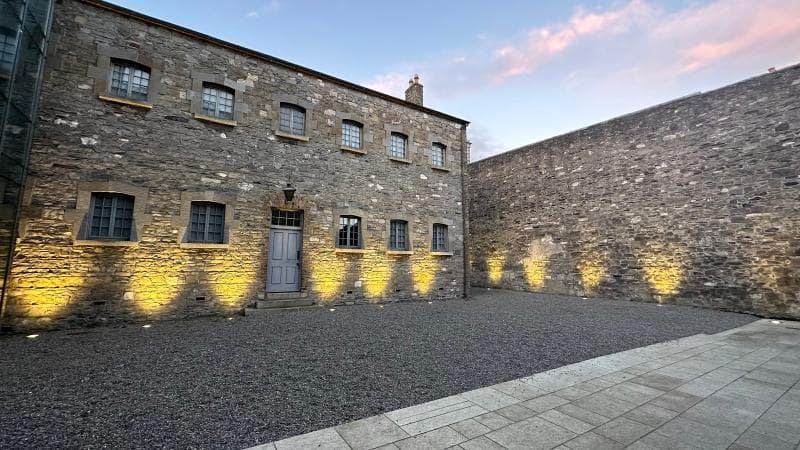
Explore the Stonebreakers' Yard, the somber execution site within Kilmainham Gaol in Dublin, Ireland, where 1916 Easter Rising leaders were martyred.
Overview
Deep within the historic walls of Kilmainham Gaol in Dublin, Ireland, lies a place of profound significance known as the 'Execution Sites', most notably the Stonebreakers' Yard. This unassuming courtyard, once a place of mundane penal labour, was tragically transformed into the crucible of Irish independence. It is here that the fate of many Irish revolutionaries was sealed, particularly during the tumultuous period of the 1916 Easter Rising. Today, it stands as a solemn testament to sacrifice and a powerful symbol of Ireland's fight for self-determination. Visitors to Kilmainham Gaol are inevitably drawn to this hallowed ground, where the echoes of history resonate with an enduring intensity, offering a unique and often emotional connection to the past.
History & Cultural Background
Kilmainham Gaol, opened in 1796, served as Dublin's county gaol, designed to be a modern prison for its time. Over its long history, it housed a diverse range of prisoners, from common criminals to political detainees. However, it is the Stonebreakers' Yard that gained an indelible place in Irish history during the aftermath of the 1916 Easter Rising. Between May 3rd and May 12th, 1916, fourteen leaders of the Rising were executed by firing squad in this very yard. These executions, carried out by the British Army, were intended to crush the rebellion but, paradoxically, ignited a surge of Irish nationalist sentiment.
Originally, the Stonebreakers' Yard was where male prisoners performed hard labour, breaking stones, a stark reminder of the harsh realities of prison life. This yard, previously a scene of toil, became the backdrop for the final moments of figures such as Patrick Pearse, Thomas Clarke, Thomas MacDonagh, and James Connolly. The swift and often brutal nature of these executions, which included denying proper burials to some of the executed, transformed these leaders into martyrs in the eyes of the Irish public.
What Makes It Special
The Stonebreakers' Yard is more than just an historical location; it is a sacred space where the modern identity of Ireland was forged. The confined nature of the yard, enclosed by high, unyielding stone walls, creates an atmosphere of immense gravity and introspection. It is a place where the concept of national identity moved from a political ideal to a visceral reality, cemented by the blood and sacrifice of those executed there.
Standing within this yard, one cannot escape the profound sense of history that permeates every stone. The silent witness of the walls, the memory of the convictions, courage, and ultimate consequences of those who stood there, make it an incredibly powerful experience. It's a stark reminder that freedom often comes at a great cost, and the decisions made in this small yard had monumental repercussions for an entire nation. The deliberate suppression of the yard's memory for decades after the executions only adds to its mystique and importance today.
Stories, Fun Facts & Local Details
The executions in the Stonebreakers' Yard are filled with poignant and often tragic details that highlight the human cost of the fight for independence. One of the most famous stories is that of James Connolly, who was so severely wounded from fighting during the Rising that he could not stand. He was reportedly tied to a chair to face the firing squad on May 12, 1916, a detail that deeply affected public opinion.
Another heartbreaking tale is that of Joseph Plunkett, who, just hours before his execution on May 4, 1916, married his fiancée, Grace Gifford, in the Kilmainham Gaol chapel. These personal stories, interwoven with the broader narrative of rebellion, make the history of the Execution Sites particularly moving.
Following their executions, many of the leaders were buried in quicklime in a mass grave at Arbour Hill Prison, a deliberate act to prevent their graves from becoming shrines. However, this only served to strengthen their martyr status. Kilmainham Gaol itself, including the Stonebreakers' Yard, was abandoned and fell into disrepair after its closure in 1924, its symbolic importance ironically contributing to its neglect. It was only through the dedication of a restoration society, beginning in the 1960s, that the gaol was preserved and opened to the public as a museum in 1966, ensuring these stories would not be forgotten.
Visitor Perspective
Visiting the Execution Sites, particularly the Stonebreakers' Yard, at Kilmainham Gaol is often described as a deeply moving and reflective experience. It's a moment to step back in time and consider the weighty decisions and profound sacrifices made by individuals for the cause of Irish independence. The solemnity of the yard encourages contemplation, and many visitors find themselves overwhelmed by the palpable sense of history. The guided tours provided by the museum bring these stories to life, offering insightful narratives that humanize the historical figures and the events that unfolded here. It is an essential stop for anyone seeking to understand the foundational moments of modern Ireland and truly connect with its revolutionary past.
Coordinates: -6.309805, 53.341838
View on Google Maps💬 How Travelers Describe This Place
Based on community votes
Interesting
931Beautiful
692Unique
491Photogenic
266Must See
261
Traveler Stories
Discover memorable experiences shared by travelers who have visited this place.
No traveler stories yet.
Be the first traveler to share what made this place memorable.

Tour
By
Spot
Discover amazing places around the world. Your journey starts here.
Explore
© 2026 TourBySpot. All rights reserved.