Courtyard
Dublin, Ireland
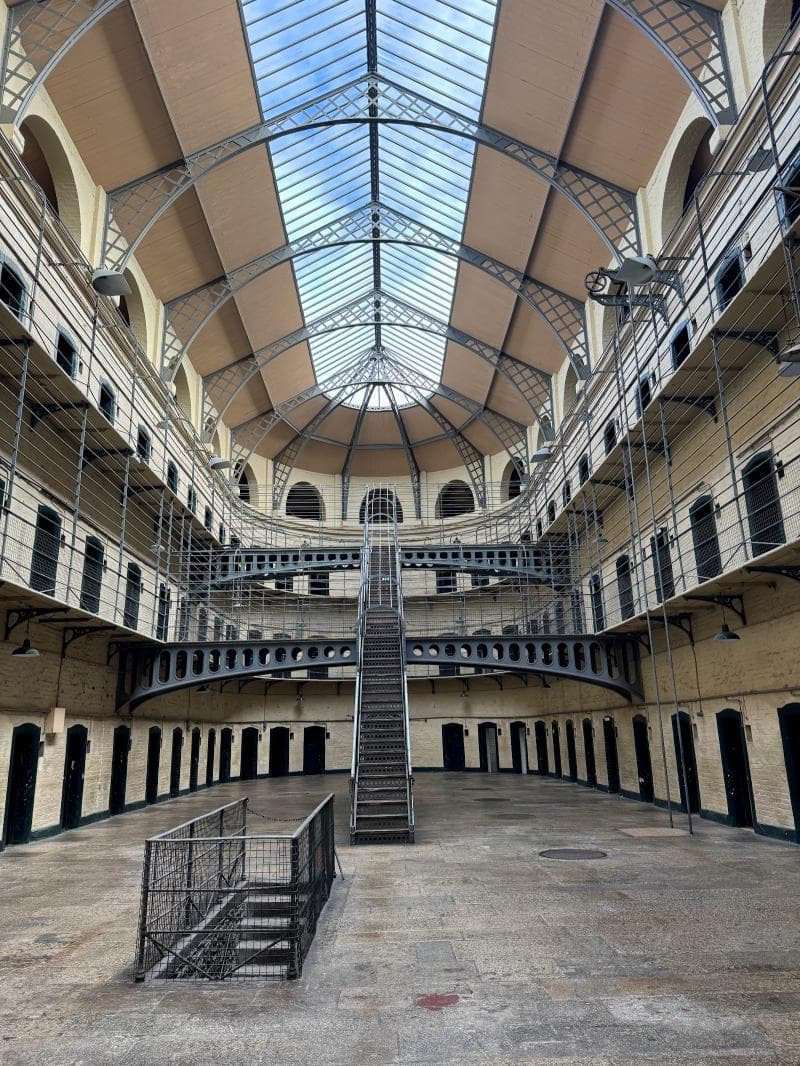
Discover the Stonebreakers' Yard, the poignant courtyard within Kilmainham Gaol in Dublin, Ireland, where 1916 Easter Rising leaders were executed.
Overview
Stepping into the Courtyard at Kilmainham Gaol in Dublin, Ireland, often referred to as the Stonebreakers' Yard, is to enter a profound space where history's weight is palpable. This seemingly austere enclosure, with its high stone walls, transcends its original purpose as a place of hard labor and exercise, evolving into a solemn memorial to Ireland's struggle for independence. It was here, within these very walls, that some of the most pivotal and heartbreaking moments of Irish history unfolded, particularly following the 1916 Easter Rising. The yard stands as a stark reminder of the sacrifices made and the profound courage displayed by those who dreamed of a free Ireland. Its atmosphere is one of quiet contemplation, drawing visitors into a narrative far grander than its physical dimensions suggest.
History & Cultural Background
The Stonebreakers' Yard was originally an area for prisoners sentenced to hard labor, primarily men, who would spend their days manually breaking stones. Women with similar sentences worked in the laundry. The Gaol itself, opened in 1796 as the County of Dublin Gaol, housed a diverse range of inmates, from common criminals and debtors to prominent political figures. However, the courtyard's most enduring and poignant historical significance stems from the aftermath of the 1916 Easter Rising. Between May 3rd and May 12th, 1916, fourteen leaders of the Rising were executed by firing squad in this very yard. These executions, carried out by the British authorities, unwittingly transformed these rebels into martyrs and dramatically shifted public opinion, fueling the burgeoning movement for Irish independence. Prior to this, the yard had also been used for other executions and had housed various political prisoners over the centuries, cementing its place in the nation's collective memory.
What Makes It Special
What sets the Stonebreakers' Yard apart is its profound emotional resonance. It is not merely a historical site but a place imbued with the spirits of those who walked its cobblestones in their final moments. The presence of memorial crosses marks the exact spots where the leaders of the 1916 Rising fell, serving as tangible anchors to a moment that irrevocably shaped a nation. The execution of James Connolly, who, due to his injuries, had to be tied to a chair, is a particularly poignant detail that humanizes the immense sacrifice. The yard was deliberately abandoned and sealed off for decades after the executions, its memory suppressed, only to be meticulously restored in the 1960s by volunteers who uncovered original wall fragments and bullet marks, preserving the stark reality of the past. This deliberate act of remembrance makes the courtyard a powerful symbol of national identity and resilience.
Stories, Fun Facts & Local Details
One of the most heart-wrenching stories associated with the courtyard involves Joseph Plunkett. Just hours before his execution in the Stonebreakers' Yard, he married his fiancée, Grace Gifford, in the Gaol's Catholic chapel, a ceremony lit by prison-issue candles with strict silence imposed. This act of defiance and love in the face of certain death adds a deeply human and tragic dimension to the historical narrative. Another lesser-known fact is that after the executions, the prison itself fell into disrepair and was nearly demolished before a dedicated group of volunteers launched a restoration campaign in the 1950s and 60s, opening it as a museum on the 50th anniversary of the Easter Rising. The silence and stillness you experience today in the yard are a direct result of this dedicated preservation, allowing visitors to connect directly with the past without modern distractions. Even the very stones of the exercise yard, as one imprisoned during the Civil War noted, speak of the blood that stained them.
Visitor Perspective
For many visitors, entering the Stonebreakers' Yard is the climax of their Kilmainham Gaol experience. The transition from the stark cells and corridors to the open, yet enclosed, space of the yard creates an immediate sense of solemnity. Guides often lead groups here, encouraging quiet reflection as the story of the executions is recounted. The simplicity of the yard, devoid of elaborate monuments, forces contemplation on the bare facts of what occurred. It's a place that asks for silence, inviting personal connection to the struggles and sacrifices for Irish independence. The sense of gravity, of standing on ground that witnessed such momentous and tragic events, is profound, leaving a lasting impression on those who visit.
Coordinates: -6.3098, 53.34184
View on Google Maps💬 How Travelers Describe This Place
Based on community votes
Interesting
800Must See
658Beautiful
589Photogenic
387Unique
90
Traveler Stories
Discover memorable experiences shared by travelers who have visited this place.
No traveler stories yet.
Be the first traveler to share what made this place memorable.

Tour
By
Spot
Discover amazing places around the world. Your journey starts here.
Explore
© 2026 TourBySpot. All rights reserved.