Stonebreakers’ Yard
Dublin, Ireland
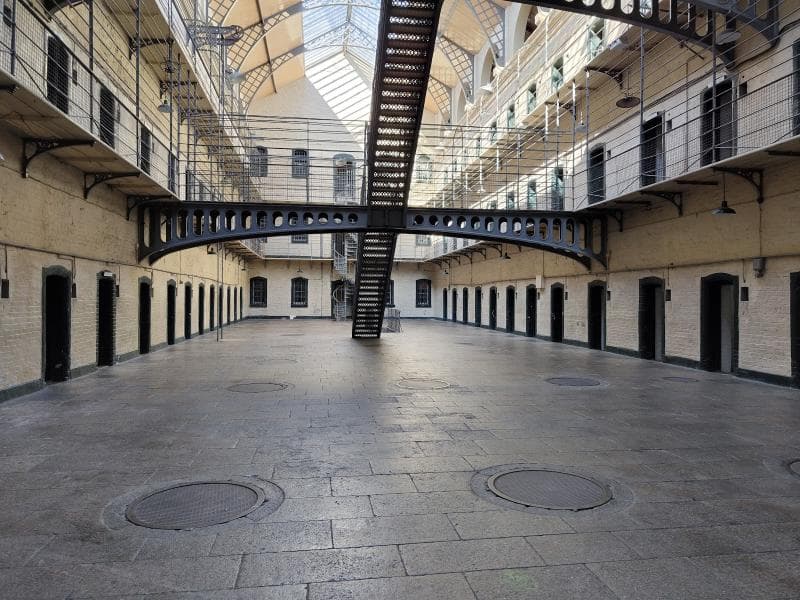
Explore Stonebreakers' Yard in Kilmainham Gaol, Dublin, Ireland – the solemn site where 1916 Easter Rising leaders were executed, shaping Irish history.
Overview
The Stonebreakers' Yard, nestled within the imposing walls of Kilmainham Gaol in Dublin, Ireland, is far more than just an old prison courtyard. It is a profoundly significant site, a solemn space where the echoes of Ireland's fight for independence resonate deeply. Originally designed for hard labour, where male prisoners would spend their days breaking stones, this seemingly ordinary yard was tragically transformed into the execution site for the leaders of the 1916 Easter Rising. Today, it stands as a powerful monument, inviting visitors to reflect on the pivotal moments that forged modern Ireland.
History & Cultural Background
Kilmainham Gaol itself opened in 1796 as the new county gaol for Dublin, witnessing a long and often grim history until its closure in 1924. Throughout its operational years, it incarcerated a diverse range of individuals, from common criminals and those awaiting transportation to Australia, to prominent political prisoners involved in various Irish rebellions. The gaol played a central role in nearly all major Irish nationalist uprisings, holding figures from the 1798 Rebellion to the Irish Civil War of 1922-23.
The Stonebreakers' Yard, specifically, was where prisoners condemned to hard labour performed their arduous tasks. However, its historical weight primarily stems from the events of May 1916. Following the failed Easter Rising, fourteen of the insurrection's leaders were executed here by firing squad over ten harrowing days. These executions, carried out by British forces, included signatories of the Proclamation of the Irish Republic, such as Patrick Pearse, Thomas Clarke, and James Connolly. The yard's transformation from a place of mundane labour to a site of profound sacrifice etched its place indelibly into Irish national consciousness.
What Makes It Special
What makes the Stonebreakers' Yard uniquely special is its direct, tangible connection to the birth of the Irish Republic. It is a place where history did not just happen, but where it was dramatically, brutally, and ultimately, catalytically made. The executions of the Easter Rising leaders here are widely considered to have galvanized Irish public opinion, turning the tide of sentiment towards independence after an initially mixed public reaction to the Rising itself.
The yard's simple, stark appearance today belies the immense historical gravity it holds. Two small crosses embedded in the stone wall mark the approximate spots where the firing squads' targets stood, serving as poignant reminders of the lives lost and the ideals they died for. Standing in this enclosed space, visitors are transported to a moment of immense national trauma and transformation, making it one of the most sacred and moving locations in Ireland.
Stories, Fun Facts & Local Details
Among the most tragic and impactful stories associated with the Stonebreakers' Yard is that of James Connolly. Gravely wounded during the Easter Rising, he was so weak he could not stand for his execution. On May 12, 1916, he was reportedly tied to a chair to face the firing squad, an act that further inflamed public outrage. Another poignant tale is that of Joseph Plunkett, who married his sweetheart Grace Gifford in the gaol's chapel just hours before his execution in the yard on May 4, 1916.
Interestingly, after the executions, the yard was largely abandoned and its memory suppressed for decades. It was only during the restoration efforts in the 1960s that its historical significance was fully re-embraced and preserved for future generations. The British government's intention with the executions was to crush the rebellion, but ironically, they cemented the resolve for Irish independence, making the Stonebreakers' Yard a powerful symbol of defiance rather than defeat.
Visitor Perspective
A visit to the Stonebreakers' Yard is often described as the most solemn and impactful part of the Kilmainham Gaol experience. Travelers consistently note a profound sense of quiet and reflection upon entering this space. The high, unyielding walls and the open sky above seem to amplify the sense of memory and sacrifice. Guides lead visitors through the narrow corridors, culminating in the courtyard, where the history feels almost palpable. It is common for visitors to spend moments in silent contemplation, absorbing the weight of the events that transpired here.
The experience is designed to be thought-provoking, prompting a deeper understanding of Ireland's struggle for self-determination. The guided tour ensures that the stories of the men executed are told with reverence and detail, allowing curious travelers to connect emotionally with the site's immense historical and cultural significance. It is a place that challenges visitors to confront a difficult past, yet leaves them with an appreciation for the sacrifices made in the name of freedom.
Coordinates: -6.3098, 53.3418
View on Google Maps💬 How Travelers Describe This Place
Based on community votes
Interesting
931Beautiful
692Unique
491Photogenic
266Must See
261
Traveler Stories
Discover memorable experiences shared by travelers who have visited this place.
No traveler stories yet.
Be the first traveler to share what made this place memorable.

Tour
By
Spot
Discover amazing places around the world. Your journey starts here.
Explore
© 2026 TourBySpot. All rights reserved.