East Wing Cells
Dublin, Ireland
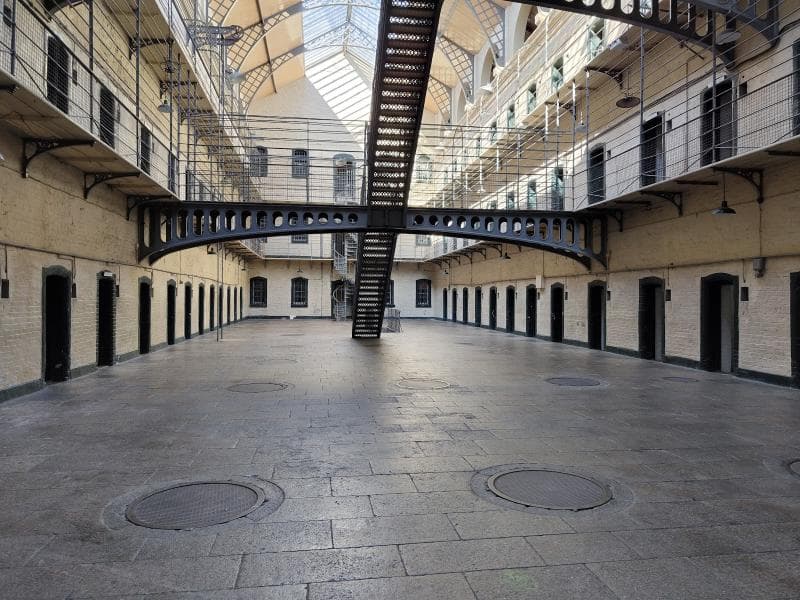
Explore the East Wing Cells of Kilmainham Gaol in Dublin, Ireland. Discover its Victorian-era architecture, 'Panopticon' design, and poignant historical stories.
Overview
Kilmainham Gaol in Dublin, Ireland, stands as a profound monument to the nation's turbulent past, particularly its struggle for independence. Originally opened in 1796 as the County of Dublin Gaol, it ceased operations as a prison in 1924, later transforming into a museum that draws visitors deep into Irish history.
Within this historic structure, the East Wing Cells represent a pivotal shift in penal philosophy. Unlike the older, darker West Wing, the East Wing, constructed in the mid-19th century, embodies Victorian ideals of surveillance, order, and reform. This distinct architectural style and its underlying principles offer a unique perspective on the evolution of imprisonment and its psychological impact on inmates.
Access to Kilmainham Gaol, including the East Wing, is exclusively by guided tour, and booking tickets online in advance is essential due to high demand. A visit typically lasts around 90 minutes, comprising a one-hour guided tour and time to explore the museum exhibits.
History & Cultural Background
Kilmainham Gaol's journey began as the 'New Gaol', replacing an earlier, more rudimentary prison. For decades, its older sections, notably the West Wing, were characterized by overcrowded and unsanitary conditions. Men, women, and even children, sometimes as young as seven, were incarcerated together for offences ranging from petty theft during the Great Famine to more serious crimes. These cells were often dark, cold, and lacked basic amenities, with prisoners sometimes sharing a single candle for light and warmth over two weeks.
The East Wing marked a significant departure. Built as an addition in 1861 or 1864, its design was heavily influenced by Jeremy Bentham's 'Panopticon' concept. The Panopticon aimed for a 'new mode of obtaining power of mind over mind', where a single guard could theoretically observe all prisoners from a central vantage point without being seen themselves, creating an omnipresent sense of surveillance. This shift moved towards a system of solitary confinement, intended to encourage self-reflection and repentance, a stark contrast to the communal, chaotic environment of the older wings.
What Makes It Special
The East Wing's striking architectural design is one of its most remarkable features. It boasts a central atrium with three tiers of open metal walkways, creating an architecturally impressive space that feels both vast and confining. A large skylight floods the area with natural light, a deliberate design choice reflecting the Victorian belief that such illumination would inspire prisoners to 'turn heavenward' and find spiritual reform.
Its 'panoptic design' stands out as a pioneering example of surveillance architecture. The cells themselves were designed to psychologically isolate inmates; each cell had a single, high-up window too high for prisoners to look out of, and peepholes on the doors could only be opened from the outside by guards. This innovative yet subtly oppressive design aimed to control not just the bodies, but also the minds of those incarcerated within its walls.
Stories, Fun Facts & Local Details
While many of the most famous political prisoners were held in different parts of the gaol, the East Wing holds its own poignant narratives. One notable story is that of Grace Gifford, wife of 1916 Easter Rising leader Joseph Plunkett. During her imprisonment in the East Wing, she painted a beautiful religious mural on her cell wall, which has been carefully preserved and remains a powerful testament to the human spirit amidst confinement. This detail offers a glimpse into the personal experiences and resilience of individuals held within these walls.
The contrast between the East Wing and the older sections is also a 'fun fact' in a historical sense. When the bright and airy East Wing was constructed, it was primarily male prisoners who were transferred to its more 'modern' conditions, while women often remained in the less humane, older West Wing. This highlights the differential treatment prisoners received, influenced by factors like gender and perceived social status. The East Wing housed an additional 96 cells, designed for individual occupancy, marking a significant change from the crowded conditions elsewhere in the prison.
Visitor Perspective
A walk through the East Wing of Kilmainham Gaol is more than just a tour; it's an immersive journey into a pivotal chapter of Irish history. The striking architecture, with its towering tiers of cells and central atrium, immediately conveys a sense of the formidable environment faced by prisoners. Visitors often describe feeling the 'weight of history' and a 'quiet sorrow' as they explore the cold stone corridors and peer into the cells.
The guided tour is highly informative, with knowledgeable guides bringing the stories of the prisoners and the political context to life. Seeing Grace Gifford's mural, understanding the psychological intent behind the 'panoptic' design, and comprehending the shift in penal philosophy between the wings leaves a lasting impression. The experience deepens one's understanding of Ireland's fight for independence and the personal sacrifices made, making it an essential and moving stop for any curious traveler in Dublin.
Coordinates: -6.3098, 53.3418
View on Google Maps💬 How Travelers Describe This Place
Based on community votes
Photogenic
692Beautiful
674Must See
503Interesting
261Unique
49
Traveler Stories
Discover memorable experiences shared by travelers who have visited this place.
No traveler stories yet.
Be the first traveler to share what made this place memorable.

Tour
By
Spot
Discover amazing places around the world. Your journey starts here.
Explore
© 2026 TourBySpot. All rights reserved.