Museum Galleries
Dublin, Ireland
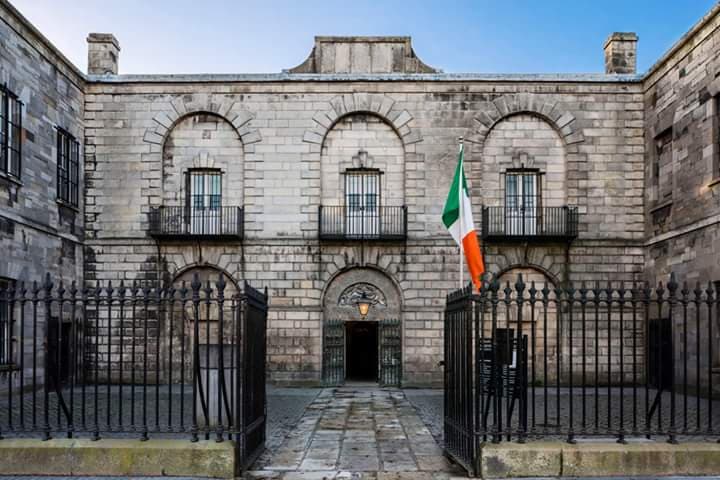
Explore the Museum Galleries at Kilmainham Gaol in Dublin, Ireland, uncovering Irish history, rebellion, and the stories of its famous prisoners.
Overview
Nestled within the historic walls of Kilmainham Gaol in Dublin, Ireland, the Museum Galleries offer a profound journey through Ireland's complex past. More than just a collection of artifacts, these galleries provide an immersive experience, complementing the guided tour of the former prison. They serve as a crucial space where the stories of ordinary people and revolutionary figures, once confined within these very walls, are brought vividly to life. The museum meticulously documents over a century of Irish social and political history, from the late 18th century to the early 20th century, culminating in the Gaol's closure in 1924 and its subsequent restoration.
Visitors typically access the Museum Galleries after completing the one-hour guided tour of the gaol itself, allowing for a comprehensive visit that should last approximately 90 minutes in total. The exhibitions are thoughtfully arranged across multiple levels, delving into various facets of prison life, the struggle for Irish independence, and the dedicated efforts to preserve Kilmainham Gaol as a national monument.
History & Cultural Background
Kilmainham Gaol, originally known as the 'New Gaol,' opened in 1796 as the County of Dublin Gaol. For 128 years, it was a place of incarceration for thousands, from petty criminals to some of Ireland's most significant political figures. The museum galleries intricately trace this evolution, detailing the harsh realities of prison life in the 1800s, where men, women, and even children were often held together in overcrowded cells with minimal light and heat.
Culturally, the galleries underscore Kilmainham Gaol's pivotal role as a symbol of Irish nationalism and resistance. It housed leaders from every major Irish rebellion, including the 1798 and 1803 rebellions, the Fenians, and most notably, the leaders of the 1916 Easter Rising, many of whom were executed in the Gaol's Stonebreaker's Yard. The museum's first floor is dedicated to this turbulent period, presenting artifacts and documents that narrate Ireland's path to independence from 1796 to 1924, including the Anglo-Irish War and the Irish Civil War.
What Makes It Special
The Museum Galleries are unique in their ability to contextualize the physical prison structure with deeply personal narratives and national historical events. Unlike many historical sites that might feel distant, the exhibitions here foster a powerful connection to the past by showcasing tangible relics and direct testimonies. Visitors can explore permanent exhibitions such as 'The 1916 Easter Rising,' 'Prison Life Through the Ages,' 'The Road to Independence,' and 'Women and Children in the Gaol,' each offering a focused lens on different aspects of the Gaol's history.
A notable feature is the 'Last Words' section, which displays the final letters and personal belongings of the 14 leaders of the Easter Rising executed in 1916, providing an incredibly poignant and human perspective on their sacrifice. Furthermore, a unique art gallery on the top floor features works by prisoners incarcerated in contemporary Irish prisons, drawing a continuous line from the Gaol's historical purpose to modern reflections on incarceration and creativity.
Stories, Fun Facts & Local Details
Within the galleries, countless stories unfold. You'll encounter the prison register detailing minor offenses like 'stealing apples,' next to grave political crimes, highlighting the diverse population confined here. A small wooden box belonging to John Sheahan, a convict transported to Australia in 1842, offers a personal glimpse into the grim practice of penal transportation. You can also see a Victorian-era Gandolfi camera, used to take prisoner 'mugshots,' illustrating the early days of criminal identification.
The museum also sheds light on the extraordinary efforts of volunteers who, in the 1960s, rescued Kilmainham Gaol from ruin and restored it as a national monument. This restoration story, detailed on the final floor of the exhibition space, is a testament to Ireland's commitment to preserving its heritage and honoring the memory of those who fought for its freedom. Currently, the museum hosts a temporary exhibition, 'The Prisoners' Lens,' featuring secret photographs taken by prisoners in 1921 during the War of Independence, offering a rare, unfiltered look into daily life within the gaol during that tumultuous period.
Visitor Perspective
Stepping into the Museum Galleries after touring the stark prison corridors provides a crucial layer of understanding and emotional depth. The artifacts, documents, and interpretative displays allow visitors to absorb the historical context and personal stories that make Kilmainham Gaol such a powerful site. It's a place for reflection, offering insights into the human cost of political struggle and the evolution of Ireland as a nation. The galleries effectively connect the dots between the cold stone cells and the vibrant, often tragic, lives of those who inhabited them. It truly is a profound educational experience, prompting contemplation on justice, freedom, and national identity, and is an indispensable part of any visit to Kilmainham Gaol.
Coordinates: -6.3098048, 53.34183805
View on Google Maps💬 How Travelers Describe This Place
Based on community votes
Unique
670Beautiful
655Photogenic
594Must See
266Interesting
166
Traveler Stories
Discover memorable experiences shared by travelers who have visited this place.
No traveler stories yet.
Be the first traveler to share what made this place memorable.

Tour
By
Spot
Discover amazing places around the world. Your journey starts here.
Explore
© 2026 TourBySpot. All rights reserved.