Kapuzinerberg
Salzburg, Austria
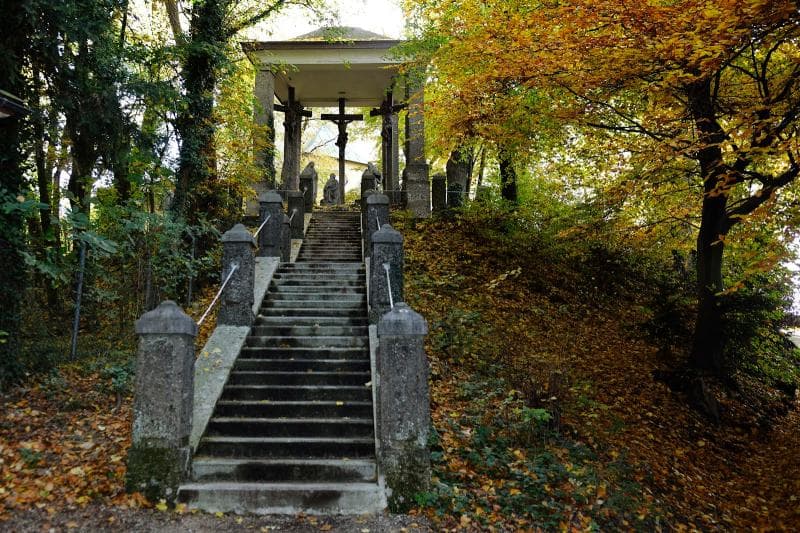
Discover Kapuzinerberg in Salzburg, Austria – a historic hill offering stunning panoramic city views, peaceful trails, and unique wildlife.
Overview
Rising majestically on the eastern bank of Salzburg's Salzach River, Kapuzinerberg is much more than just a hill; it is a verdant oasis offering unparalleled panoramic views of the city's historic Altstadt, the formidable Hohensalzburg Fortress, and the majestic surrounding Alps. Standing at an elevation of 640 meters (2,100 ft), this forested mountain forms an integral part of Salzburg's UNESCO World Heritage Site, acting as the city's 'green lung' and a tranquil escape from its bustling streets.
Visitors are drawn to Kapuzinerberg for its serene walking paths, which weave through dense woods and along ancient fortifications. It's a destination that perfectly blends natural beauty with rich history, inviting exploration and offering breathtaking vistas around every bend. Whether seeking a peaceful stroll or a more invigorating hike, Kapuzinerberg provides a unique vantage point to appreciate Salzburg's timeless charm.
History & Cultural Background
The history of Kapuzinerberg stretches back millennia, with evidence of human settlements on its eastern slopes dating to the Neolithic period, around 1100 B.C. During the Middle Ages, the site where the Capuchin Monastery now stands was occupied by a medieval fortress known as the 'Trompeterschlösschen'. In 1594, Prince-Archbishop Wolf Dietrich von Raitenau commissioned the transformation of this fortress into the Capuchin Monastery, which was largely completed between 1599 and 1605. Its original purpose was partly to serve as a stronghold against the Reformation.
The mountain is also dotted with remnants of Salzburg's defensive past, including numerous artillery bastions and extensive military walls constructed in 1629 during the tumultuous Thirty Years' War. These fortifications, particularly along the 'Basteiweg', offer a fascinating glimpse into the city's strategic importance. As you ascend, particularly from the Linzergasse, you'll encounter a series of 13 Baroque Stations of the Cross, erected between 1736 and 1744, reflecting the deep religious heritage embedded within this landscape. At the mountain's crest, the Franziskischlössl, originally a defensive structure from 1629, now serves as a quaint restaurant, offering a place for refreshment and further historical reflection.
What Makes It Special
Kapuzinerberg's allure lies in its remarkable duality: it's a wild, natural haven set against the backdrop of a cultured European city. The most striking feature is undoubtedly the breathtaking, unobstructed 360-degree views it offers. From its various viewpoints, you can gaze upon the Baroque spires and rooftops of the Old Town, the imposing Hohensalzburg Fortress perched on Festungsberg, and the sweeping grandeur of the Bavarian Alps on clear days.
Beyond the vistas, the mountain distinguishes itself as a unique ecological pocket. It is famously home to a wild chamois colony, a surprising and rare sight within a city's confines. These agile mountain goats can sometimes be spotted traversing the rocky outcrops, adding an element of wilderness to the urban hike. The extensive network of well-maintained, wooded trails, including the historic Basteiweg, provides a peaceful environment for walks and hikes, making it a favorite for both locals and visitors seeking solace in nature without leaving the city. For the adventurous, the steep north face even offers rock climbing routes known as the 'City Wall' via ferrata.
Stories, Fun Facts & Local Details
Kapuzinerberg holds many intriguing stories and local secrets. For instance, at Kapuzinerberg 5, you'll find the former residence of the renowned Austrian writer Stefan Zweig, the 'Paschinger Schlössl'. He lived there from 1919 to 1934, drawing inspiration from the tranquility and receiving esteemed guests such as Thomas Mann, James Joyce, and Hugo von Hofmannsthal. A bust commemorates Zweig, and not far away, another pays homage to Salzburg's most famous son, Wolfgang Amadeus Mozart.
Perhaps one of the most remarkable 'fun facts' is the mountain's unlikely population of chamois. These wild animals thriving within a city are a testament to the mountain's untouched natural character, and spotting them adds an element of delightful surprise to any visit. Another fascinating historical tidbit reveals that Adolf Hitler once harbored ambitions to flatten parts of Kapuzinerberg to build a colossal 'Gauburg', a stadium, and a festival hall. Fortunately, the conclusion of World War II prevented these destructive plans, preserving the mountain's natural state.
The Capuchin Monastery, while generally closed to the public due to the strict monastic rules, opens its church for services and its garden on Saturdays during fine weather, offering a rare glimpse into its spiritual life. The Franziskischlössl, once a defensive bastion, has been serving as a popular tavern since 1849, providing a charming spot to rest and enjoy a refreshment after a climb, with its own unique views over the city's New Town.
Visitor Perspective
Ascending Kapuzinerberg is an accessible and rewarding experience. Multiple paths lead to its summit, with the most common starting points being from Linzer Gasse (via the Stefan-Zweig-Weg) or the Imbergstiege. The main trails are generally well-maintained, ranging from paved sections to more rugged, wooded paths. While some sections can be steep, making sturdy footwear advisable, the hike is considered moderate and suitable for various fitness levels.
The journey to the top, depending on the route and exploration, can take anywhere from 30 minutes to an hour and a half, or even longer if you choose to explore all the trails. Many visitors find the ideal times for a visit are around sunrise, early morning, or late afternoon to sunset, when the light paints the city in magical hues, creating truly stunning photographic opportunities. It's important to note that public restrooms are not available along the trails, so planning ahead and bringing water is recommended for a comfortable visit. Ultimately, Kapuzinerberg offers a profound sense of tranquility and an intimate connection with Salzburg's natural and historical soul, making it a must-visit for any curious traveler.
Coordinates: 13.05588, 47.80408
View on Google Maps💬 How Travelers Describe This Place
Based on community votes
Photogenic
951Unique
748Beautiful
499Interesting
427Must See
94
Traveler Stories
Discover memorable experiences shared by travelers who have visited this place.
No traveler stories yet.
Be the first traveler to share what made this place memorable.
Things to see at Kapuzinerberg



Tour
By
Spot
Discover amazing places around the world. Your journey starts here.
Explore
© 2026 TourBySpot. All rights reserved.