Hettwer Bastion
Salzburg, Austria
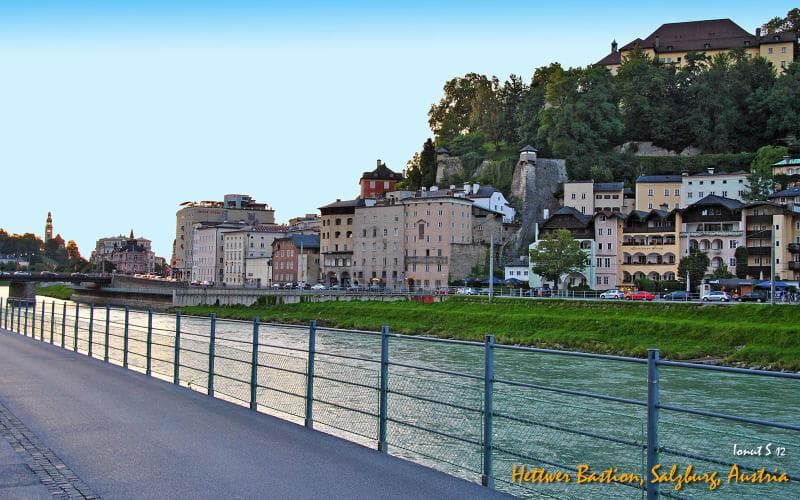
Discover Hettwer Bastion, a historic viewpoint on Kapuzinerberg in Salzburg, Austria, offering panoramic views of the Old Town and Hohensalzburg Fortress.
Overview
Perched majestically on the Kapuzinerberg in Salzburg, Austria, the Hettwer Bastion offers a truly enchanting perspective of the city. This historic viewpoint, also known by its older name, Lodronsche Wehranlage, is not just a scenic overlook but an integral part of Salzburg's rich defensive heritage. From its elevated position, visitors are treated to breathtaking panoramic vistas of the Old Town, the winding Salzach River, the formidable Hohensalzburg Fortress, and even the distant, majestic peaks of the Bavarian Alps on clear days. Reaching the bastion is an experience in itself, involving a pleasant, albeit uphill, walk, making the reward of the view all the more satisfying.
The Hettwer Bastion is nestled within the larger Kapuzinerberg area, a prominent hill on the eastern bank of the Salzach River. This green lung of Salzburg serves as a popular recreation spot for both locals and travelers seeking tranquility amidst nature, combined with historical exploration. Unlike its more easily accessible counterparts, the Kapuzinerberg, and by extension the Hettwer Bastion, remains an authentic, car-free sanctuary, reachable only by foot.
History & Cultural Background
The story of the Hettwer Bastion is deeply interwoven with the turbulent history of Salzburg, particularly the period of the Thirty Years' War. The bastion was originally constructed around 1630 as a vital component of the extensive defensive walls, known as the Lodronsche Wehranlage, commissioned by the farsighted Prince Archbishop Paris Count Lodron. These fortifications were designed to protect the city against potential invasions, including a critical defense of the main bridge.
The broader Kapuzinerberg itself has a history stretching back even further, with evidence of human settlement on its eastern slopes dating to the Neolithic period and significant prehistoric settlements from as early as 1100 B.C. The Capuchin Monastery, which gives the mountain its name, was established between 1599 and 1605 on the site of a medieval fortress called the 'Trompeterschlössl', by Bishop Wolf Dietrich von Raitenau, partly as a stronghold against the Reformation. The name 'Hettwer' was a later addition, bestowed in 1924 to honor Colonel D. R. Emil Hettwer, who made significant contributions to the study of the city's historical maps. This naming reflects a blend of ancient strategic importance and more recent historical recognition.
What Makes It Special
What truly sets the Hettwer Bastion apart is its unparalleled vantage point. While Salzburg boasts several viewpoints, the Hettwer Bastion offers a distinctive, postcard-perfect panorama that captures the essence of the city. From here, the Baroque domes and spires of the Old Town spread out below, framed by the Salzach River, with the imposing Hohensalzburg Fortress reigning supreme on the opposite side.
It is often described as a 'hidden gem', a place that requires a little effort to reach but rewards visitors with a sense of discovery and a peaceful atmosphere. Unlike other more crowded tourist spots, the Hettwer Bastion maintains a serene ambiance, allowing for quiet contemplation and appreciation of Salzburg's beauty. Its location just below the Capuchin monastery makes it a natural stop for those exploring the Kapuzinerberg's hiking trails.
Stories, Fun Facts & Local Details
The journey to the Hettwer Bastion itself is part of its charm. The most common route is via the Imbergstiege, a historic stairway comprising 261 steps that ascends 51 meters from the charming Steingasse. This path offers glimpses into the city's older architecture before leading to the sweeping views. The surrounding Kapuzinerberg is also home to ancient artillery bastions and watchtowers dating back to 1629, which form part of the well-preserved fortifications from the Thirty Years' War.
For those who enjoy a longer stroll, the Basteiweg, a historical 1.7-kilometer trail, begins at Hettwer Bastion and traces along the Lodronian defensive walls, leading towards the Franziskischlössl. This path offers varying perspectives of Salzburg and even hints of the Bavarian Alps. The Kapuzinerberg is also noted for its natural beauty, boasting diverse flora and fauna, including chamois, deer, badgers, and pine martens, making it a unique urban natural reserve. A visit during sunrise or sunset is particularly recommended, as the changing light paints the city in dramatic hues, creating a magical experience.
Visitor Perspective
A visit to the Hettwer Bastion is ideal for travelers who appreciate history, stunning landscapes, and a bit of a physical challenge. The ascent, while involving stairs, is generally considered manageable and rewards amply with its panoramic views. Many visitors describe the effort as entirely worthwhile for the 'amazing view over the old Salzburg city'. It provides an excellent opportunity for photography, capturing the iconic landmarks from a fresh and elevated angle.
It's a perfect spot for those looking to escape the bustling city center for a couple of hours, offering a tranquil retreat and a unique way to gain a comprehensive understanding of Salzburg's layout. Travelers often combine their visit with further exploration of the Kapuzinerberg's trails, such as a hike to the Franziskischlössl, which houses a small restaurant. The Hettwer Bastion truly offers a memorable and enriching experience for anyone wishing to delve deeper into the beauty and heritage of Salzburg.
Coordinates: 13.057513, 47.804961
View on Google Maps💬 How Travelers Describe This Place
Based on community votes
Photogenic
886Unique
443Beautiful
310Must See
277Interesting
233
Traveler Stories
Discover memorable experiences shared by travelers who have visited this place.
No traveler stories yet.
Be the first traveler to share what made this place memorable.

Tour
By
Spot
Discover amazing places around the world. Your journey starts here.
Explore
© 2026 TourBySpot. All rights reserved.