Forest Trails
Salzburg, Austria
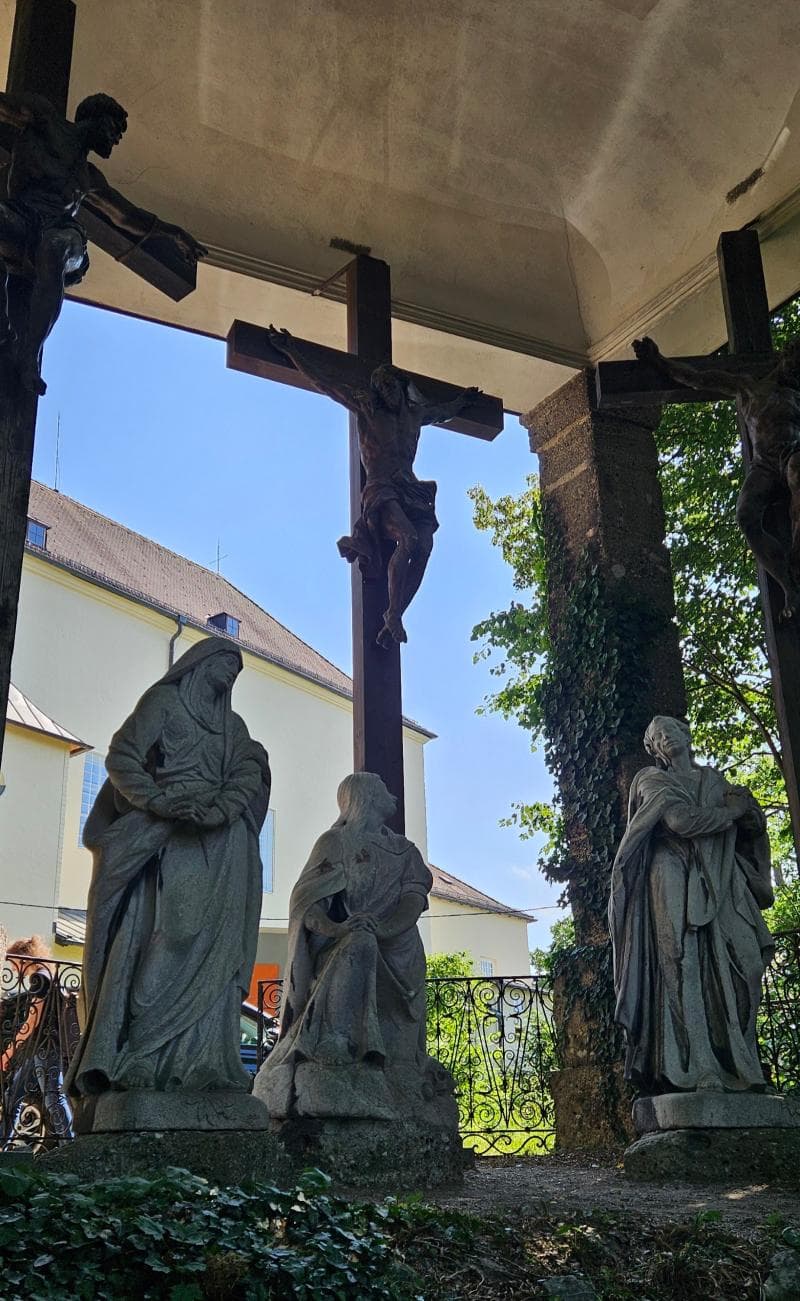
Explore the serene Forest Trails of Kapuzinerberg in Salzburg, Austria. Discover historic fortifications, a Capuchin monastery, and breathtaking panoramic city views.
Overview
Nestled on the eastern bank of the Salzach river, rising majestically above the historic city of Salzburg, Austria, lies Kapuzinerberg. Far more than just a hill, it is a verdant oasis, a natural retreat that forms an integral part of Salzburg's UNESCO World Heritage Site. While its towering presence is undeniable, it's the 'Forest Trails' of Kapuzinerberg that truly invite exploration. These winding paths, weaving through dense woodlands, offer a peaceful escape from the city's charming bustle, revealing breathtaking panoramas and a rich tapestry of history with every step. Visitors can anticipate an elevation of 640 meters (2,100 ft), promising rewarding views at every turn.
History & Cultural Background
The Kapuzinerberg's past is as deeply rooted as its ancient trees. Its strategic location meant it was fortified centuries ago. The hill is encircled by 400-year-old defensive walls, remnants of the city's protection during the Thirty Years' War, which hikers can explore along the 'Basteiweg Trail'. At its peak stands the historic Capuchin Monastery, built between 1599 and 1605 on the foundations of a medieval fortress known as the 'Trompeterschlössl'. This abbey and its simple, modest architecture reflect the contemplative life of the Capuchin order. Along the ascent from Linzer Gasse, visitors encounter a series of six Baroque Stations of the Cross, created by Salzburg artists between 1736 and 1744, offering a spiritual journey intertwined with the physical climb. The Felixpforte gateway, commissioned by Prince-Archbishop Paris Lodron in 1632, marks a significant point along the path, providing early glimpses of the cityscape.
What Makes It Special
The Forest Trails of Kapuzinerberg offer a unique blend of pristine nature and profound history, all within minutes of a bustling city center. Unlike other urban mountains, Kapuzinerberg has no funicular or elevator, preserving its natural, tranquil character and ensuring that the journey is as rewarding as the destination. The dense forest acts as the 'green lung' of Salzburg, providing a sanctuary for various flora and fauna. Here, you might spot indigenous chamois, deer, badgers, and pine martens, a truly remarkable sight within a city perimeter. The trails are well-maintained, varying from paved sections to unpaved paths and stairs, catering to different preferences while consistently offering moderate challenges with steep sections. This blend of accessibility and wildness, coupled with unparalleled views of Salzburg's Old Town and the iconic Hohensalzburg Fortress, makes these trails exceptionally special.
Stories, Fun Facts & Local Details
Kapuzinerberg holds a treasure trove of stories. One fascinating detail is the thriving colony of chamois, graceful mountain goats that roam freely, offering an unexpected encounter in an urban setting. The 'Franziskischlössl', originally a 17th-century defensive bastion, was transformed into a popular tavern in 1849, providing a historical refreshment stop with panoramic views. Another notable residence on the mountain was the 'Paschinger Schlössl', where the renowned author Stefan Zweig lived from 1919 to 1934 (or 1937 according to some sources), finding inspiration in its secluded tranquility. A bust dedicated to Wolfgang Amadeus Mozart is also found along the paths, commemorating Salzburg's most famous genius. Perhaps one of the most intriguing historical tidbits is that the extensive forested areas of Kapuzinerberg ultimately thwarted Adolf Hitler's plans to construct a massive fortress, stadium, and festival hall on the site, preserving its natural beauty for generations to come.
Visitor Perspective
Embarking on the Forest Trails of Kapuzinerberg is an experience that caters to a wide range of visitors. Whether you seek a leisurely stroll or a more invigorating hike, the mountain's pathways offer diverse options. Entrances can be found conveniently from Linzer Gasse or via the Imbergstiege in Steingasse. The main paved loop, known as the Stefan-Zweig-Weg, is approximately 3 miles (4.8 km) with additional trails available, offering a moderate challenge with some steep sections. Comfortable shoes are highly recommended due to the varied terrain, which includes stairs and uneven paths. The reward for the climb is immediate: stunning viewpoints emerge quickly, particularly those near the Capuchin Monastery, offering iconic vistas of Salzburg's Old Town, the Hohensalzburg Fortress, and the surrounding Alps. Many visitors choose to linger at these viewpoints, especially at sunset, to capture unforgettable moments. Further exploration into the deeper forest trails provides an even greater sense of solitude and connection with nature, far from the tourist crowds. Remember to bring water, as there are limited facilities along the routes, allowing for an uninterrupted journey through this historic and naturally rich landscape.
Coordinates: 13.06309, 47.80759
View on Google Maps💬 How Travelers Describe This Place
Based on community votes
Must See
556Photogenic
540Unique
470Interesting
410Beautiful
254
Traveler Stories
Discover memorable experiences shared by travelers who have visited this place.
No traveler stories yet.
Be the first traveler to share what made this place memorable.

Tour
By
Spot
Discover amazing places around the world. Your journey starts here.
Explore
© 2026 TourBySpot. All rights reserved.