Viewing Terraces
Salzburg, Austria
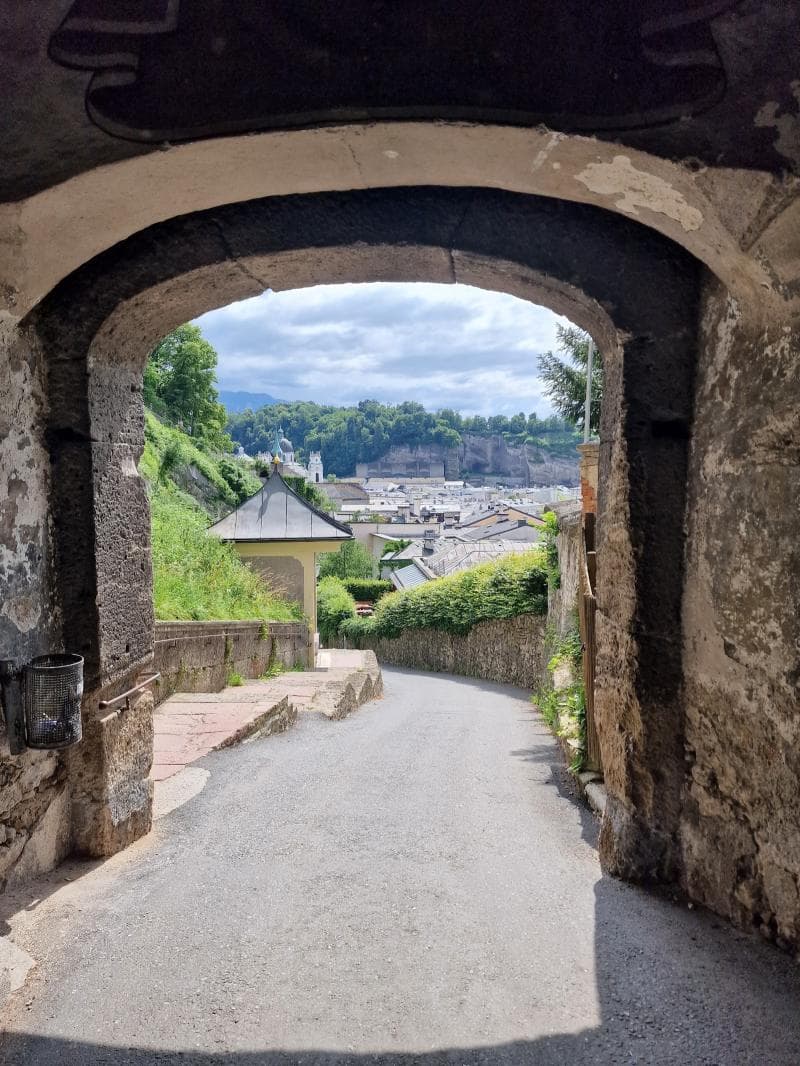
Discover the Viewing Terraces on Kapuzinerberg in Salzburg, Austria, for breathtaking panoramic views of the Old Town and Hohensalzburg Fortress.
Overview
Perched high above Salzburg's historic center on the eastern bank of the Salzach River, Kapuzinerberg offers a serene escape and unparalleled vistas of the city. While not a single designated spot, the 'Viewing Terraces' refer to various breathtaking viewpoints scattered along the hill's extensive walking paths. Rising to an elevation of approximately 640 meters, this forested mountain provides panoramic views that sweep across Salzburg's iconic Old Town, the majestic Hohensalzburg Fortress, the winding Salzach River, and, on clear days, even the distant peaks of the Bavarian Alps. It serves as a popular recreation area for both locals and travelers seeking tranquility and a unique perspective of this UNESCO World Heritage city.
History & Cultural Background
Kapuzinerberg is not merely a scenic overlook; it is deeply embedded in Salzburg's rich history. Evidence suggests human habitation on its eastern slopes dates back to the Neolithic period, around 1100 B.C. The hill's strategic importance was recognized early, with a medieval fortress known as the Trompeterschlössl standing where the Capuchin Monastery now resides. In 1594, Prince-Archbishop Wolf Dietrich of Raitenau invited the Capuchin monks to Salzburg, leading to the construction of their monastery between 1599 and 1605, incorporating the old fortress's remains. Over the centuries, Kapuzinerberg played a crucial defensive role. During the Thirty Years' War in the early 17th century, Prince-Archbishop Paris Lodron oversaw the construction of extensive defensive walls and bastions, parts of which, like the Franziskischlössl, still stand today. As you ascend, particularly from the Linzer Gasse, you'll encounter a series of baroque chapels depicting the Stations of the Cross, erected between 1736 and 1744, testament to the mountain's long-standing spiritual significance.
What Makes It Special
What truly sets Kapuzinerberg's viewing terraces apart is the harmonious blend of natural beauty, historical depth, and the sheer breadth of its outlook. Unlike other viewpoints, Kapuzinerberg offers a distinct, often less-crowded experience, allowing for quiet contemplation amidst lush greenery. From the vantage points like Hettwer Bastei or near the Franziskischlössl, you can trace the pastel-colored houses lining the Salzach River, marvel at the intricate baroque domes and spires of the Old Town, and appreciate the imposing presence of Hohensalzburg Fortress from a unique angle. The mountain itself acts as Salzburg's 'green lung,' providing a vital natural habitat within the city. The journey to these views is part of the experience, winding through peaceful, wooded trails that offer a welcome respite from the urban hustle and bustle.
Stories, Fun Facts & Local Details
Kapuzinerberg holds many intriguing layers. For centuries, it has been a cherished local recreation area, where residents come to hike, reflect, and connect with nature. Despite proposals for intensive development, including visions from Adolf Hitler for grand structures, the mountain's forested character has largely been preserved, protecting its ecological and historical integrity. The Franziskischlössl, now a rustic building high on the hill, began its life as a defensive outpost in 1629. Standing on its observation deck, one can easily imagine the medieval guards scanning the horizon for approaching enemies. In the 19th century, it transformed into a popular tavern, a destination for leisurely excursions. The mountain was also home to the esteemed writer Stefan Zweig, whose former residence, the Paschinger Schlössl, is located here. Keen observers might even spot some of Kapuzinerberg's indigenous wildlife, such as chamois, deer, badgers, and pine martens, adding to its natural charm. For the most spectacular views, many suggest visiting around sunrise or late afternoon to sunset, when the light bathes Salzburg in a magical glow.
Visitor Perspective
Reaching the viewing terraces of Kapuzinerberg requires a bit of effort, as there's no funicular or elevator. Visitors will embark on a walk involving stairs or sloped paths, but the reward is well worth the climb. Multiple entry points exist, including the Imbergstiege stairway and the path from Linzer Gasse. Popular routes like the Basteiweg offer an historical journey alongside the old city walls, providing varying perspectives of Salzburg and the surrounding landscape. The Hettwer Bastei viewpoint, just below the Capuchin monastery, is particularly renowned for its sweeping panoramas. A round trip to some of the key viewpoints, such as Franziskischlössl, can take anywhere from 1.5 to 3 hours, depending on your pace and the specific trails chosen. It's advisable to wear sturdy footwear, as paths can sometimes be uneven. The Kapuzinerberg offers an accessible, easy to moderately difficult hike that promises stunning views and a tranquil retreat, making it an essential experience for any curious traveler to Salzburg.
Coordinates: 13.0631, 47.80765
View on Google Maps💬 How Travelers Describe This Place
Based on community votes
Must See
950Beautiful
287Photogenic
255Unique
231Interesting
86
Traveler Stories
Discover memorable experiences shared by travelers who have visited this place.
No traveler stories yet.
Be the first traveler to share what made this place memorable.

Tour
By
Spot
Discover amazing places around the world. Your journey starts here.
Explore
© 2026 TourBySpot. All rights reserved.