Stefan Zweig Memorial
Salzburg, Austria
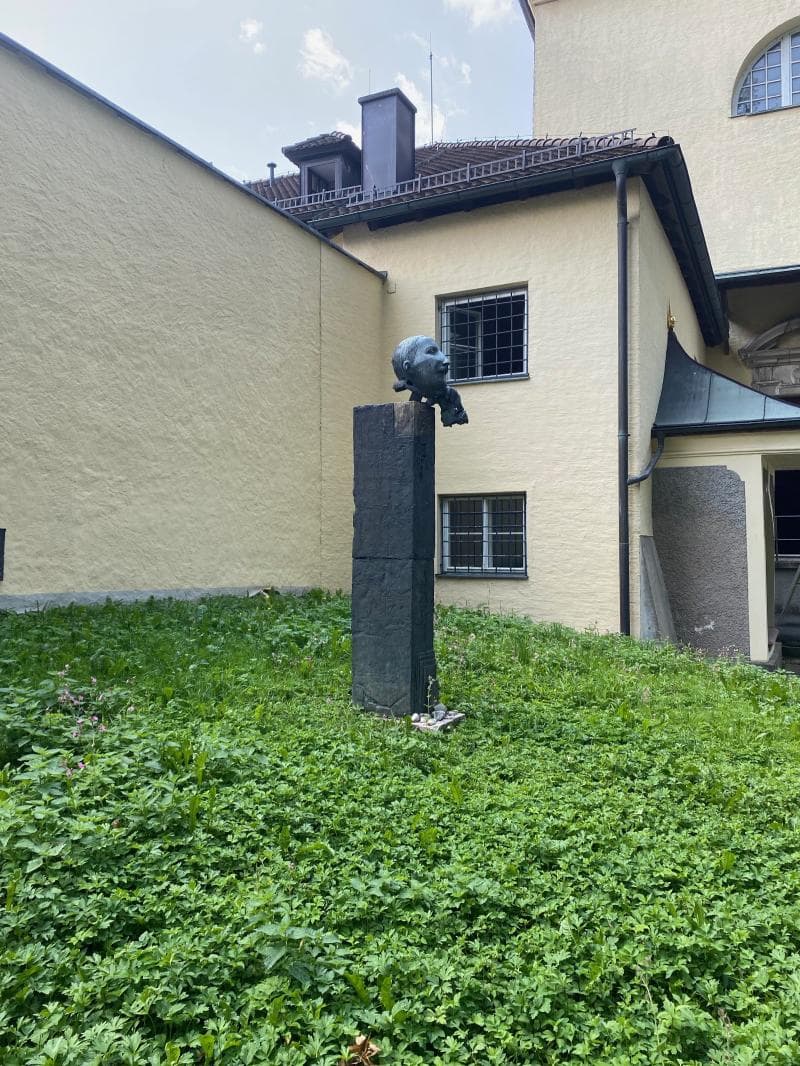
Explore the Stefan Zweig Memorial on Kapuzinerberg in Salzburg, Austria, a serene tribute to the famed writer's life and his enduring legacy.
Overview
Perched majestically above the enchanting city of Salzburg, the Kapuzinerberg offers not only breathtaking panoramic views but also a poignant tribute to one of Austria's most celebrated literary figures: the Stefan Zweig Memorial. This serene spot, nestled within the verdant slopes of the Kapuzinerberg, invites thoughtful contemplation on the life and legacy of a writer whose profound insights into the human condition continue to resonate today. It's less a grand monument and more a subtle acknowledgment of a significant historical residence and the enduring spirit of a global citizen. Visitors can follow the 'Stefan-Zweig-Weg,' a path winding through nature, leading to the area where the famed author once found inspiration and refuge [3, 13].
History & Cultural Background
Stefan Zweig, an influential Austrian writer, translator, and pacifist, made Salzburg his home from 1919 to 1934, a period widely regarded as the most successful and prolific of his literary career [5, 7, 9]. His residence was the 'Paschinger Schlössl,' also known as 'Villa Europa,' located at Kapuzinerberg 5. This 17th-century property, with its secluded setting, provided the ideal environment for Zweig's prolific writing and served as a vibrant cultural hub. During these years, he penned many of his acclaimed novellas, biographies, and essays, works that garnered him worldwide fame [5, 15]. The villa became a meeting point for a constellation of intellectual giants of the era, including literary luminaries such as Thomas Mann, James Joyce, Hugo von Hofmannsthal, and Arthur Schnitzler, among others [15, 19, 24].
However, this idyllic chapter came to an abrupt end with the rise of Austro-fascism and Nazism. A committed pacifist and Jewish intellectual, Zweig felt the increasing political pressures and anti-Semitic sentiment. Following anonymous threats and an unsettling police search of his home, he was compelled to flee Salzburg in 1934, ultimately going into exile and leaving behind the city that had been his creative sanctuary [8, 13, 15, 19, 24, 28]. His departure marked the tragic loss of a brilliant mind from the Austrian cultural landscape, a wound that Salzburg has since striven to acknowledge and heal, recognizing his immense contribution to literature and his humanist ideals [24].
What Makes It Special
The Stefan Zweig Memorial is not a singular, imposing structure but rather a collection of subtle markers that honor his memory and connection to Kapuzinerberg. A bust, positioned near the Capuchin Monastery, commemorates the great writer [6, 15, 21]. Furthermore, 'Stolpersteine' (stumbling stones) have been laid at Kapuzinerberg 5, outside his former home, serving as poignant reminders of Zweig and his relatives who were victims of the Nazi regime [17, 29]. The very path that winds up the mountain, the 'Stefan-Zweig-Weg,' is named in his honor, allowing visitors to walk in his footsteps and experience the landscape that inspired him [3, 13, 30]. The Kapuzinerberg itself is a UNESCO World Heritage Site and acts as the 'green lung' of Salzburg, offering magnificent views of the Old Town and the Hohensalzburg Fortress [6, 17]. This combination of natural beauty, historical significance, and quiet remembrance makes the memorial a unique and moving experience, far removed from typical tourist crowds [11].
Stories, Fun Facts & Local Details
Stefan Zweig's 'Villa Europa' was more than just a house; it was a sanctuary of thought and a beacon of European cultural exchange. Imagine the intellectual conversations that unfolded within its walls, hosting figures like James Joyce, who once visited. It's a testament to Zweig's international standing and his vision for a united Europe of the spirit [15, 19, 24]. A particularly poignant detail is the garden gate at 5 Kapuzinerberg, which was a wedding present to Stefan from his first wife, Friderike Zweig-Winternitz, and remains a tangible link to their life there [13]. His deeply humanist perspectives are captured in quotes like, 'Formerly man had only a body and a soul. Now he needs a passport as well for without it he will not be treated like a human being,' reflecting the era's turmoil and his own eventual statelessness [22, 25]. The burning of his books in German university towns in 1933, and later in Salzburg in 1938, highlighted the ideological chasm that forced him into exile, cementing his status as a symbol of resistance against barbarism [13]. This site offers a quiet contrast to the bustling city below, a place where one can truly feel the echoes of a rich but ultimately tragic intellectual past.
Visitor Perspective
To visit the Stefan Zweig Memorial on Kapuzinerberg is to embark on a journey that blends scenic beauty with profound historical reflection. The ascent, whether by the paved 'Stefan-Zweig-Weg' or one of the steeper trails, rewards walkers with invigorating exercise and increasingly spectacular vistas of Salzburg's historic Altstadt, the Salzach River, and the surrounding mountains [3, 6, 10, 11, 17]. As you walk, consider the writer who once trod these same paths, seeking inspiration and peace. Reaching the vicinity of his former villa and the Capuchin Monastery, where the memorial bust is located, offers a moment of quiet contemplation. The atmosphere is one of serene natural beauty, far from the city's hustle and bustle, allowing visitors to connect with Zweig's legacy on a deeply personal level [6, 11]. It's an opportunity to appreciate the city through the eyes of one of its most insightful observers and to reflect on the universal themes of peace, culture, and humanity that defined his life and work. This quiet corner of Salzburg stands as a powerful reminder of the importance of intellectual freedom and the enduring impact of a truly European spirit.
Coordinates: 13.04838, 47.80415
View on Google Maps💬 How Travelers Describe This Place
Based on community votes
Must See
540Photogenic
252Unique
147Beautiful
114Interesting
19
Traveler Stories
Discover memorable experiences shared by travelers who have visited this place.
No traveler stories yet.
Be the first traveler to share what made this place memorable.

Tour
By
Spot
Discover amazing places around the world. Your journey starts here.
Explore
© 2026 TourBySpot. All rights reserved.